

ETF popularity poised to stay as investors flock to diversification, stability

WHEN marketing communications manager Ong Yun Qi entered the workforce three years ago, she chose to kickstart her investing journey with equity exchange-traded funds (ETFs) and bonds.
“I don’t have a lot of time in my day to analyse the stock market, so I needed something that I can do rather passively,” said the 27-year-old.
Since then, Ong has built a portfolio of ETFs focused on mainly Singaporean companies, as well as developed and emerging markets.
“I like that the diversification (of ETFs) helps to reduce risk while allowing me to dip into markets across the world,” she said.
Her preference for the ETF – a type of financial instrument which tracks an underlying index – reflects its growing popularity over other forms of investments such as stocks or mutual funds.
More than three decades since the first ETF debuted in Canada, the financial product has been expanded to track almost every type of asset and geography.
The last few years, in particular, have seen ETFs surge in popularity as investors turned to the product for their stability and liquidity during a period of market volatility.
Globally, assets under management (AUM) for ETFs crossed the US$10 trillion mark last year.
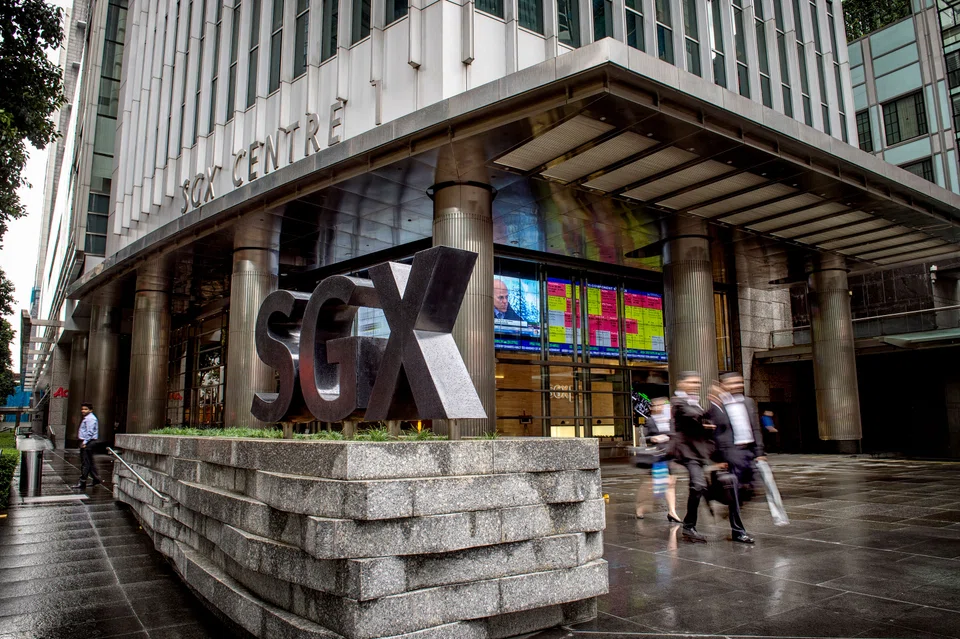
Within Singapore, 20 new ETFs have listed on the Singapore Exchange (SGX) since 2020, up from five new ones listed between 2015 and 2019.
The popularity of ETFs is set to grow even further, given the wider range of such financial products that are emerging, say market observers.
Singapore saw its first actively managed ETF listed earlier this year, while the first ETF to track the performance of Asia-Pacific financial services companies will debut on SGX this month. The latter is OCBC Securities’ fourth ETF launch in under four years.
Fund manager BlackRock, which offers 1,400 ETFs, expects the industry to grow to US$25 trillion by 2030.
Allure of ETFs
The allure of ETFs lies in their ease of access and convenience, said market observers.
“For passive investors, it is a simple way to diversify their portfolios across various securities and markets through a single investment,” said Wilson He, managing director of OCBC Securities.
The low investment requirement, which can be as little as S$1, also reduces the barriers to entry, particularly for younger investors who are starting their investment journey with limited funds, he added.
The variety of ETFs available also caters to different investor profiles, added Chloe Nadia Halim, a senior research analyst at wealth management platform FSMOne.com.
While risk-averse investors can turn to fixed-income ETFs for regular payouts, those who are more risk-seeking can opt for thematic ETFs that focus on particular trends or themes such as technology or sustainability, said Halim.
The rise of robo investor platforms which use ETFs heavily in their portfolios in the late 2010s has also contributed to the financial product’s popularity, added Joyce Chng, a client adviser at wealth advisory company Providend.
What investors are eyeing
ETFs related to the semiconductor industry, as well as fixed deposits and bonds, have been gaining popularity among investors in recent years, said industry players.
Halim said that the semiconductor theme has become attractive as the rapid adoption of artificial intelligence is expected to have a “profound impact” on chip sales.
A popular ETF among investors who wish to gain exposure to the semiconductor industry is Vaneck Semiconductor ETF, she added.
There has also been a surge in demand for bond ETFs in Asia, driven by rising bond yields over the past few years, said Andy Ng, the head of iShares Equity Product Strategy at BlackRock.
Ng said that in Asia, investors are adding to their fixed-income ETF portfolios.
In the past, bonds used to be an asset class for which they had to make five phone calls just for a single purchase. But these days, the whole buying process involves just one click.
Meanwhile, gold ETFs have gained ground in recent weeks due to rising prices of the yellow metal as a result of escalating geopolitical tensions in the Middle East.
According to data from the Singapore Exchange (SGX), the average daily trading turnover of the SGX-listed SPDR GoldShares ETF reached its highest levels in close to four years recently.
Within Singapore, local investors turn to ETFs for access to local markets and to shore up their retirement coffers.
Halim noted that the SPDR Straits Times Index ETF is one of the best-selling ETFs on FSMOne’s platform, showing Singaporean investors’ preference to invest locally.
A growing number of investors also use ETFs as a portfolio management tool for their Supplementary Retirement Scheme (SRS), said OCBC Securities’ He.
The SRS is a voluntary savings scheme which allows individuals to contribute savings at their own discretion. These savings may be used to purchase various investment instruments.
He said that the Lion-OCBC Securities Hang Seng Tech ETF and China Leaders ETF were among the top 10 ETFs traded by SRS investors last year.
Disruptors to ETFs
Even as investors buy into ETFs, analysts reminded investors to do their due diligence on the risks involved.
Bitcoin, for instance, is notorious for substantial price fluctuations and ETFs that track its price are inherently high-risk investments, said Halim.
Tracking errors, where ETFs do not perfectly replicate the index, could also result in different returns, said observers.
Chng of Providend also warned that regulatory changes which increase the cost of ETFs, or new technologies such as blockchain that offer alternative investment vehicles to ETFs, could reduce their appeal.
Despite the potential pitfalls, ETFs look set to stay.
Budding investor Ong says she will continue to invest “a good portion” of her salary in ETFs.
She said: “I see investment as a way for myself to build financial independence, and ETFs are what I’m most comfortable with.”






