OUE Reit eyes higher hospitality contribution in growth push

WHILE offices and hotels are both considered commercial assets, they have markedly different operating and investing characteristics. Having a portfolio comprising both types of properties, though, has been a key strategy for OUE Real Estate Investment Trust (Reit).
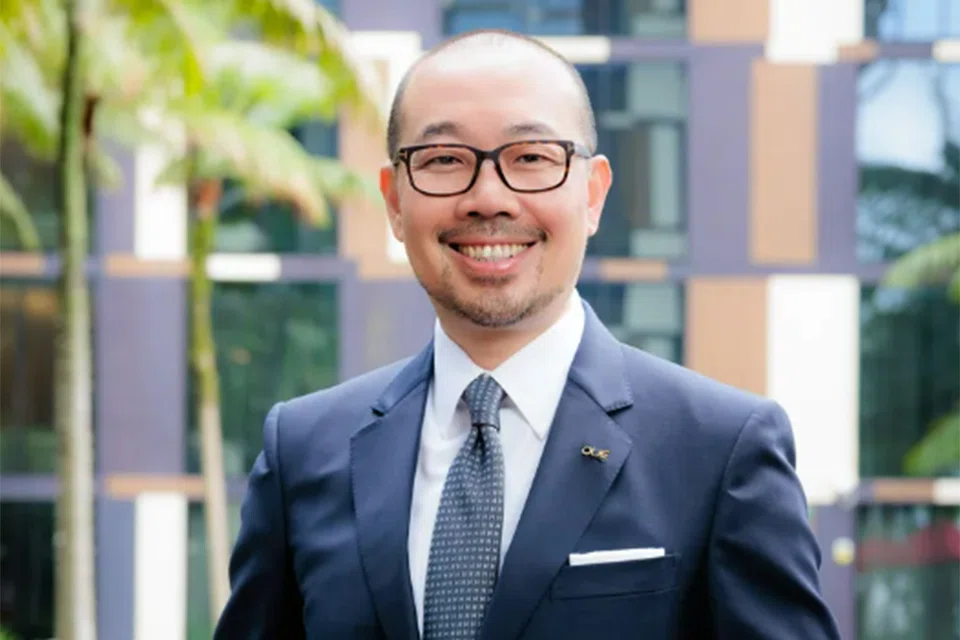
Han Khim Siew, chief executive of the manager, eyes the benefits coming from such diversification, which provides the Reit with stability as well as a pathway for growth.
“We like the barbell we have now,” he said.
Around half of OUE Reit’s revenue last year came from the office segment, while its hospitality properties – Hilton Singapore Orchard and Crowne Plaza Changi Airport – contributed 32.2 per cent. The manager is targeting to grow the revenue share from the hospitality segment to 40 per cent.
“It makes sense on many fronts for us to start increasing the component of hospitality,” Han said.
OUE Reit – previously known as OUE Commercial Reit – first gained hospitality exposure in 2019, when it merged with OUE Hospitality Trust.
And growing the hospitality segment in the current market is part of the manager’s strategy for growth in the current uncertain macroeconomic climate.
Hospitality push
Han noted that inflation is expected to remain sticky, amid trends such as geopolitical tensions and onshoring. This would also result in a higher-for-longer interest-rate environment, even though rates may ease from their current levels.
“We must buy something which is DPU accretive. Now, historically, hospitality assets trade at (capitalisation rates) of 5 to 8 per cent,” he said, adding that this allows for accretive acquisitions, even at the current cost of debt.
Such accretive acquisitions may be more challenging for the office space. Han noted that office assets in Singapore have been trading at cap rates of between 3.5 and 5 per cent, depending on asset quality and location.
The manager is also keen on the hospitality sub-sector, as its assets allow for inflation costs to be passed through. Hotel room rates, Han pointed out, are more easily adjusted than office rents.
He noted that average daily rates, which rose sharply in 2022 and 2023, are currently likely close to their peak.
However, revenue per available room could still grow as occupancy improves.
Singapore saw 13.6 million international visitor arrivals in 2023, but this is forecast to improve to between 15 million and 16 million in 2024.
“There’s still room to grow the occupancy because visitor arrivals are just not here yet,” Han said.
To grow the contribution from hospitality in its portfolio, OUE Reit would need to reconstitute its portfolio, decreasing some of its office weightage in favour of hospitality.
“Whatever we acquire, number one, must be accretive. Number two, we want to buy very prime assets,” he said.
Han noted that the manager would consider what makes sense in Singapore, but is also looking at overseas opportunities. This would likely be in key gateway cities such as Tokyo, Sydney, Melbourne and London.
“If you look at the top ranking of destinations, tourist arrivals, you want to be there,” he said.
He added that the manager is more risk-averse, and prefers certainty, which means it would be less likely to look to developing countries.
“We believe having prime assets means we benefit: when times are tough, there is flight to quality,” he said.
While they had considered buying overseas assets previously, the gap in buyers’ and sellers’ expectations had been “too massive”.
“But now we are seeing that gap close… and we are seeing transactions now starting to take place,” Han said. “It is actually now a good time to start looking closer.”
Stable offices
Even as hospitality is seen as a growth driver, offices remain an important part of the portfolio.
“We quite like the balance because office leases are three years, they provide a certain amount of stability,” Han said.
OUE Reit’s office portfolio comprises mostly Grade A office buildings in Singapore, including interests in OUE Bayfront, One Raffles Place and OUE Downtown.
Han noted that OUE Reit’s current passing rents for its Singapore office assets stand at S$10.43 per square foot per month on average. However, spot rents in the market are currently S$11.90.
“We still think when we renew our leases, we will see upside potential,” he said.
To move towards the target of having more revenue from hospitality, OUE Reit would need to recycle capital, which could involve divesting some of its existing office assets.
“We just need a partial divestment, we don’t need to sell everything,” Han noted.
Recycling capital would allow the Reit to fund acquisitions while maintaining an aggregate leverage ratio of under 40 per cent. The manager is not considering an equity fundraising for acquisitions currently.
“Our price-to-book ratio is so far below parity currently, that it really doesn’t make sense for us to do it,” Han said.
With its closing price of S$0.275 on Apr 5, OUE Reit trades at a trailing 12-month distribution yield of around 7.6 per cent. The Reit also trades at over a 50 per cent discount to its net asset value of S$0.60 per unit.
Han believes that investors may have been discounting the counter due to perceptions over the Reit’s main focus.
He noted that during the Covid-19 era, many were concerned about hospitality players. While prospects for hospitality have since improved, concerns about the global office sector have seen investors penalise the Reit now for a different reason.
“I think we’re getting penalised, and if you look at most of the office Reits, it’s sort of massively penalised,” Han said.
OUE Reit rebranded itself earlier this year, dropping the word “commercial” from its name to reflect the diversified nature of its portfolio of hospitality, office and retail assets.
Han also noted that in the current interest-rate environment, some investors may naturally prefer other assets over Reits.
“Once you see the Fed cut, I think you will see the Reits re-rate, because then the fear in the market would have dissipated,” he said.
The manager has focused on its capital structure, amid the challenging interest-rate environment.
This includes launching a S$150 million bond in 2022, which came with a step-down in interest rates once the Reit became investment-grade. OUE Reit obtained its investment grade rating last October, with S&P Global Ratings assigning a “BBB-” rating with stable outlook.
Han added that the manager also carried out refinancing to move its debt from secured to unsecured, with zero refinancing due in 2024.
Nevertheless, higher interest rates have weighed on performance, with net finance costs more than doubling in the second half of 2023 to S$55.8 million. However, the Reit’s distribution per unit (DPU) remained stable in the second half, at S$0.0104.
The Reit could maintain its DPU performance, if stronger performance from both office and hospitality can offset any impact from higher finance costs.
“It’s manageable in my view,” Han said. “We’re still seeing reversionary growth from our office portfolio in Singapore, and we believe our two hotels will still continue to grow, so it’d be more than adequate to offset that.”