

Seatrium CEO urges investors to stay the course as company tackles ‘energy trilemma’
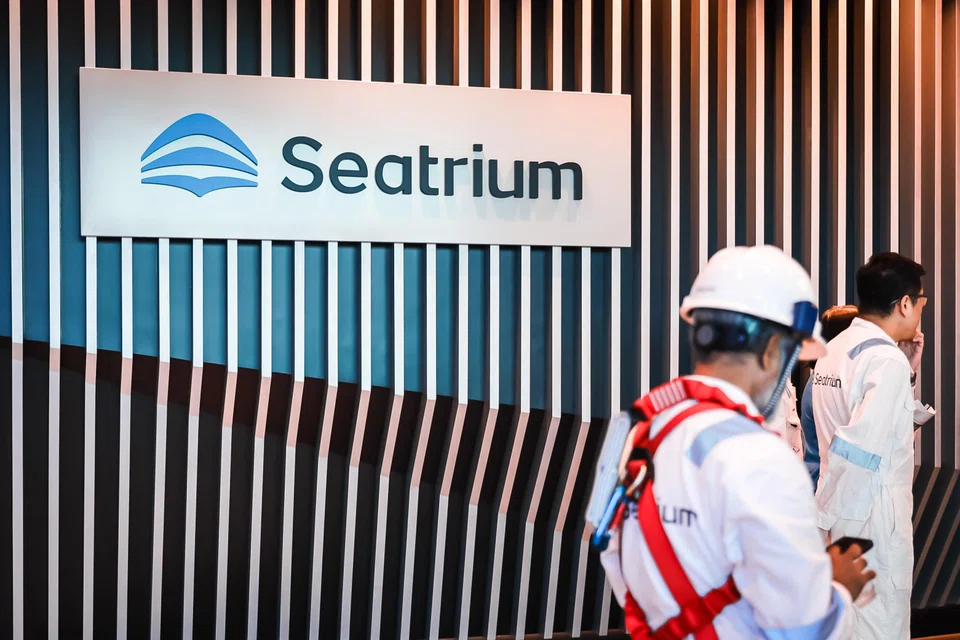
SHAREHOLDERS of Seatrium – a company formed after a mega-merger between Keppel Offshore & Marine (Keppel O&M) and Sembcorp Marine (Sembmarine) – have been put through the wringer of late.
Not only have they had to part with money to support two deeply discounted rights issues, they have not been getting dividend payouts from the stock. Seatrium’s share price, at S$0.084 as at market close on Friday (Apr 5), would have shareholders questioning how much longer they should hold on.
In an interview with The Business Times, Seatrium’s chief executive Chris Ong said he was grateful to the retail investors for their “patience and loyalty”.
“You can only do your best during a downturn to make sure that you maintain value,” he said. “I’m very thankful, regardless of chatter, that we have a loyal group of mutual investors.”
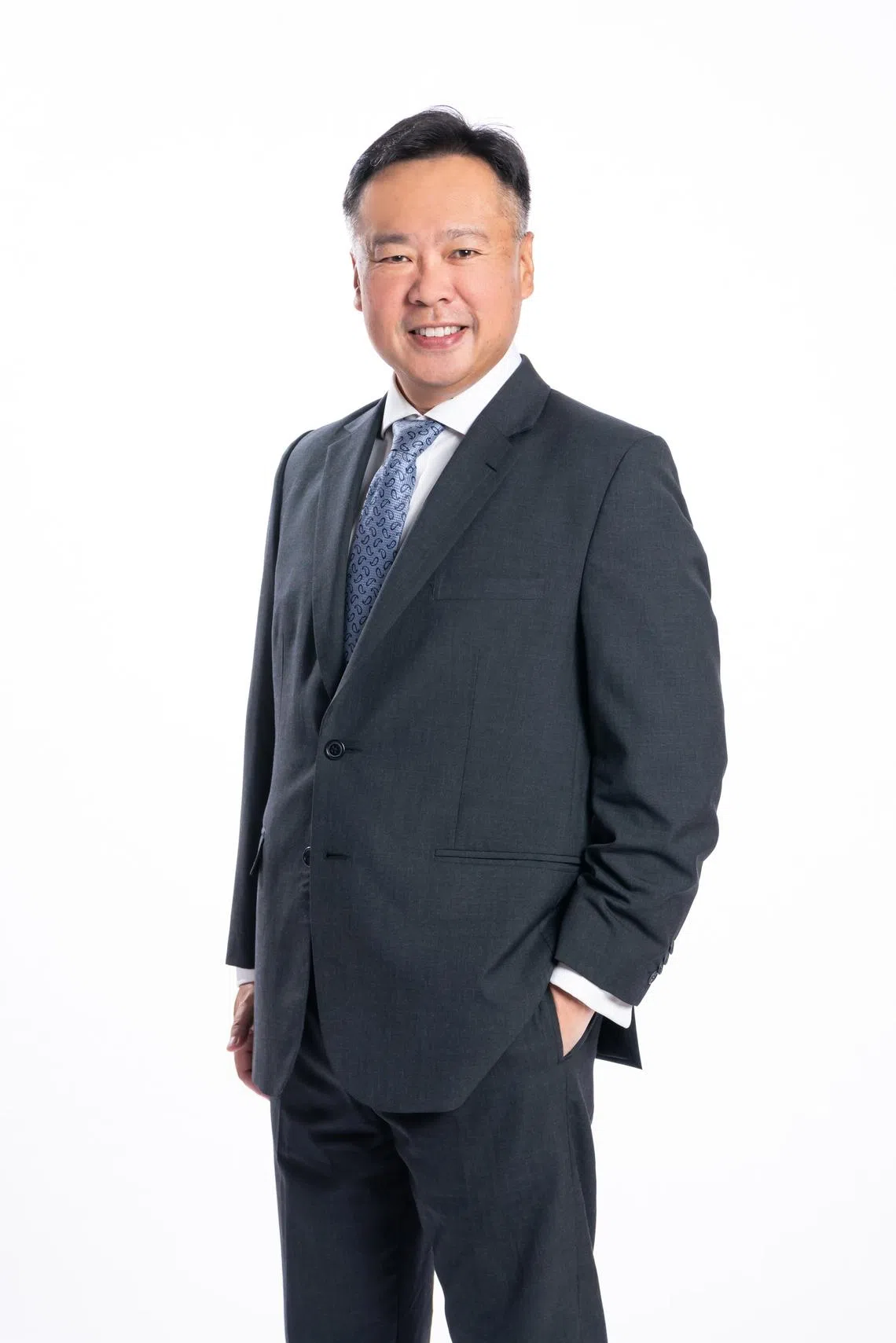
He believes Seatrium is positioned in a way that allows the company to capitalise on the global “energy trilemma”, with the three pillars being energy security, sustainability and affordability.
Ong said the company’s share price is “a function of what happened” and that Seatrium is now – after a strategic review – a company that has a “through-cycle capability”.
He stressed that Seatrium’s financial targets – which have been criticised by a number of investors and analysts as being too conservative – unveiled at its recent investor day are “just a base”, and the company is looking to deliver more than that.
Seatrium executives said then that the company is looking at a minimum of S$1 billion in earnings before interest, taxes, depreciation and amortisation, and a return on equity of 8 per cent by 2028.
“We need to fundamentally change the way that business was made almost a decade ago,” Ong said. Back then, he noted, companies in the O&M space had “crazy market shares” and were creating assets often to maintain or grow their slice of the pie.
“But when oil prices went south, it went to the dumps. We cannot afford that,” he said.
Seatrium today has a slew of products and revenue streams – oil products, jack-ups, floating production storage and offloading (FPSO) systems, as well as the renewable offshore platform space.
“The DNA of this company is a pathfinding one,” said Ong, adding that the only way for him to take Seatrium to “the global stage” was to diversify so that it was able to attract customers and contracts from multiple areas.
Cleaning up the balance sheet
When Ong took the helm in February 2023 after the merger was completed, a top priority was to “totally clean up the balance sheet and cost structure” of the company.
“When we first merged the books, we had a net current liability (sum) of S$1.5 billion,” he said. “That, as a CEO, is as if your company is not viable… and soon to come, it’s not going to be viable because you’re strapped for cash.”
Loans were expiring, and the banks could always walk away without extending the loans. Ong then had to, with his team, sit down with the banks and make sure the lenders understood how they intended to grow the business in a resilient yet profitable way.
Once Seatrium is profitable, Ong said the company wants to look at diversifying away from bank loans to bonds. The company will also look at doing buybacks in “a more structured way”.
In May last year, Seatrium announced a holistic strategic review that would allow the company to best tap growth opportunities amid the global green energy transition.
Seatrium booked a S$866.6 million writedown of property, plant and equipment in its FY2023 results as a result of its strategic review, in addition to a S$277.7 million writedown of right-of-use assets in H2.
At first glance, the value might lead people to believe that Seatrium took a “kitchen sink approach” to clearing its balance sheet, Ong said.
But this is untrue, he added. He stressed that the company chose to be “thorough” and look at which assets would be relevant on the back of the merger.
For instance, keeping the “big capacities” of both Keppel O&M and Sembmarine would have meant that both sides “continued to build huge floating docks”. But Seatrium was looking at a “horizontal integration” where it could scale the business, find the best asset to build a certain product, integrate its systems and deliver the product to the customer.
“There are assets that are no longer relevant because of the strategy. There are also obsolete inventories that (the companies) have been holding… so that was critically written down,” Ong said.
A year on, Ong believes Seatrium has made considerable progress, although a bulk of it is behind the scenes and not yet visible to shareholders. He also reckons that as things stand currently, Seatrium is not likely to book more writedowns or impairments.
Although, the company was saddled with legacy issues such as impairments and fines – chief of which was the involvement of Sembmarine executives in a Brazil corruption probe. Ong said the company should have completed accounting for a majority of its legacy projects “by this year”.
Rejigging the business model
A decade ago, the offshore and marine industry was dominated by drilling rigs. Companies could not build them fast enough, and that led to an oversupply when the oil price slump came. Many players in the sector merged or had to shutter.
Seatrium identified that products were getting bigger and more complex, and a company would need “very strong engineering and project management know-how” to thrive in this industry, Ong said.
Seatrium could have chosen a yard-by-yard approach – meaning that it would combine the profit and loss statements of both Keppel O&M and Sembmarine and look at the profitability of each yard.
But the company opted to integrate its operations. “The whole supply-chain challenge is overcome by us being able to operate all over the world,” he said.
For instance, the FPSO Petrobras contract that Sembarine clinched in 2022 saw different components being assembled in countries such as Singapore and Brazil.
Chinese partners in Singapore assembled the components and integrated the FPSO system partially, and the half-finished product was then delivered to Brazil to be integrated and delivered to the customer.
Having engineering centres and facilities across the world means that Seatrium can score “big boy” customers such as Petrobras, ExxonMobil, Shell and TenneT.
Ong also estimated that easily 80 per cent of Seatrium’s customers today are recurring ones, which gives the company more certainty about its earnings.
Attracting institutional investors
Seatrium’s current stock price puts it at a “penny stock” level. With about 68 billion shares on the market, volatility is also high, Ong noted.
The company has received the go-ahead for a 20-to-1 share consolidation, which Ong hopes will stamp out short sellers and make the stock “a lot more attractive”. Today, someone can just hit a buy or sell button, and cause a 1 or 2 per cent shift in Seatrium’s stock price.
At current prices, institutional investors cannot invest in Seatrium, although Ong said such conversations have taken place. The consolidation will also help the company attract institutional investors who can focus on the stock’s “growth forward rather than the burden of what’s behind”.
Institutional investors have been attracted to the stock, said Ong because “there are not many businesses that can claim to play at the scale and outreach that Seatrium has”.
Being at the centre of the ongoing energy trilemma and global energy transition, Ong said interest from institutional investors and hedge funds has picked up.
When asked if he had a target share price in mind after the consolidation, Ong declined to comment. He said that if a company opts to consolidate its shares solely to hit a particular share price, it would be “artificial” and “not fair to the retail investors especially”.
Asked when he thought Seatrium will become profitable, Ong said it would be sometime between now and 2028, and that the management was looking to achieve this sooner rather than later.
TRENDING NOW

Once staunchly pro-China, Malaysian Chinese businesses are now distancing themselves from Beijing
Looking beyond looming CEO succession, should UOB potentially pursue a transformative merger?

Could stablecoins be the future of money?

Grab CEO’s wife Chloe Tong on life with Anthony Tan and finding her purpose

