

ST Engineering aims for S$17 billion in revenue, higher net profit margin by 2029
It will also look at construction robotics, decentralised hydrogen production and marine renewables as new venture areas

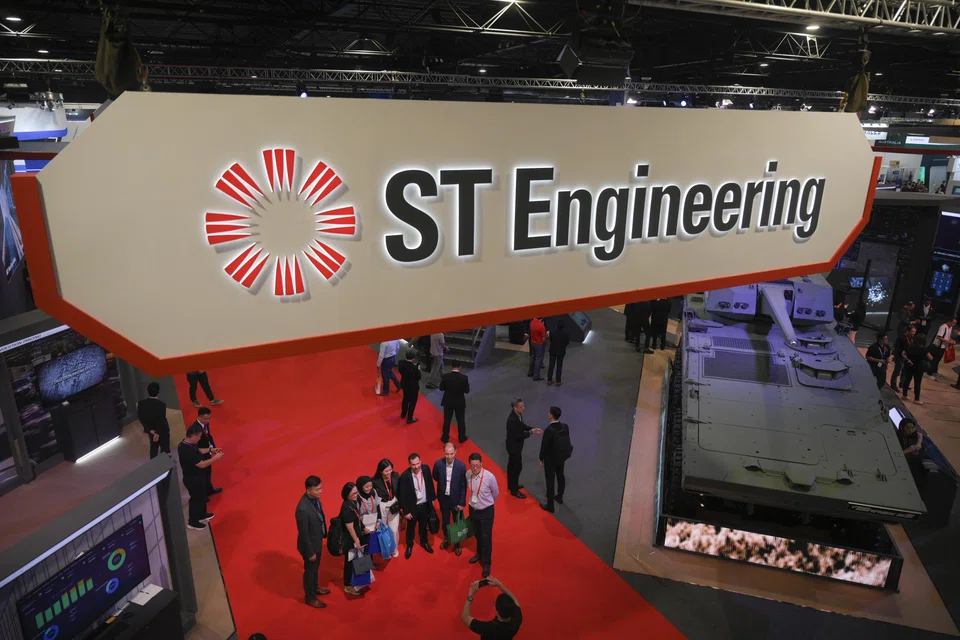
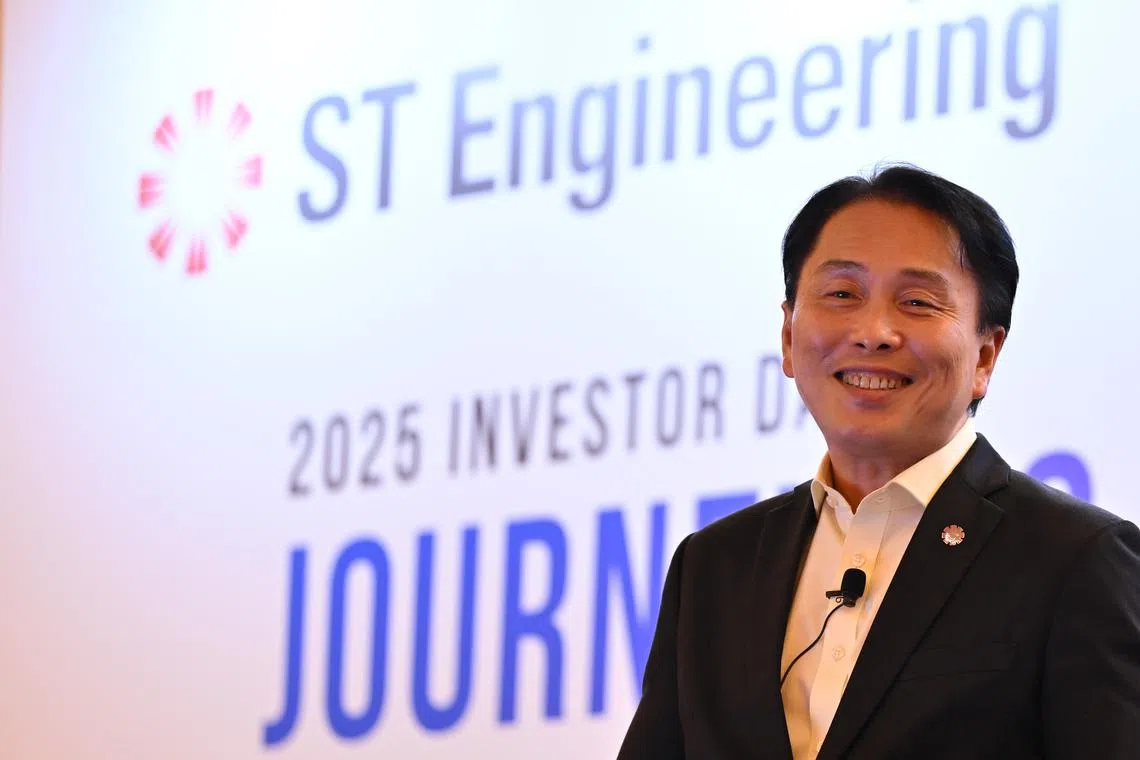
[SINGAPORE] ST Engineering is eyeing a revenue of S$17 billion and a net profit improvement that outpaces its top-line increases by up to five percentage points annually over the next five years, said group chief executive officer Vincent Chong on Tuesday (Mar 18).
The group expects to reap S$6 billion in revenue from its commercial aerospace segment, more than S$7.5 billion from its defence and public security one, and S$3.2 billion from its urban solutions and satcom unit by 2029, he added at the company’s investor day.
For the 2024 financial year, it posted S$11.3 billion in revenue and S$702.3 million in net profit, while its order book came in at S$28.5 billion.
Cedric Foo, group chief financial officer, said that the engineering powerhouse will raise its top line by improving its core businesses, among which digital business, defence, premier maintenance, repair and overhaul engines and smart mobility are key drivers.
He also noted that heightened geopolitical tensions and increased defence spending by some governments bode well for the group’s defence business.
Meanwhile, ST Engineering will look at construction robotics, decentralised hydrogen production and marine renewables as new venture areas.
The mainboard-listed group expects that a higher top line with scale effects, an improved product and project mix, procurement and productivity savings, and reduced interest expense will improve its net profit margin.
Foo said that lower costs will be derived from various initiatives, including tapping a new pool of talents at its Vietnam competency centre.
Dividend per share would rise in tandem with higher earnings as ST Engineering unveiled a new dividend policy that takes effect from FY2026. It plans to pay out a third of its year-on-year increase in net profit as incremental dividends, enabling it to reinvest while rewarding shareholders with a higher return.

It will maintain its research and development spending, at 4 to 5 per cent of group revenue for the next five years.
While noting that the Trump administration has been imposing tariffs to protect the United States since President Donald Trump took office in January, Chong said that it is “too early to tell the effects” and pointed out that 30 per cent of ST Engineering’s revenue is generated out of the US.
“We don’t think we would be disadvantaged over our competitors,” the helmsman added.
He was quick to denounce the allegation of ST Engineering’s ties with the Chinese Communist Party as “fearmongering” by Conduent, a competitor of ST Engineering’s US subsidiary TransCore that provides tolling technology and traffic management solutions.
Conduent is a former vendor that had lost a US$1.7 billion order from New Jersey Turnpike Authority to TransCore to provide customer service and toll payment processing. It is appealing the outcome and made the allegation about the foreign ownership ties.
The outcome of the appeal is not out yet, and ST Engineering has not included the deal in its order book.
ST Engineering shares rose to as high as S$6.56 after the announcement of the new dividend policy on Tuesday, but closed at S$6.38, up 0.9 per cent or S$0.06.
Decoding Asia newsletter: your guide to navigating Asia in a new global order. Sign up here to get Decoding Asia newsletter. Delivered to your inbox. Free.
Copyright SPH Media. All rights reserved.
TRENDING NOW

Two Singapore-listed palm oil firms named in Greenpeace report on Indonesian plantation fires

Singapore Airlines flight returns to San Francisco after ‘unruly’ passenger incident

Singapore looking into which companies responsible for haze-causing fires: PM Wong
Deluge IPO 3.86 times subscribed ahead of SGX debut

