ST Engineering betting US$2.7b on two US transport solutions firms in its biggest deal ever

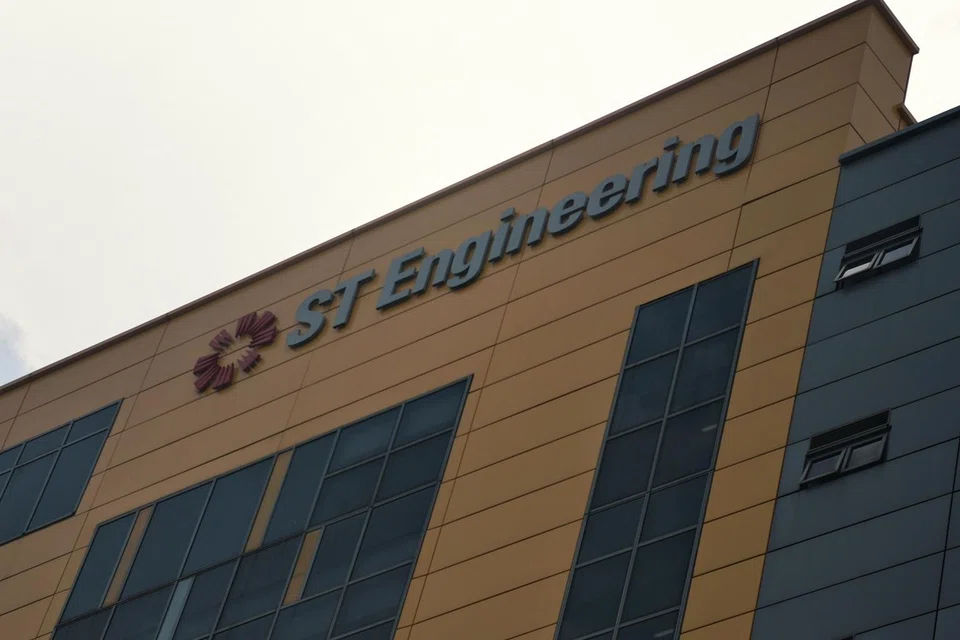
IN what marks the biggest deal ever by Singapore Technologies Engineering (ST Engineering) S63 , the engineering and aerospace giant has agreed to fork out US$2.68 billion in cash to buy two US-based firms that provide technical solutions and engineering services to the transportation industry.
The mainboard-listed firm's acquisition of the entire interests in TransCore Partners and TLP Holdings will accelerate the growth of its smart city business and position it as a market leader in smart mobility, ST Engineering's group chief executive Vincent Chong told analysts and the media at a briefing on Sunday.
An extraordinary general meeting will be held for shareholders to vote on the transaction, which is expected to close by end-March 2022, said the firm in a statement.
But the mega deal appears as good as done - barring regulatory challenges - as ST Engineering's majority shareholder Temasek Holdings, which owns a 50.8 per cent stake, has given its blessings.
TransCore has over 80 years of history, and provides technical solutions and engineering services for applications encompassing next-generation electronic toll collection, congestion pricing, intelligent transportation systems (ITS), back office solutions and radio-frequency identification (RFID) products.
The North America electronic toll collection and ITS markets, in which TransCore has leadership positions, are expected to grow from US$2.5 billion in 2021 to more than US$4 billion in 2030, ST Engineering noted.
TransCore also has been contracted to deliver a congestion pricing project that will levy a fee on drivers entering the busiest parts of Manhattan, New York - the first ever such project in the US.
TransCore's electronic toll collection, congestion pricing and ITS solutions are "highly complementary" to ST Engineering's smart integrated mobility solutions, the Singapore firm added, and will result in a comprehensive suite of "world-class" smart mobility offerings for customers.
Cedric Foo, ST Engineering's group chief financial officer, said the purchase will accord ST Engineering "plentiful opportunities" to grow its smart city business. "We can try to do this organically. But you can imagine how slow it would be to gain the channel into US customers and the transit authorities," stated Mr Foo.
The company's top management stressed that they have been "rigorous" in evaluating potential acquisitions and valuing the target, as well as gathering input from experts across various domains to ensure a robust and comprehensive assessement process.
"As you'd expect, given the scale and size of this deal, the rigour of our evaluation process...was high," said Mr Chong. He was responding to questions on the forecast by Roper Technologies, a New York-listed firm and the seller, which expects TransCore to make lower revenue and earnings before interest, tax, depreciation and amortisation (EBITDA) in FY2021 from the previous year.
"We've taken many factors into consideration in arriving at our investment decisions - past cash flow, EBITDA, profit, revenue performance, and then, the pipeline of opportunities, recurring income, new growth opportunities , strong backlog that offers revenue visibility, synergies ...and other upside potential that we have not yet incorporated in our forecast," he added.
TransCore had a backlog or order book of US$1.2 billion as at July 31.
The purchase is expected to be earnings accretive from the second year post-acquisition for ST Engineering, which will fund the deal largely via US-dollar denominated debt, as it seeks to capitalise on the low interest rates.
The company's balance sheet "will remain very strong and we believe our rating will be very high", noted Mr Foo who declined to disclose the firm's gearing ratio post-acquisition. ST Engineering said its dividend payout will remain strong as TransCore's operations are expected to generate healthy cash flow. The Singapore company has a track record of paying total dividends of 15 Singapore cents per share.
According to Mr Chong, TransCore is expected to be cash-flow positive from the first year as the US company is in a "very strong cash flow position" with a very high EBITDA margin. He also stated that ST Engineering has "very strong" retained earnings.
Based on the unaudited financial statements of the TransCore business for the six months to June 30, 2021, the profit including discontinued operations that have not been disposed of and before income tax and non-controlling interests was about US$54 million.
The net asset value and the net tangible assets (NTA) of TransCore as at June 30, 2021 were about US$584 million and US$219 million respectively. On a cash-free and debt-free basis, the transaction translates to an enterprise value to EBITDA ratio of 16.2 times after accounting for tax benefits.
Assuming that the deal had been consummated end-2020, its pro forma financial effects on the consolidated NTA of ST Engineering would be a deficit of S$0.90 per share, compared to a positive S$0.18 before the acquisition.
TransCore is a business low on hard assets, with most of its value in intellectual property, noted Mr Foo. "So naturally when you buy companies like this, the NTA ... can be rather low. And when you add them to ST Engineering's overall NTA, it has a dilutive effect, and therefore the NTA actually return negative. But this is merely an accounting entry."
Assuming the deal was done on Jan 1, 2020, its pro forma financial effects on ST Engineering's consolidated earnings for FY2020 would be S$587 million post-acquisition versus S$522 million pre-deal, or earnings per share of S$0.19 compared to S$0.17.
If the transaction fails to get the green light from the Committee on Foreign Investment in the US (CFIUS) by Oct 1, 2022, ST Engineering said it will be liable for a termination fee of US$120 million to the seller. But this may be unlikely given the group has obtained the nod from the regulator for all eleven past acquisitions in the US.
ST Engineering shares closed down by 0.79 per cent or three Singapore cents to S$3.78 on Oct 1.