

ST Engineering, DSO set up JV in satellite analytics
Singapore
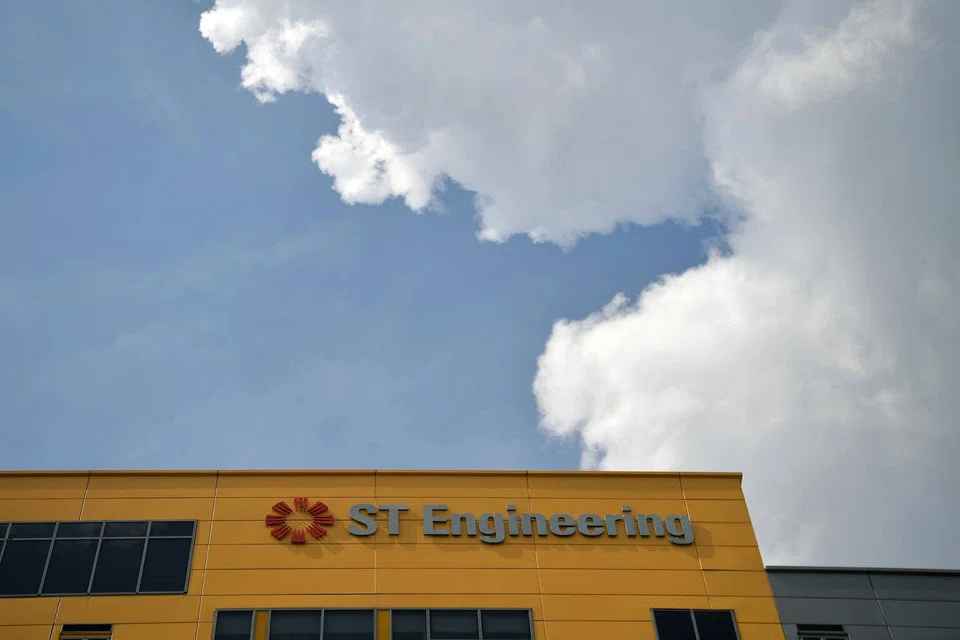
ST Engineering is setting up a joint venture company with DSO National Laboratories with an eye on unlocking new business opportunities through the latest advancements in satellite technology, the company announced on Thursday.
The new entity, called ST Engineering Geo-Insights, will offer data analytics services based on satellite imagery to address growing global demand for timely data insights in sectors such as construction, maritime safety and agriculture.
Emerging space technologies present Singapore with an entirely new frontier to create new industries, said Minister for Trade and Industry Chan Chun Sing, who was the guest of honour at the Global Space and Technology Convention at St Regis Singapore where the agreement was signed.
"As a land-constrained country, Singapore's challenge has always been about how we can transcend our geographical limitations and space technology allows us to do exactly that," said Mr Chan. "It has a direct impact on the kind of business opportunities and jobs we can create ... in the sense of applications in surveillance, telecommunications, encryption and data analytics."
The advent of low-cost small satellites has disrupted the satellite industry.
Typically weighing around 500kg, and up to 20 times cheaper and 10 times faster to build than traditional large models, small satellites are making large volumes of satellite imagery readily available as they can be launched in bulk for wider coverage areas.
ST Engineering had previously entered into a joint venture with DSO and the Nanyang Technological University (NTU) in 2011 to design and produce earth observation satellites.
Tang Kum Chuen, deputy president of ST Engineering's electronics arm, said: "We are taking the information from the satellites we built under the first venture and fusing it with information on the ground.
"So for example, we match the data we get against the customer's blueprint of their construction project and tell them whether construction is progressing as planned or if there has been any deviation. This is very useful for mega construction sites, which are nearly impossible to monitor from the ground." Another potential use of the satellites, he added, is in maritime safety.
Ship movements can be tracked to check for any illegal activities or deviations from maritime traffic rules."With the data we can alert the port authority in advance so that the appropriate action can be taken quickly," Mr Tang said.
Jonathan Hung, president of Singapore Space and Technology Association, said that high costs have always been a barrier of entry for potential players in the US$350 billion space industry, but low-cost small satellites are a game-changer for countries such as Singapore.
"Singapore is not known to be a space-faring nation but we have a lot of other capabilities, like in smart manufacturing," he said. "Lower costs allow us to be agile and bring our capabilities to bear on various applications."
TRENDING NOW
Far East Organization’s The Serra Residences sells less than a quarter of units released at average S$3,460 psf

Philippine power giant First Gen rebuffs foreign offers, plans up to US$2.6 billion in expansion

Once staunchly pro-China, Malaysian Chinese businesses are now distancing themselves from Beijing

Is stagflation returning? That mostly depends on the Iran war

