ST Group Food Industries scales up its business amid pandemic
Worst may be over as the group's Australia and New Zealand core markets see a pickup in business activity as lockdown measures ease.
Claudia Tan HS
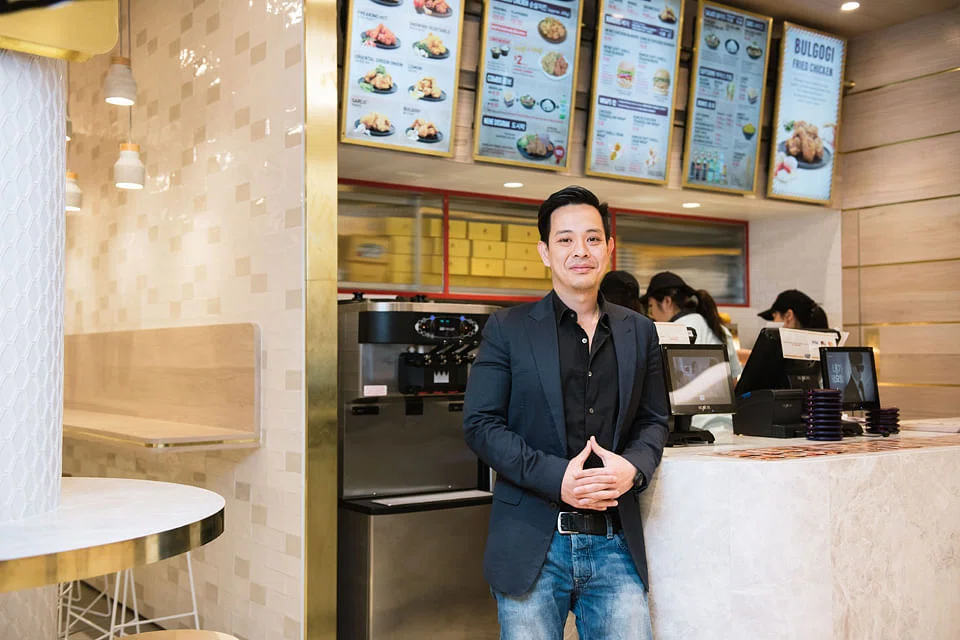
EVEN as the food and beverage industry reels from the pandemic, ST Group Food Industries is on track to open eight new food outlets by year end, and is hunting for more new sites amid a softening rental market.
The company, headquartered in Melbourne, owns exclusive franchise and licence rights to brands like PappaRich, NeNe Chicken, Hokkaido Baked Cheese Tart, Gong Cha, Ippudo, Go Noodle House and i Darts for Australia, New Zealand, the United Kingdom and Malaysia. It also owns two Japanese dessert brand concepts Pafu and Kurimu.
Chief executive officer Saw Tat Ghee first dipped his toes in the F&B industry when he was just a student at the University of Melbourne, where he rented a single unit at the university's union house to sell beverages.
That was when he saw the opportunity to cater to the Asian community in Australia.
"The brands that we focus on are mostly Asian brands from South-east Asia like Malaysia, South Korea and Singapore," Mr Saw told The Business Times.
ST Group Food Industries launched its first restaurant in 2012, a PappaRich outlet in Melbourne, following a joint venture agreement with the PappaRich Group.
"We were the first to have brought the (PappaRich) brand from Malaysia to other countries in the world. We started out with three outlets and we grew to 34 PappaRich outlets currently," said Mr Saw.
As business took off, Mr Saw included more brands in the company's portfolio to increase its footprint in the countries it operates in. ST Group Food Industries now has over 120 outlets, with several more in the pipeline.
This was in part thanks to the group's ability to efficiently tap on new trends in the F&B scene.
"One of our key strengths is that we are able to identify new and upcoming trends and what is missing from the existing market," said Mr Saw.
For instance, NeNe Chicken - a Korean fried chicken brand - was introduced in response to the growing prominence of the South Korean wave, said Mr Saw.
Bubble tea, on the other hand, had become almost a "necessity", said Mr Saw who had launched the first Gong Cha outlet in Auckland back in 2015.
While the initial intent is to cater to the Asian palate, the South-east Asian flavours have been gaining traction among non-Asians.
Non-Asians now make up around 30 per cent of ST Group Food Industries' customers compared with just 10 per cent when the business first started, said Mr Saw.
Also contributing to the group's steady growth is its commercialised central kitchen in Melbourne.
The 3,000-square-metre central kitchen allows much of the food preparation including processing of key ingredients like marinades to be completed ahead of time. These food products are then delivered to the food outlets in Australia and New Zealand to cut down time and manpower required to serve up the food.
The cost savings allowed ST Group Food Industries to scale quickly across Australia and New Zealand, the two countries where the group derives over 90 per cent of its revenue.
In October, ST Group Food Industries opened new Ippudo and PappaRich restaurants in Auckland and Melbourne, respectively.
By December, the company plans to open new outlets for NeNe Chicken, Gong Cha, PappaRich and Go Noodle House in Australia, London and New Zealand.
This is despite the group having suffered a dip in earnings as business took a hit from the pandemic.
For the financial year ended June 30, net profit fell 56.6 per cent to A$848,858 (S$831,938) compared with A$2 million a year ago. Revenue fell 15.6 per cent to A$44 million from A$52.1 million in the previous financial year. The company attributed the weaker numbers to the adverse impact of Covid-19 on its F&B retail sales, supply chain sales and franchise revenue.
"Basically, the pandemic affected us greatly from the months of April to June where the majority of the cities were in lockdown," said Mr Saw.
But the worst may be over for the group as its core markets in Australia and New Zealand are seeing a pickup in business activity as lockdown measures have eased there.
Against this backdrop, UOB Kay Hian had in October initiated coverage on ST Group Food Industries with a "buy" rating and a S$0.14 target price. UOB Kay Hian's analysts said in the report that they expect net profit to grow at a 47.3 per cent compound annual growth rate over FY20 and FY23.
The group's long-term master franchise agreements will allow continued expansion of outlets to drive growth, said the analysts.
Indeed, Mr Saw is already keeping an eye out for favourable leases for potential new store openings.
He added that rentals have gone down as much as 20 per cent in the central business district (CBD) compared with pre-pandemic times, which give the group opportunity to "lock in rents at cheaper rates" should the rent be "reflective of traffic flow".
This comes as the CBD is seeing smaller crowds, unlike in neighbourhood malls where footfall has increased as a result of stay home and work from home measures.
The group is also in talks with landlords regarding having a higher turnover rent component instead of a high base rent.
This ensures that the risk of sales not rebounding quickly is shared between the tenant and landlord, Mr Saw explained.
That said, Mr Saw is optimistic that stronger recovery is underway, particularly as the holiday season draws closer. People in Australia and New Zealand tend to travel to other countries after Christmas and in January, said Mr Saw.
"This time round no one can travel so they may end up spending money back in their home countries," said Mr Saw.
Shares of ST Group Food Industries last traded on Nov 3 at 11.5 Singapore cents.