

StanChart banks on international ties amid demand for cross-border wealth needs: James Lye
It is part of the lender’s wider strategy to grow its affluent client business

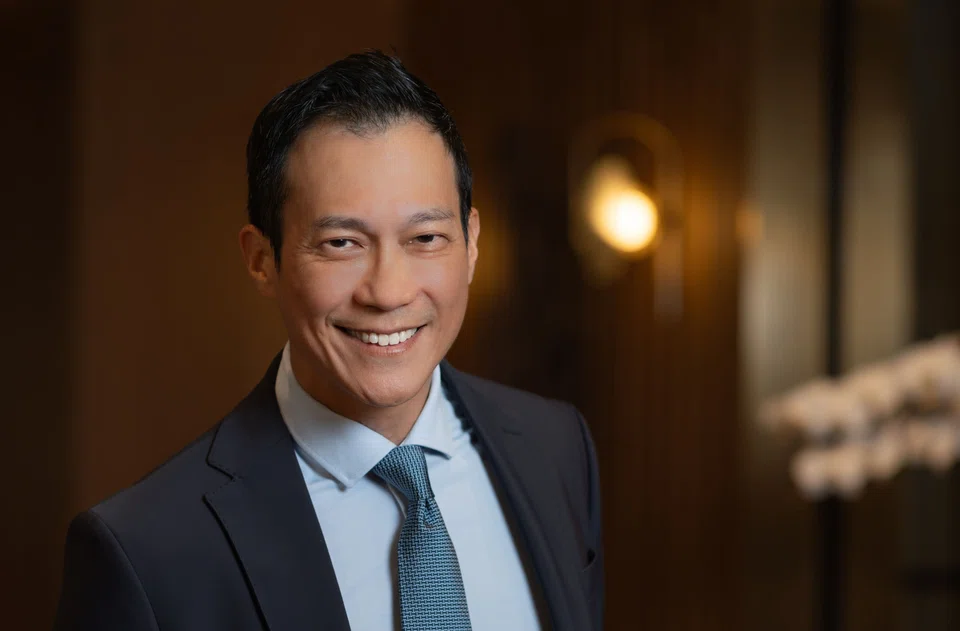
INTERNATIONAL banking is increasingly becoming a key driver for Standard Chartered Bank’s affluent business, as more clients look for wealth offerings outside of their home jurisdictions, said James Lye, StanChart’s global head of international banking.
“Increasingly, (clients’ needs and our international corridors) play a part in driving where our growth is,” Lye said on Wednesday (Jun 5).
StanChart’s international banking proposition is part of its wider strategy to grow its affluent client business and in the wealth management space.
The affluent client business reported an income of US$4.6 billion in 2023, from US$3.7 billion the year before, according to the bank’s annual report for 2023.
Client numbers rose to 2.3 million in 2023, from 2.1 million in 2022, which helped drive a 50 per cent rise in net inflows to US$29 billion.
The lender said that it intends to increase the number of international affluent clients to over 375,000 – from 274,000 as at the end of 2023 – by 2026.
This comes as more clients are looking for cross-border offerings, Lye said.
Nearly seven in 10 clients across the markets it surveyed send money internationally, according to RFI Global’s international banking report for 2023, commissioned by StanChart. The United Arab Emirates (UAE), Indonesia, Malaysia and Singapore topped the list.
Some 20 per cent of consumers also hold cross-border banking products, said the report.
The top reasons for cross-border needs were to gain greater returns on investments, to have access to more banking and investment products, and to diversify portfolios.
For StanChart, cross-border needs of its clients include relocation, overseas investments, multi-currency payments, funding children’s education, buying a second home as an investment, investing in global protection and legacy management.
Lye noted that income from international banking clients has grown two times since 2021, while the number of such clients has also grown two times since 2021 as well.
But contributions from international banking go beyond the immediate earnings, as they act as a key proposition to appeal to clients, he noted.
“A table needs its legs; the legs without a tabletop are just legs. So it becomes a complementary conversation for all our markets when we go to our clients,” Lye said. “Whatever numbers provided will not be representative of the impact of what (international banking) means to the bank…it is part of the engine that drives overall revenue.”
Lye, a well-known actor in Singapore before joining the banking industry, expects to leverage the four wealth hubs – in Jersey, the UAE, Hong Kong and Singapore – to connect the cross-border needs of clients.
Jersey connects clients to opportunities in Asia and the Middle East, while the UAE is an offshore centre that serves the global Indian community, he pointed out.
Meanwhile, Singapore is a financial hub for Asean and South Asia, while Hong Kong is a gateway to the Greater China region.
The RFI report found that Singapore and Hong Kong are top markets for cross-border outbound flows from Indonesia, Malaysia, India and China.
One in three affluent clients in Indonesia and Malaysia hold banking products in Singapore, while almost half of affluent clients in China hold accounts in Hong Kong.
Noting that several lenders also have a similar international approach when it comes to their wealth offerings, Lye said that the bank is able to stand out by having a good understanding of the ground, even as it boasts its international links.
“We are almost like a local bank everywhere,” he added. “It’s not a magic formula that people cannot copy. But having that presence, the history and the relationship with clients through generations is not so easy to do.”
TRENDING NOW

First Resources blames El Nino, outside fires for Kalimantan hotspots amid haze scrutiny

High Court rules against Julius Baer’s Singapore trust arm in US$50 million family trust dispute
Singapore key exports jump by higher-than-expected 68.4% in September, led by non-electronics

MSCI proposes downgrading Indonesia to standalone market status

