

Steady returns keep shareholders invested amid global uncertainty: GP Industries CEO
Company proposed a FY2026 dividend of S$0.035 per share, versus S$0.03 apiece last year
Meera Pathmanathan
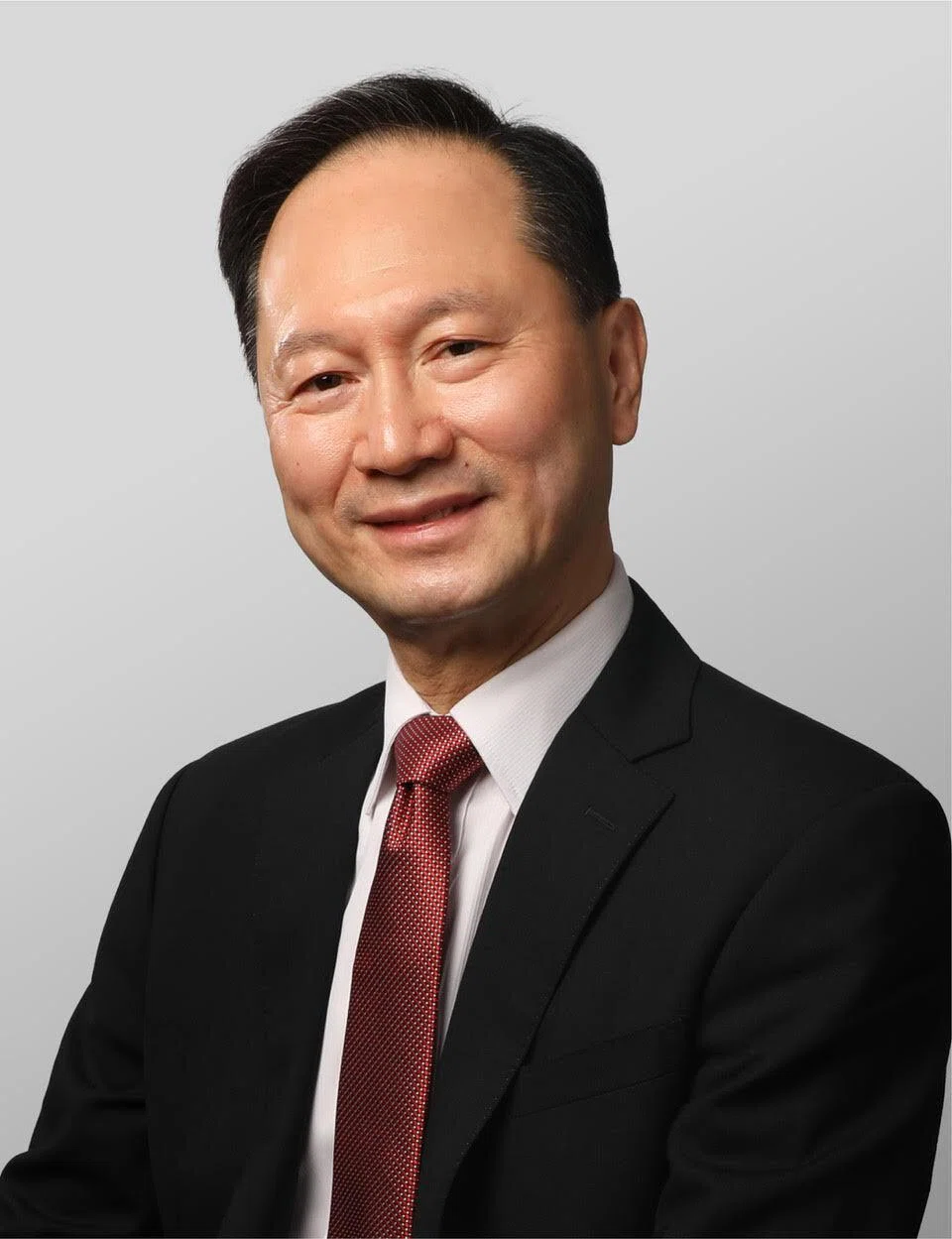
[SINGAPORE] A reputation for delivering steady dividends has helped GP Industries retain shareholder support even as global economic and geopolitical uncertainties continue to reshape the manufacturing landscape, said CEO Dr Brian Li.
In May of this year, the Singapore-listed manufacturer of consumer batteries and premium audio products proposed a total dividend of S$0.035 per share for FY2026. This represents a payout ratio of about 62 per cent based on earnings per share (EPS) of S$0.0565.
The dividend will be paid out if shareholders approve it at the company’s annual general meeting on Jul 27.
For FY2025, the company paid dividends totalling S$0.03 per share, or about 61.2 per cent of its EPS for the year.
To date, GP Industries’ shares have risen by 10.6 per cent, giving it a market capitalisation of around S$300 million.
Dr Li told The Business Times in an exclusive interview that the board’s dividend decision reflected the group’s intention to reward shareholders following a stronger-than-expected performance.
“When we did a bit better than our original expectation, the point of shareholder interest became a high priority item to be discussed,” he said.
While GP Industries does not maintain a fixed dividend payout policy, Dr Li said shareholder returns remain a key consideration in board deliberations.
“Shareholder value has always been a very important part of our business and management philosophy,” he added.



Feedback from minority shareholders at annual general meetings has also shaped management’s decision-making on capital returns.
“One of the first things that comes to mind from their point of view is that we have a steady dividend payout, which they consider to be a reliable source of income,” Dr Li said.
Improved earnings driven by acoustics business
GP Industries is the Singapore-listed subsidiary of consumer battery giant Gold Peak Technology Group, which is headquartered in Hong Kong. It owns premium audio brands KEF and Celestion.
Net profit rose 16.9 per cent to S$28.4 million for FY2026, mainly due to stronger contributions from its electronics and acoustics business, improved associates’ results and lower finance costs.
Revenue from the electronics and acoustics business rose 6.1 per cent to S$287.9 million. The increase was driven by its premium consumer and professional audio operations as well as stronger contributions from its electronics manufacturing arm.
By contrast, revenue from the battery business fell 3.2 per cent year on year, amid intense competition in the global battery market and lower sales to the Americas due to the impact of United States tariffs.
The group’s share of results from associates increased to S$19.2 million from S$13.5 million a year earlier, helped by stronger performance from high-precision cooling solutions manufacturer Wisefull. The manufacturer benefited from growing demand for artificial intelligence and data centre cooling solutions.
In addition, GP Industries recorded a one-off fair value gain of S$6.3 million from the re-measurement of a previously held equity interest in an associate. There was no such gain in FY2025.
“These gains helped offset softer performance from our battery operations, where margins were affected by tariff pressures and competition in the battery business,” Dr Li said.
The stronger FY2026 performance continues the company’s turnaround from a difficult FY2024 when it went into the red with a net loss of S$58.7 million.
The loss was mostly related to XIC Innovation, an industrial investment.
Supply chain diversification cushions geopolitical risks
Dr Li said the group’s years of supply chain diversification have left it better positioned to navigate future disruptions.
GP Industries established its first manufacturing facility in Malaysia in 1992, and accelerated its shift beyond China during the first Trump administration, when trade tensions between Washington and Beijing intensified.
The group currently operates three facilities in Malaysia, two in Vietnam and one in Thailand. It also has two plants in the United Kingdom. Today, about 30 to 40 per cent of GP Industries’ production is located outside China.
“We started diversifying to South-east Asia when it became clear there were geopolitical issues that could potentially affect exports from China over the longer term,” Dr Li said.
The diversification strategy, however, comes at a cost.
Manufacturing in South-east Asia is typically between 3 and 5 per cent more expensive than in China, depending on the product category. This is due to factors such as electricity, logistics and transportation costs.
Early investments offer silver lining
Even so, Dr Li believes the company’s move to diversify its supply chain operations overseas created a competitive advantage.
“Some of our competitors are years behind us,” he said. “We are making use of this first-mover advantage by increasing scale and consolidating smaller factories into larger factories.”
He added that geopolitical risk will remain “one key item” for the business to consider in future decisions.
“It is something that we are very conscious of and try to deal with as a high priority,” he said.
Looking ahead, Dr Li remains cautiously optimistic despite continued uncertainty.
“The years ahead are still full of challenges and remain very unsettled, especially given the economic, business, energy and political issues we face,” he said.
“However, based on the progress we have achieved and the direction we are pursuing, we remain cautiously optimistic.”
For GP Industries, maintaining investor confidence will ultimately depend on balancing long-term investment with consistent shareholder returns.
“We are a steady company,” Dr Li said, adding that shareholder value remains a priority.
Decoding Asia newsletter: your guide to navigating Asia in a new global order. Sign up here to get Decoding Asia newsletter. Delivered to your inbox. Free.
Share with us your feedback on BT's products and services






