Sterling likely to fall further; impact on Singapore firms, S-Reits mitigated by hedging, limited exposure

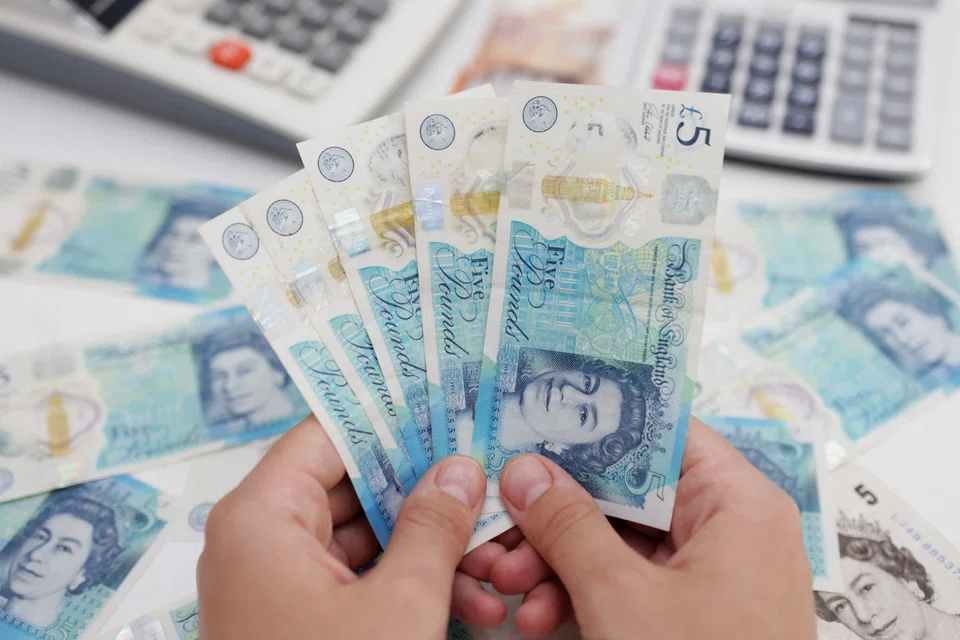
THE British pound is likely to continue to weaken as the United Kingdom pursues policies to jumpstart corporate growth amid soaring inflation caused by the European energy crisis.
Analysts predict that the pound could test further lows against the Singapore dollar, after reaching a 4-decade intra-day low on Monday (Sep 26) of 1.50.
The steep drop could hurt Singapore businesses operating in the UK.
Still, the impact on most Singapore-listed real estate investment trusts (Reits) and companies is not expected to be severe due to their limited exposure to the UK economy and the building-up of hedges.
Bank of Singapore chief economist Mansoor Mohi-uddin said the pound’s plunge is likely a result of UK Prime Minister Liz Truss’ government’s unveiling of sweeping unfunded tax cuts. (*see amendment note)
He noted the government’s announcement that it would freeze energy bills to help households and companies deal with an energy crisis resulting from the war in Ukraine. But this could lead the UK’s budget deficit to jump sharply and make investors wary of government bonds, he added.
Mohi-uddin further expects the Bank of England (BOE) will need to raise its benchmark rate faster as the plunge in the pound and increased government borrowing exacerbate inflation.
“The pound, however, is likely to slump below its (previous) all-time low of 1.05 against the US dollar, hit in 1985, as investors fear UK debt is on an unsustainable, rising path now,” he said.
“This could cause a vicious emerging market-style spiral of higher inflation, higher yields and falling activity, resulting in the government having to make emergency spending cuts and forcing a deep recession.”
Standard Chartered senior investment strategist Abhilash Narayan, too, remains bearish on the pound/Sing dollar rate over a 3-month horizon and assigned a high probability for the pair to fall further.
“GBP/SGD is likely to remain vulnerable in the near term, and a test of 1.45 over the next few days cannot be ruled out,” he said.
He added that markets are now speculating on whether there could be an emergency BOE meeting, rate hike or outright intervention to stem the pound’s decline.
“However, the latter seems to be unlikely or, at best, ineffective as UK’s foreign exchange reserves stand at around US$110 billion, constraining the BOE’s ability to stabilise the pound through direct intervention,” he said, adding that market confidence around the UK government’s credibility and its lack of decisive action to stabilise the currency could push the pound/Sing dollar rate lower.
While a number of S-Reits do have significant exposures to the UK economy, analysts believe the impact will be mitigated somewhat by hedging practices.
RHB analyst Vijay Natarajan said most S-Reits with exposure to UK assets do hedge a portion of their income 6-12 months ahead.
“Thus, while the sharp depreciation of the pound is expected to have a negative impact on distributable income, the effect will be mitigated.” he said.
DBS analyst Derek Tan echoed these sentiments, noting that Reits also tend to take out loans that match their asset exposure – creating a “natural hedge”.
Natarajan noted, however, that Reits and companies could see a greater impact on their net asset values as they do not typically adopt a balance sheet hedge.
Companies are also not expected to see much impact on their toplines due to their limited exposures to the British market.
CGS-CIMB analyst Lim Siew Khee said that City Developments , Sembcorp Industries and ComfortDelGro Corp could potentially see some translation impact, but it should be limited to not more than 5 per cent of revenue and profit.
Similarly, DBS analyst Ho Pei Hwa noted that assuming the UK contributed 8-10 per cent of Sembcorp Industries’ bottom line in the first half of 2022, a 10 per cent depreciation in the pound would reduce profit before tax by S$8-10 million. The company posted net profits of S$490 million for the latest half-year period ended in June.
RHB analyst Shekhar Jaiswal said that in ComfortDelGro’s case, foreign exchange fluctuations have had an impact on the company’s financials; but this has not been meaningful.
The bigger impact could come from the UK’s weaker economy.
“What you need to note for ComfortDelGro is that the UK will go through a sharp slowdown in economic activity; that’s an understood base case and that’s where we’ll have business impact,” he said.
*Amendment note: The article had earlier said that Mansoor Mohi-uddin is OCBC’s chief economist. He is actually Bank of Singapore’s chief economist.