

Sterling trims drop after BOE hike, China's data sends US dollar higher
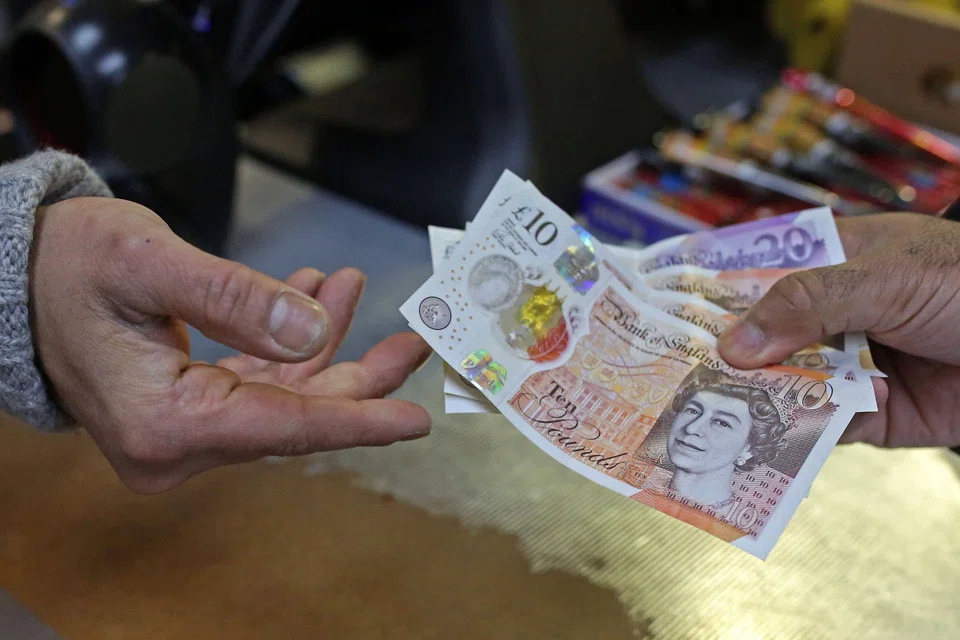
STERLING trimmed declines after the Bank of England (BOE) raised interest rates for the 12th consecutive time, while the safe-haven US dollar rose on Thursday (May 11) as more evidence of weakness in China’s post-Covid recovery clouded the outlook for the global economy.
The BOE raised its key interest rate by a quarter of a percentage point to 4.5 per cent on Thursday as expected by a Reuters poll, taking borrowing costs to their highest since 2008 as it seeks to curb the fastest inflation of any major economy.
The UK central bank no longer predicts recession, but it now expects inflation to be slower to fall than it had hoped, mostly due to unexpectedly big and persistent rises in food prices.
Sterling edged up 0.2 per cent to US$1.2597, from a 0.4 per cent fall before the BOE decision.
“The change in the underlying assumptions was slightly on the hawkish side and they upgraded GDP (gross domestic product) and inflation expectations, and also stressed tightness in the labour market,” said Peter Schaffrik, global macro strategist at RBC Capital Markets in London.
The US dollar rose against the euro and other major currencies following the release of Chinese data showing consumer inflation almost flatlined last month.

It had slid this week on the back of slowing US inflation, which bolstered confidence that the Federal Reserve was done hiking interest rates.
The slowing Chinese inflation, suggesting more stimulus may be needed to boost a patchy post-Covid economic recovery, came on the foot of data earlier in the week showing an unexpected decline in imports.
The onshore yuan slipped as low as 6.9427 per US dollar, a level last seen on Mar 10.
The US dollar index measuring the greenback against a basket of six major peers including euro and sterling, rose 0.4 per cent to 101.81.
“The market is trying to assess which economy is going to slow down quicker, and is undecided how to read the latest data,” said Rodrigo Catril, senior FX strategist at National Australia Bank.
“US CPI (consumer price index) was encouraging, and should be dollar negative, but China CPI is a reminder of the ongoing issues there.”
Money market traders currently lay odds of 5 per cent on a quarter-point hike in June, and a 95 per cent probability of a pause. Three quarter-point cuts are priced in by the end of this year.
The euro also got a hit from the Chinese data, slipping 0.5 per cent to a three-week low of US$1.0929.
The Swedish krona fell 0.6 per cent to 10.2790 per US dollar.
The Aussie dollar slipped 0.7 per cent to US$0.6731, pulling away from Wednesday’s two-and-a-half-month high of US$0.6818. New Zealand’s dollar fell 0.5 per cent to US$0.6339, after briefly touching a three-month high of US$0.6384. REUTERS
Decoding Asia newsletter: your guide to navigating Asia in a new global order. Sign up here to get Decoding Asia newsletter. Delivered to your inbox. Free.
Share with us your feedback on BT's products and services






