The STI has soared over 12% this year. Here’s how much analysts predict it can still rise
Aggregated 12-month target of the blue-chip index is 4,619.49, Bloomberg data indicates

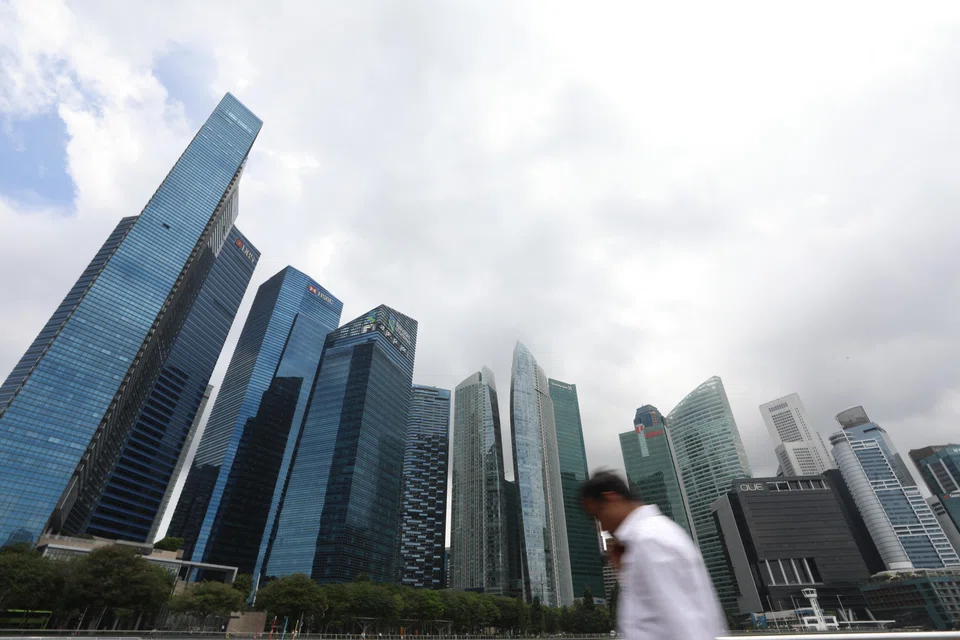
[SINGAPORE] Amid several global headwinds this year, analysts are positive on the Straits Times Index (STI), with many raising their targets recently.
This comes on the back of new measures by the government to enhance equity market returns in the city-state, via the “value unlock” package and the Equity Market Development Programme (EQDP).
Separately, the Singapore Exchange on Sep 22 also launched a new index – the iEdge Singapore Next 50 Index – tracking the performance of the next 50 stocks outside the flagship 30-stock mainboard.
The STI’s year-to-date return is 12.6 per cent, based on the close of 3,787.6 on Dec 31.
The aggregated 12-month target of the index is 4,619.49, as indicated by Bloomberg data. The STI opened 0.3 per cent or 11.68 points higher at 4,277.66 on Monday (Sep 29).
Price targets
JPMorgan analysts Khoi Vu and Rajiv Batra revised their 12-month STI bull target to 6,000. Their base target for the index was updated to 4,500, according to their Sep 21 report.
“Although this transformation may require time, the anticipated reforms hold out the promise of narrowing Singapore’s market valuation gap with its regional counterparts,” they said.
The analysts believe this could drive the market return on equity (ROE) to close to the average of 12 per cent seen in 2012 to 2013, bringing the price-to-book (P/B) valuation back to the highs of 1.9 to two times, and the STI to their 6,000 “blue sky” projection and beyond.
Meanwhile, Chua Jen-Ai, equity research analyst for Asia at Julius Baer, set her target for the STI at 4,500.
“Our target excludes dividends, which should bring potential total return to over 10 per cent when factored in,” she told The Business Times.
She noted that while large-cap stocks are not the main beneficiaries of the EQDP, they could still enjoy “positive spillover effects” from greater interest in Singapore – and should also be considered possible investment candidates for investors seeking to increase exposure to the market.
She drew parallels between Singapore’s recent efforts in market revitalisation and the reforms of Asia counterparts – such as Japan’s “P/B reform” in January 2023 and South Korea’s “Value-Up” programme in February 2024.
“The success of reforms in Japan suggests that such top-down initiatives can improve ROE and valuations for the market if well-executed, and we are positive that Singapore equities could enjoy a similar uplift,” she said in a Sep 24 note.
OCBC Investment Research and UOB Kay Hian analysts set their targets for the STI in a similar range as well, at 4,504 and 4,602, respectively.
Adrian Loh, head of equity research at UOB Kay Hian, said his top-down STI target was based on the research house’s forecast of 2026 earnings growth of 5 per cent for the index’s stocks.
“At our new STI target, the index would trade at a forward price-to-earnings (P/E) multiple of 13.4 times, which we do not view as stretched for a Singapore market that is long on quality defensive names,” he said in his Sep 8 report. “If we impute a 10 per cent premium to our P/E multiple, the STI could trade up to 4,877.”
Shekhar Jaiswal, head of equity research at RHB Group Research, said the group’s last published target for the STI – on Aug 18 – was 4,300 by end-2025. He added that the research house was currently in the process of updating this target.
The analyst told BT that he expects Singapore’s earnings outlook to remain muted in the near term. However, he forecasts a strong recovery for Singapore equities in 2026.
“For our coverage universe, we expect 2026 market cap-weighted earnings-per-share growth (ex-real estate investment trusts) of 6.9 per cent, while Reits under coverage should deliver 2026 distribution-per-unit growth of 4.2 per cent,” he said.
Impact of Fed rate cuts
On Sep 17, the US Federal Reserve lowered its overnight funds rate by a quarter-point to a range of 4 to 4.25 per cent. This is the first rate cut since December, with more generally expected to come under the Trump administration.
The overnight funds rate reduction, together with a weaker US dollar, will boost liquidity in Asian markets such as Singapore, said the JPMorgan analysts.
“Singapore has been among the countries that have seen strong capital inflows so far in 2025, which has led to the Singapore dollar firming up and interest rates declining sharply,” they said.
Economists from JPMorgan expect the Fed to cut the policy rate by 75 basis points over the next six months. “Liquidity expansion would therefore continue, which, in our view, will support flows into Singapore equities,” they said.
On Sep 25, the city-state’s six-month Treasury bill yield rose to 1.44 per cent after falling for 13 consecutive issuances since Mar 26.
Still, bond yields are trending in lower territory, said UOB Kay Hian’s Loh, noting that dividend equities yielding 4 to 6 per cent are looking compelling relative to the 10-year Singapore government bonds.
“This is considering how they come with sustainable payouts supported by strong cash flow, low gearing and resilient balance sheets,” he explained. He added that his target for the STI implies a roughly 8 per cent upside.
Jaiswal, meanwhile, flagged that the STI’s earnings-per-share growth estimate by Wall Street is 5.4 per cent in 2026 and 7.3 per cent in 2027.
To the RHB Group Research analyst, a benign inflation backdrop, falling Singapore overnight rate average and 10-year yields, and his base case for two Fed rate cuts in September and December, should support Singapore equities. This is together with supportive domestic policy headroom and global risk aversion.
“Against this backdrop, we see scope for P/E multiple expansion alongside improving earnings growth in 2026 and 2027,” he said.