

STI highlights from 2020
 Add BT as a preferred source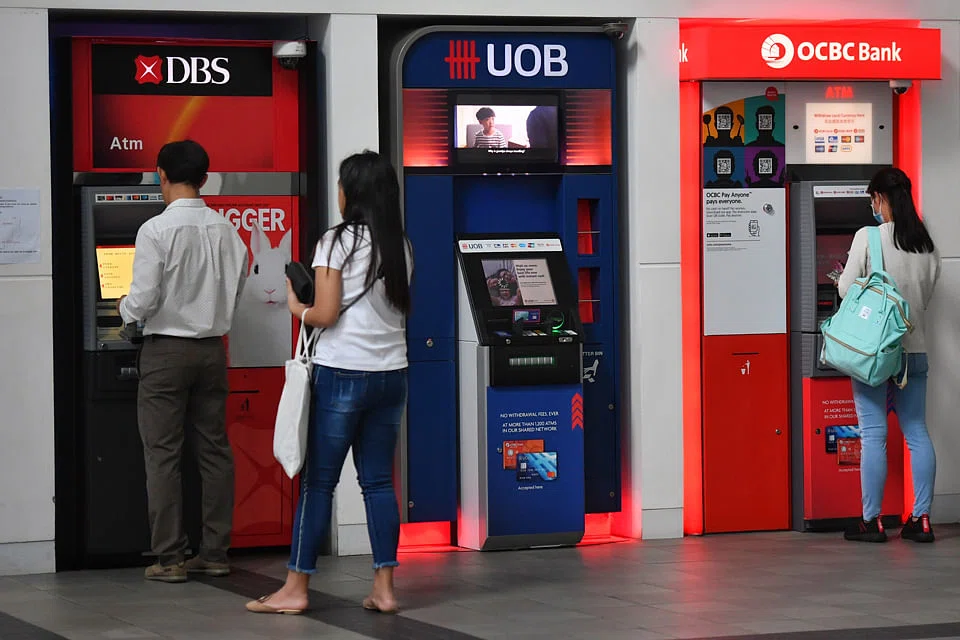
FOR the 2020 year through to Dec 2, the Straits Times Index (STI) generated a decline of 8 per cent.
This negative return was on a dividend-inclusive total return basis, an important detail, given that the STI maintains a higher dividend yield than the FTSE Country Stock Indices across the region.
However, rather than yield, participation in the Singapore-listed STI Exchange Traded Funds (ETFs) indicates that broad market weakness was the main reason for investors to build their exposures in 2020.
It was during the June and September quarters, that participation in these two ETFs soared.
STI ETF milestones
The two STI ETFs have seen S$950 million of combined net inflows (also referred to as net unit creations) in the 2020 year to Dec 22.
Navigate Asia in
a new global order
Get the insights delivered to your inbox.
This has brought their combined assets under management (AUM) from S$1.16 billion at the end of 2019, to S$2.08 billion on Dec 23.
While the STI declined 8 per cent, the size of the combined STI ETF funds grew close to 80 per cent.
Much of the growth in participation was booked prior to November, which saw the STI generate a total return of 16.2 per cent, its strongest month of gains since May 2009.
Introduced in 2002, State Street Global Advisors manages the SPDR STI ETF, while Nikko Asset Management manages the Nikko AM STI ETF, launched seven years later in 2009.
Both these two ETFs currently have a total expense ratio of 0.3 per cent.
The combined AUM of the two STI ETFs took 17 years to reach the S$1.0 billion milestone in June 2019, and just 17 months to reach the S$2.0 billion threshold in November 2020.
The SPDR STI ETF AUM also crossed the S$1 billion threshold for the first time in its history back in June 2020.
The SPDR STI ETF is the most popular of global funds that track Singapore equities, with an AUM almost twice the level of the US-listed iShares MSCI Singapore ETF.
Secondary market trading turnover of the two ETFs has also surpassed S$1.76 billion this year, a level that is close to 300 per cent higher than the full-year trading turnover in 2019.
Aside from the growth of ETFs, the platform for Singapore stock investing has changed significantly over the past 10 years, so much so that there are now more than 60,000 individual investors that are on regular sharing saving plans, which include a monthly means to invest in the moves of the STI ETFs.
The recent growth of digital wealth managers is also bringing the ways and means to invest to new levels.
The STI's two new joiners in 2020, Keppel DC Reit and Mapletree Industrial Trust (MIT) invest in data centres. While the former Real Estate Industrial Trust (Reit) was Asia's first pure play data centre to list in Asia, 39 per cent of the AUM of the MIT portfolio invests in data centres.
An acquisition of a data centre in Virginia in the United States, due to be completed in the first quarter of 2021, is expected to increase the MIT data centre portfolio exposure to 41 per cent.
With the strong digital trends seen this year, these two Reits provided defensive returns for the first 10 months of the year.
Through to the end of October, Keppel DC Reit ranked among the top five performing global Reits with a market value of at least US$500 million with MIT ranking among the top 30.
Together, these two Reits make up between 3 per cent and 4 per cent of the STI weights.
Keppel DC Reit and MIT averaged a 37 per cent total return on close to S$100 million of net institutional inflow in the first three quarters of 2020.
For the fourth quarter through to Dec 23, the trio had averaged 7 per cent declines on S$140 million of net institutional outflow.
Keppel DC Reit debuted in 2014 with a market value of S$821 million, with a string of acquisitions seeing its market value grow more than fivefold to S$4.5 billion.
Its portfolio AUM has grown from S$1 billion to S$2.9 billion as of Sept 30, excluding Intellicentre 3 East Data Centre with development expected for completion in the first half of FY21.
MIT debuted in 2010 with a market value of S$1.7 billion, with its acquisitions, build-to-suit projects and asset enhancement initiatives seeing its market value growing close to fourfold at S$6.7 billion.
Its portfolio AUM has grown from S$2.2 billion to S$6.6 billion as of Sept 30.
In mid-October, the manager of Keppel DC Reit noted that the cloud is increasingly dominating the IT landscape and according to Synergy Research, annual spending on cloud services could double in under four years.
MIT joined the STI on June 22, while Keppel DC Reit joined the STI on Oct 19.
The cornerstone of the STI
Much of the STI performance in 2020 hinged on the performance of the local banks.
The three banks, DBS Group Holdings (DBS), Oversea-Chinese Banking Corp (OCBC) and United Overseas Bank (UOB) currently have a 40 per cent day-to-day impact on the performance of the STI.
Moreover, big global banks, facing the same income and provision challenges, moved mostly in unison for most of the year.
The day-to-day moves of global bank indices were 95 per cent correlated with DBS, OCBC and UOB for the 2020 year through to Dec 23.
The financial services sector was among the sectors that benefited most from the rotation from industries with momentum, to the big sectors perceived to be trading at value in November.
DBS, OCBC and UOB averaged 21 per cent declines in total return on S$3.9 billion of net institutional outflow in the first three quarters of 2020.
For the fourth quarter through to Dec 23, the trio had averaged a 22 per cent gain on S$1.6 billion of net institutional inflow.
The three banks have consecutively reported combined net interest income above S$5.0 billion since Q1FY18.
The trio average a return-on-equity (ROE) ratio of 11 per cent compared to the median ROE of the top quartile of globally listed banks by market value at 8 per cent.
Since 2010, DBS, OCBC and UOB have increased their combined annual income segmented to greater China by 175 per cent.
While the trio have trimmed FY20 dividends to 60 per cent of FY19 levels to bolster ability to serve credit needs and absorb potential shocks, DBS, OCBC and UOB also remain among the top 10 constituents of the FTSE Developed Asia Pacific ex-Japan Sustainable Yield Index.
Global Finance Magazine also ranked the three banks Asia's safest banks again for 2020.
Key industry drivers going into 2021 include the ability to expand non-interest income, potential for lower provisions, net interest margin stabilisation, with focus on the extent of the earnings and economic recovery.
Digitalisation could see banks embrace more emerging frontline technologies, while these technologies also provide a means for new consumer-orientated entrants into the sector.
On Dec 10, DBS announced that it was establishing a digital exchange, enabling institutional investors and accredited investors to tap into a fully integrated tokenisation, trading and custody ecosystem for digital assets.
The year also saw the combined entity of CapitaLand Mall Trust and CapitaLand Commercial Trust begin trading as CapitaLand Integrated Commercial Trust (CICT) on Nov 3.
CICT's manager maintains that the new name reflects CICT's investment mandate to invest in quality income-producing commercial properties, including those primarily used for retail and/or office purposes, located predominantly in Singapore.
The combined entity has a total portfolio property value of S$22.4 billion (as of June 30, 2020), and a market capitalisation of S$13.9 billion making it the largest Reit listed in Singapore and among the five largest Reits listed across the Asia-Pacific.
Decoding Asia newsletter: your guide to navigating Asia in a new global order. Sign up here to get Decoding Asia newsletter. Delivered to your inbox. Free.
Share with us your feedback on BT's products and services
TRENDING NOW

Inside Indonesia’s trial of Gojek co-founder: How a Google laptop deal became a multitrillion-rupiah case

No prosecution for Seatrium over Brazilian corruption offences, High Court approves US$110 million penalty

Will the Philippines hit the brakes on a deregulated oil industry amid fuel pain?

Hao Mart shuts stores, sinks deeper into losses with four High Court lawsuits looming

