Stocks, US futures reel amid Credit Suisse turmoil
 Add BT as a preferred source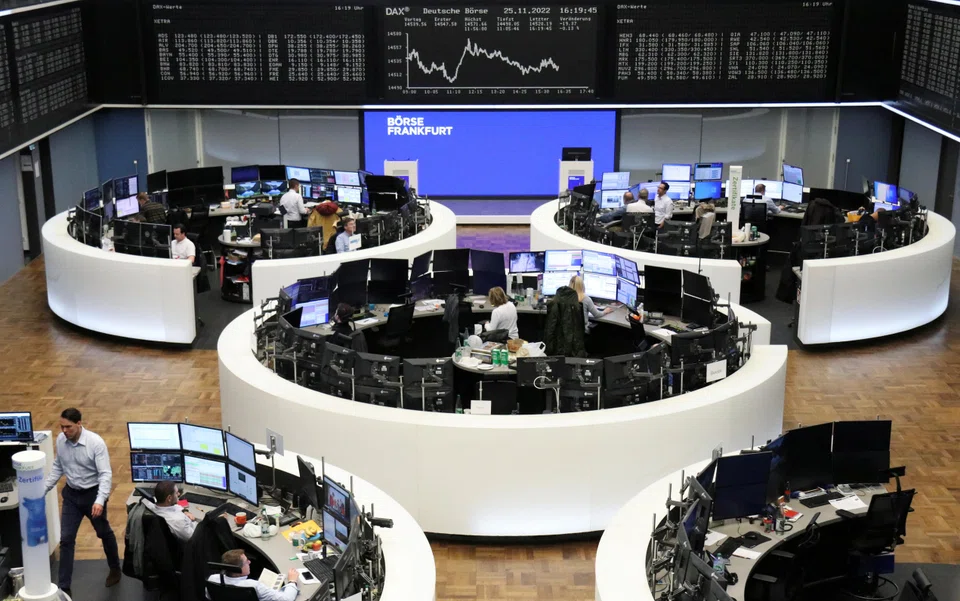
DeeperDive is a beta AI feature. Refer to full articles for the facts.
FRESH turmoil at Credit Suisse Group roiled European bank shares and dented sentiment in the US futures market, as investors remain on edge after last week’s regional-bank failures. Treasuries turned higher on haven demand.
Europe’s Stoxx 600 equity benchmark fell more than 2 per cent, with a gauge of banks plunging as much as 6 per cent. Credit Suisse shares slumped 25 per cent after its top shareholder ruled out more assistance, while the cost of default insurance on the Swiss lender’s short-term debt approached distressed levels.
Contracts on the S&P 500 sank more than 1 per cent, indicating Tuesday’s rebound won’t persist, as overnight gains in regional banks faded. The index plunged more than 3 per cent at the end of last week after Silicon Valley Bank’s demise before stabilising on the government rescue. Citizens Financial Group and US Bancorp lost at least 3 per cent in early trading, dragging down shares in larger lenders including Wells Fargo, Bank of America and Citigroup.
The 10-year Treasury yield fell 16 basis points, and a gauge of dollar strength gained after four days of declines.
Renewed jitters in the banking sector are complicating the task for policy makers still facing inflation pressures while having to ensure stability of the financial system. Swaps pricing is positioning for the Federal Reserve to cut interest rates by as much as 100 basis points by year-end from an expected peak in May, even after the latest data showed still-persistent inflation pressures.
“Central banks are likely to be more cautious as they monitor the tightening in credit conditions,” said Frederik Ducrozet, head of macroeconomic research at Pictet Wealth Management. “However, one major difference with previous banking crisis episodes is a more resilient macro backdrop including persistent inflationary pressures. This will make for a difficult trade-off between inflation and financial stability risks.”
Navigate Asia in
a new global order
Get the insights delivered to your inbox.
A drop in the two-year Treasury yield – the most sensitive to interest-rate moves, suggests the pendulum has swung back toward expectations the Fed will halt rate increases, as tighter lending standards at US banks lead to more restrictive financial conditions. The two-year yield fell 23 basis points after rising as much as 14 basis points earlier. Swaps are pricing in less than a single quarter-point hike next week.
“With the regional banks playing a key role in US credit extension, the Fed will not raise interest rates next week, and we have likely seen the peak in both short and long rates during this cycle,” said Torsten Slok, chief economist at Apollo Global Management.
The two-year Treasury yield has fluctuated wildly after dipping below 4 per cent on Monday for the first time since September. Just a week ago, it stood above 5 per cent after Fed Chair Jerome Powell signalled higher rates for longer.

Stocks have been on a similar roller-coaster ride. Stocks plunged 4.6 per cent last week, the worst since September, before rallying 1.7 per cent on Tuesday. Data on producer prices, manufacturing and retail sales later today may provide further clues on the outlook for policy.
Some voices are now also calling on the European Central Bank to reconsider its policy path. The central bank is seen tightening by 50 basis points on Thursday, though former Executive Board member Lorenzo Bini Smaghi said policy makers should either delay or pare back the increase to avoid a policy error. Germany’s two-year yield resumed a decline, falling 25 basis points, while the euro weakened more than 1 per cent versus the dollar.
Remarks from ratings companies on the financial sector underscored that sentiment is likely to remain fragile after the biggest American bank failures since the financial crisis.
Moody’s Investors Service cut its outlook on the sector on the heels of the trio of banking collapses over the past few days. First Republic Bank triggered a volatility halt after S&P Global Ratings placed the company on watch negative.
Traders were also digesting a slew of economic data from China, where retail sales rose as much as estimated while factory output was fractionally lower than projected. The People’s Bank of China added more liquidity than expected while holding a key lending rate unchanged. Rising housing sales provided one clearly positive signal, reflected in a rally in a mainland property index. BLOOMBERG
Decoding Asia newsletter: your guide to navigating Asia in a new global order. Sign up here to get Decoding Asia newsletter. Delivered to your inbox. Free.
Share with us your feedback on BT's products and services