

Straits Real Estate eyes adaptive China retail
It sees new retail formats, ideas and concepts in brick-and-mortar space there as it aims to double its S$1.2b in AUM in five years.
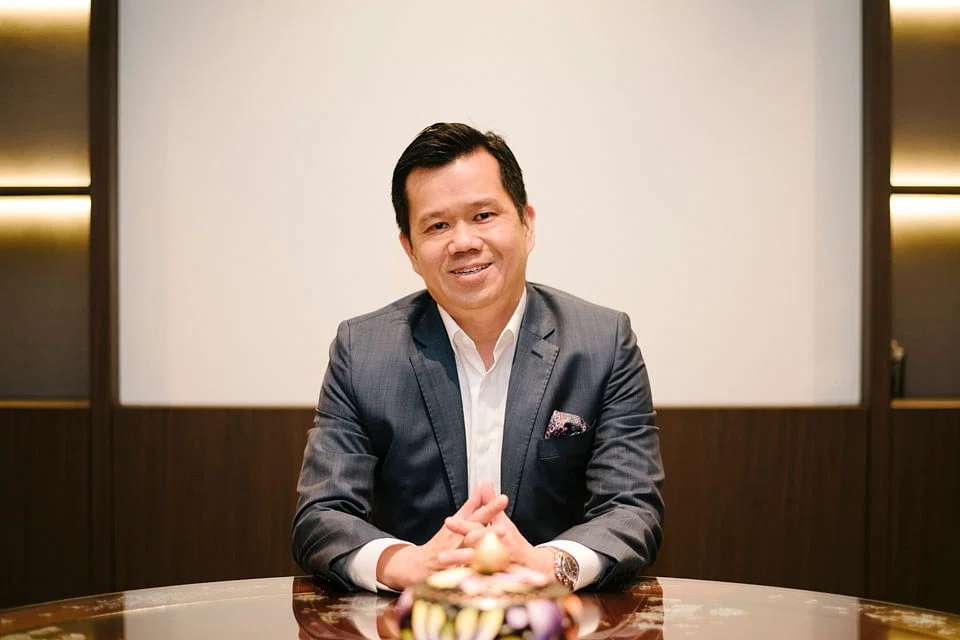
STRAITS Real Estate (SRE), a subsidiary of Straits Trading Company (STC), is exploring more investments in China's retail scene, seemingly undeterred by the explosive growth of e-commerce there.
This is because it finds that offline sales, including sales at shopping centres, have continued to expand despite the online competition, and Chinese retailers have in fact adapted quickly to changing consumer needs by reinventing themselves with new offerings.
In a recent interview with The Business Times, Desmond Tang, chief executive officer of SRE, says: "Obviously there's been a lot of talk and concern about e-commerce, how retail is being beaten up. If I'm on this and I look around all the markets that we understand, including some European and Japanese markets, I'd think the Chinese retailers have been the most adaptive to the whole new world of e-commerce."
He does not deny that there have been many "casualties" that "did not survive", but he says he also sees new retail formats as well as ideas and concepts sprouting up in the brick-and-mortar space.
Retailers are offering new store formats, new price points, new products, and new presentations, packaging, and branding to go with them, attaining standards that can rival more developed retail markets such as Hong Kong and Japan.
"As a retail property owner, you are encouraged that the tenants you work with have new ideas, and are not sitting down and giving up," he says.
SRE is a real estate investment company set up in late-2013. It is 89.5 per cent owned by STC, with John Lim (ARA) Family Office owning the rest.
In December 2014, it had acquired a mall in Chongqing, China, called Times Midtown, for about 668.4 million yuan (S$143 million).
According to its 2017 annual report, monthly footfall at the 80,000 sq m mall rose 1.9 times in the six months leading up to end-December 2017, while monthly gross sales at the mall increased 2.1 times over the same period.
E-commerce isn't all bad
Mr Tang says: "That's the resilience we've seen in retail in China." In that sense, e-commerce "isn't all bad" because it has forced old department store formats, which started in the late 1980s and usually enjoy prime locations, to switch up their game for their own survival.
"If it hadn't been for e-commerce and the change of shopping habits among shoppers, then the need to change would not be so apparent," he says.
For its fiscal year 2017, SRE's return on invested capital for the year was 4.6 per cent, while return on equity was 7.2 per cent. It posted a full-year after-tax profit of S$29.3 million for FY2017.
While SRE could not disclose the year-on-year growth in its profit figure, Mr Tang says that as a subsidiary, SRE contributed about 55 per cent to STC's total profit after tax.
As for SRE's realised investments, the firm has achieved an internal rate of return (IRR) of around 15 per cent upon exit, with some investments even hitting as high as 20 per cent.
For example, SRE's Great Tokyo Office Fund divested two assets - a building in the Shinagawa area and another in the Tokyo Bay vicinity - at IRRs that were above 15 per cent per annum, and equity multiples of 1.5 times or higher, outperforming their original targets.
Its ARA Summit Development Fund, which has a portfolio of mezzanine loans made to residential development projects in Sydney and Melbourne, also exited its investment in a downtown Sydney project at an IRR of 20 per cent per annum, while its ARA Harmony Fund III also sold its Mont Kiara Office Tower in Kuala Lumpur at an IRR return of 16.8 per cent per annum.
STC had led a consortium last year comprising JL Investment Group, CK Asset Holdings, Warburg Pincus and Avic Trust to successfully privatise ARA Asset Management at a price that valued the target at S$1.8 billion. Today, SRE is still an investor in the afore-mentioned funds, which remain managed by ARA.
Mr Tang adds that SRE has fully deployed its initial capital commitment of S$950 million, but some of that money has also returned to its coffers following recent divestments.
The next milestone would be for the company to double its S$1.22 billion in assets under management as at the end of last year within five years' time, Mr Tang says. Already, last year's tally showed a 27.4 per cent growth from the year before.
China strategy
So far, most of SRE's investments have been in investors' favourite markets such as Australia and Japan. These include close to 1,000 short-term residential apartments in Tokyo and Osaka - which SRE is planning to expand to other cities such as Yokohama, Fukuoka and Nagoya - as well as office buildings in Sydney and Perth.
Looking ahead, China will likely make up a larger part of its strategy. "We are slightly light in China. Given how politically stable China is now, I think it's a market that we may potentially put more resources on," says Mr Tang.
He is confident of making the move, saying: "We know China. John (Lim) has been been active and has experience investing in China; my personal team and myself too. I have been investing in China since 1995."
Prior to joining SRE in 2013, he had been co-head and managing director of Alpha Investment Partners, the real estate fund management unit of Keppel Land, and even before that, director of fund management with Prudential Insurance Company of America's Asia real estate arm named GRA (Singapore). In both former roles, he completed successful investments in China.
The other members of the senior management team in SRE also have significant China-market experience from their previous professional roles with other companies, he says.






