

Straits Trading launches shareholders' club, offering fractional investments in properties
Joining the Straits Trading Shareholders' Club is free and open to shareholders holding at least 100 shares
Claudia Tan HS
Singapore
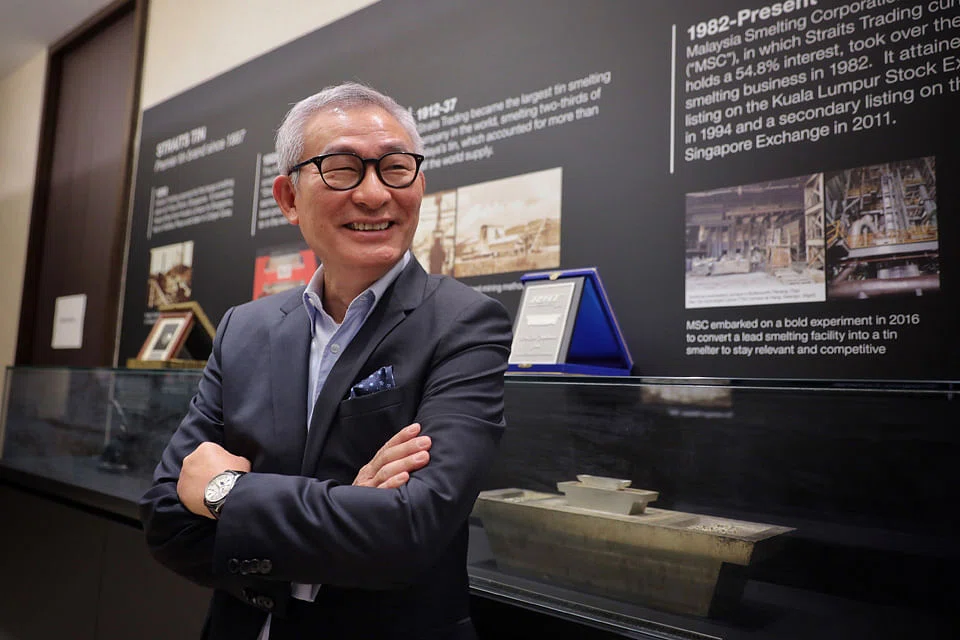
WITH property likely to remain a preferred choice among investors for long-term wealth creation, The Straits Trading Company is looking to become a major player in the securitisation of real estate. In doing so, it also hopes to create value and investment opportunities for its shareholders.
This comes as the company embarks on a transformation to broaden its investor base while allowing existing shareholders to actively participate in the continued growth of the company.
The company's plan, dubbed Transformation 5.0, includes a new shareholders' club. Straits Trading aims to engage active shareholders as a community and give them access to opportunities to grow and co-invest with the group, said Eric Teng, chief executive officer of Straits Developments.
"Investing in the mothership is just one part of the deal, you can do a lot more things " said Mr Teng.
"The engagement would be more active rather than just the once a year kind of engagement, which is quite standard," he added.
Joining the Straits Trading Shareholders' Club is free and open to shareholders holding at least 100 shares.
Those who are part of the club will get priority to networking sessions, webinars and product launches.
Among the club's objectives is to boost knowledge about Straits Trading as a conglomerate-investment company through interaction with management, curated market commentaries and opinion pieces.
This will help create a "relationship that is more sticky", said Mr Teng.
Accredited investors will also get access to new investment opportunities.
For instance, Straits Trading has been working on allowing shareholders to have fractional ownership of high-quality real estate and property.
While the Covid-19 pandemic had redefined the way people perceive space, Mr Teng said, property ownership is still at the top of investors' minds in the search for a steady stream of passive income as a wealth creation vehicle.
Yet there are often high barriers to entry for quality real estate investments.
Straits Trading has therefore launched investment products that will allow retail accredited investors in its shareholders' club to invest in smaller amounts for a partial ownership of real estate and property.
"Our shareholders who are asset-rich and cash-poor can find opportunity in fractional investments and stay invested in the property space without necessarily buying the whole property," said Mr Teng.
The fractional ownership model allows a group of individuals to own a fraction of an asset or entity, as opposed to owning the entire property.
For instance, a S$1 million property can be owned by 10 unrelated individuals with each contributing S$100,000. Each investor can then receive one tenth of the total yield and also have the option of exiting the investment based on the prevailing market value of the property once it appreciates.
The first offerings for accredited investors of the club include fractional ownerships in a Good Class Bungalow (GCB) on Cable Road in Chatsworth Park, and a residential development at Woollerton Park in Gallop Green.
Straits Trading has set up two investment vehicles to hold the two assets. Both will issue notes with an annual cumulative interest of 3 per cent of the subscription price, with the possibility of the distribution of special interests upon the sale of the property after five years. The investment period may be shortened or extended depending on the market value.
Minimum investment amounts range from S$200,000 to S$500,000, with no lock-in period. Although Straits Trading will be able to sell these notes to any accredited investor, priority will be given to members of its shareholders' club.
Investors also have the flexility to sell their ownership to other interested parties.
Straits Trading is a diverse group, with businesses in property, resources and hospitality. It has a 52 per cent stake in tin smelter Malaysia Smelting Corp, and a 30 per cent stake in Far East Hospitality Holdings.
Real estate, however, is by far its biggest and most profitable business segment. The company is engaged in property development as well as fund management specialising in global real estate securities.
It also owns a stake in real estate manager Ara Asset Management, and a stake in commercial real estate investment trust Suntec Reit.
Straits Trading's net profit was S$122.6 million for the six months ended June 30, 2021, up from S$5.5 million in the year-ago period. Revenue rose 62.2 per cent to S$219 million.
Nearly all of that gain was driven by the property segment. Property revenue grew 18.3 per cent year-on-year to S$23.5 million during the first half.
Net profit from real estate was S$125.4 million for the half-year, up from S$21.8 million across the same period the previous year. This was mainly due to fair value gains from the logistics properties portfolio in Australia as well as higher share of profits from a joint venture in South Korea.
Mr Teng said Straits Trading continues to be active in the property space and will be on the lookout for other opportunities it can bring to its shareholders' club.
"Property, particularly residential property, seems to be a big thing on Singaporeans' minds but we hope to move the needle to other things like hospitality and other forms of fractional products," he said.
He also does not believe offices will become obsolete despite the current widespread adoption of work-from-home arrangements.
There is still a future for office spaces in Singapore as long as these are not too expensive, he said.
Offices have already began to decentralise beyond the central business district, which is possible thanks to Singapore's connectivity and transport infrastructure, said Mr Teng, citing business parks and heartland areas as examples for office locations.
TRENDING NOW

Government to bring forward raising of retirement age, give employers more financial support to create flexi-load jobs

Indonesia stocks suffer worst plunge in nearly 30 years as MSCI proposes standalone status

If Europe goes to war, the fallout will be felt in East Asia
Natural gas to stay for the long haul beyond 2050: Singapore International Energy Week panellists

