HOCK LOCK SIEW

Straits Trading shareholders' club a commendable initiative, but it should re-think co-investment plan

Ben Paul
Published Wed, Sep 29, 2021 · 09:50 PM

    THE Straits Trading Company's announcement on Sept 8 that it had launched a "shareholders' club" to strengthen ties with investors might have left some market watchers scratching their heads.

    Over the preceding month, the real estate group that also owns a controlling stake in the world's third-largest tin producer had made a number of announcements that boosted its stock price and put it on the radar of many investors.

    In particular, on Aug 5 its shares jumped nearly 14 per cent on elevated trading volume after the news broke that ARA Asset Management - in which Straits Trading held a nearly 19 per cent stake - was being acquired by Hong Kong-listed ESR Cayman for US$5.2 billion.


    On a pro forma basis the transaction would have lifted its net tangible assets per share as at end-2020 from S$3.72 to S$5.52, the company said in an announcement on Aug 5.

    Just two days before that, on Aug 3, Straits Trading announced that its 54.8 per cent-owned Malaysia Smelting Corp (MSC) had sold 20 million new shares at RM1.90 in a placement exercise. The bulk of the proceeds have been earmarked to repay debt.

    While MSC has been affected by movement control orders related to the pandemic in Malaysia, it is positioned to benefit from the surging price of tin - which is up more than 70 per cent this year.

    MSC is also in the process of relocating its smelting operations from Butterworth to a more efficient facility at Pulau Indah, which should eventually boost its profitability.

    Going further back, to April, Straits Trading took full ownership of its real estate investment arm, Straits Real Estate (SRE), on terms that were accretive to its earnings per share.

    The group noted when it reported its earnings for the first half of 2021 that SRE had been its main money spinner, with its logistics assets in Australia and South Korea having contributed recurring rental incomes and significant fair value gains.

    For the six-month period, Straits Trading reported a more than 62 per cent year-on-year rise in revenue to S$219 million. Its earnings came in at S$122.6 million versus just S$5.5 million in the corresponding period last year.

    Its net asset value at the end of the period stood at S$4.03 per share.

    Shares in Straits Trading closed at S$3.10 on Sept 29, up 51.2 per cent this year. By comparison, the Straits Times Index is up 8.2 per cent.

    With its shares already on a tear, why does Straits Trading feel the need to create a shareholders' club to engage retail investors? Shouldn't it just focus on delivering shareholder value?

    Retail shareholder power

    Retail investors often choose to support a particular company because they have an affinity to its products, heritage or simply the manner in which it does business.

    For instance, American retail investors love The Walt Disney Co as much for its capacity to deliver shareholder value as for its wholesome movies, TV shows and theme parks.

    Reflecting this emotional connection, Disney shares were once a popular gift to children from their parents and grandparents.

    Besides having a market value that stood a good chance of rising over time, the physical share certificates - emblazoned with Disney cartoon icons like Mickey Mouse, Donald Duck and Dumbo - were also a nice decorative item for a child's bedroom wall.

    The stock certificates were so popular that Disney's decision to stop issuing them in 2013 made headlines. Shareholders of Disney can still purchase "collectible" share certificates - which are not real securities and cannot be traded on the exchange - for US$50 plus tax, according to the company's website.

    From a company's perspective, having a group of ardent investors prepared to value its stock on more than just its financial numbers is certainly advantageous.

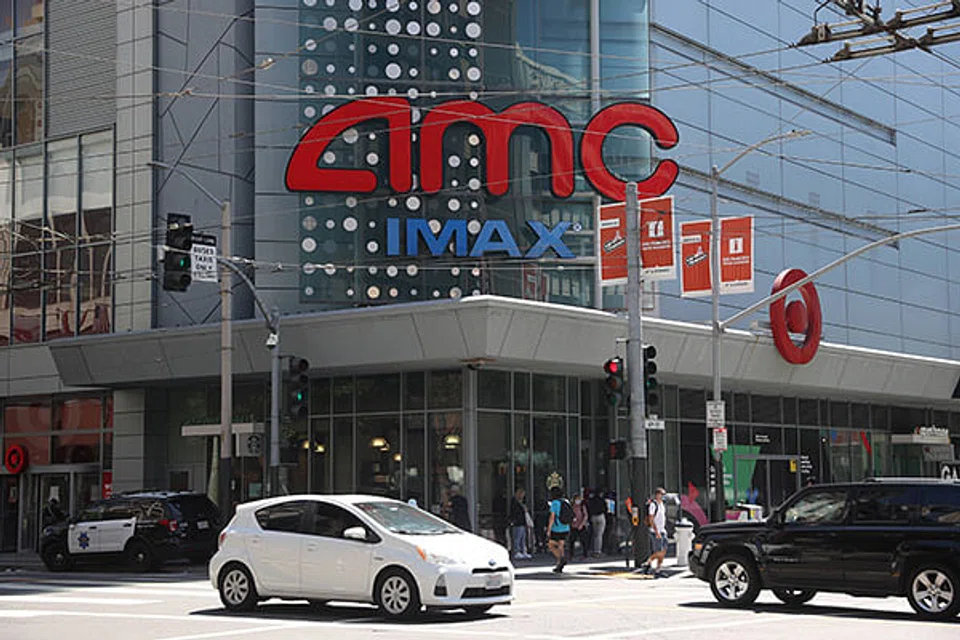
    In the wake of the meme stock frenzy, struggling US-listed movie theatre chain AMC Entertainment engaged its enthusiastic retail investor base and adroitly used its wildly elevated stock to raise buckets of cash that helped it survive the Covid-19 crunch and even contemplate acquisitions.

    AMC launched an investor relations platform in June - dubbed "AMC Investor Connect" - that delivers shareholder-exclusive promotions such as free popcorn as well as direct communications from CEO Adam Aron.

    Mr Aron has also been actively communicating with retail investors via Twitter, and has made himself available for interviews on popular YouTube channels.

    AMC raised nearly US$1.25 billion in the second quarter of 2021 alone. For the quarter, the company reported a net loss of US$0.71 per share versus a loss of US$5.38 per share for the same quarter last year.

    "There are many who shared our passion that moviegoing at our theatres should continue for future generations," Mr Aron said, acknowledging the support of retail investors. "They can take comfort in knowing that as we rebuild our company, our deeper cash reserves allow us to stay the course, to innovate again and to capitalise on opportunities around us," he added.

    While the support of small investors can change the economics of an old-economy business like AMC, the freebies that some top-end consumer goods companies hand out to their shareholders can change the economics of owning their shares for small investors.

    The LVMH shareholders' club - which is open to investors who own at least one Paris-listed LVMH share - are promised a range of perks. These include visits to Hennessy's centuries-old cellars and Louis Vuitton workshops in Asnières; and discounts on the group's wines and spirits (for deliveries in France only).

    With shares in LVMH trading at about 620 euros, a small shareholder who happens to be a connoisseur of fine wines and spirits might view the stock to be more attractively priced than a small shareholder who is a teetotaller.

    Communicate and educate

    For its part, Straits Trading has said the objectives of its shareholders' club are threefold.

    Firstly, it wants to engage its active shareholders as a community. And, secondly, it wants to enhance the level of knowledge about its businesses.

    Straits Trading is promising members of its shareholders' club will have priority access to networking sessions, webinars and product launches; and have the opportunity to interact with the group's management.

    These are commendable initiatives that other locally listed companies ought to emulate.

    Intriguingly, the third objective of Straits Trading's shareholders' club is to "enable co-investment opportunities".

    The company has said members of the shareholders' club who are "accredited investors" will have access to deals, perhaps involving real estate securitisation and participatory notes.

    This is a recipe for a public relations mess.

    As Straits Trading has indicated, these investment opportunities would only be legally open to accredited investors. In effect, the company would have to discriminate against its less-wealthy shareholders - something many will argue is against the very ethos of a public market.

    Straits Trading would presumably also have to price these co-investment opportunities on market terms, in order to not shortchange its own shareholders. Unlike a free tub of popcorn or a discounted bottle of cognac, the only point of a securitised property asset is the financial return it delivers.

    Straits Trading should focus on engaging all its shareholders on the one thing they have in common - ownership of its stock.

    The company should provide information on its businesses and how it creates shareholder value. It could perhaps also bring in business partners and independent experts to offer insight into big trends unfolding in the sectors in which it operates.

    And, if its share price keeps climbing, its retail shareholder base should keep growing.