Strategic benefits for CDL from its in specie distribution of CDLHT units

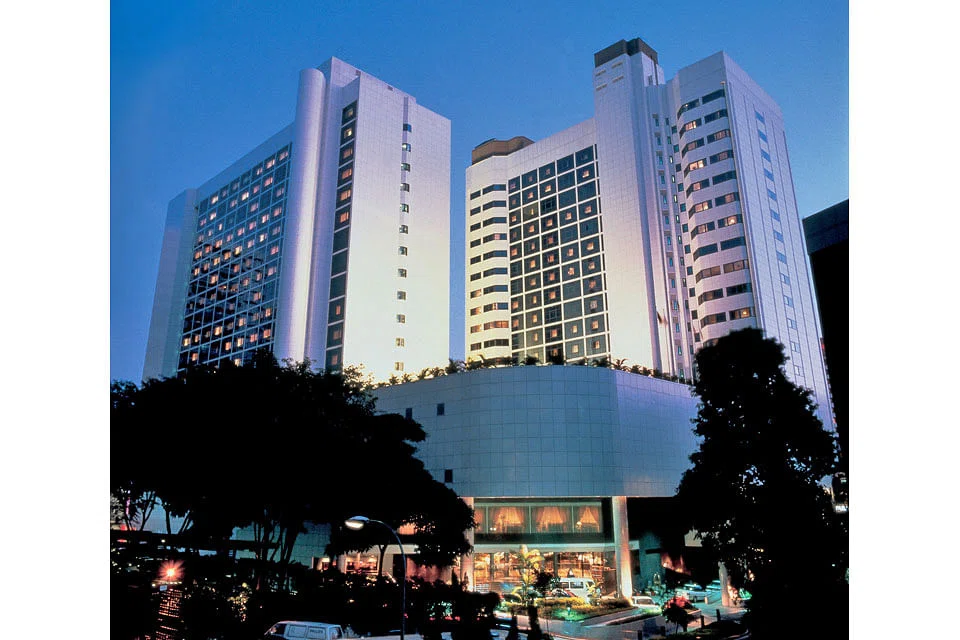
IN LATE February, when property and hotel group City Developments Ltd (CDL) posted its second-half 2021 financial results, it surprised shareholders by proposing a special distribution in specie (DIS) of 11.7 per cent of the units of its sponsored stapled group, CDL Hospitality Trusts (CDLHT).
This forms the bulk of CDL's estimated 31.1 Singapore cent total payout for FY2021, a big jump from the 12 cents in FY2020.
CDL and its top brass have said the DIS, which is subject to shareholders' nod at the annual general meeting later this month, is to reward CDL shareholders for their "unwavering support" over the past couple of years, when the group was mired in an ill-fated investment in China-based Sincere Property Group (which it has since exited) and its hotel business suffered a steep downturn in the face of the pandemic.
While most CDL shareholders would be pleased with the generous payout announced by the group for FY2021, a few sceptics have suggested that companies only offload their holdings in entities they are less than fond of.
Yet, upon close examination, CDL's reasons for this move seem more strategic.
For one thing, even if CDL did not like CDLHT's long-term prospects, it wouldn't be trying to reduce its stake in the stapled group just as borders are reopening and the hospitality sector is on the brink of a possibly sharp improvement in business.
In any case, CDL isn't selling a portion of its stake in CDLHT. Through the DIS, it will be handing units in CDLHT to its own shareholders, providing them with an opportunity to ride the hospitality sector's recovery and participate in its long-term growth.
CDL shareholders who receive the CDLHT units have a choice to either hold on to the units if they think the outlook for hospitality is improving, or to sell the units for some instant cash.
NAV boost
More importantly, CDL stands to reap some advantages from the DIS exercise. CDL will see its stake in CDLHT fall from 38.72 per cent to 27 per cent. This will result in the de-recognition of CDLHT as a subsidiary of CDL. Instead, CDL will recognise CDLHT as an associate going forward.
This means that CDL can deconsolidate CDLHT from its accounts, which will result in a gain of about S$467.5 million for CDL at profit after tax and minority interest (Patmi) level, which would enhance CDL's net asset value (NAV). This is attributed to the realisation of the fair value gains on the group's entire 38.72 per cent interest in CDLHT based on the market price of CDLHT units.
CDL accounts for its investment properties and property, plant and equipment (PP&E) at cost less accumulated depreciation and impairment losses or what is termed the "cost model", whereas CDLHT accounts for its investment properties and PP&E at fair value.
CDL had previously sold some properties to CDLHT and these continue to be recorded at their historic cost to CDL Group under the current situation where CDLHT is consolidated by CDL. Over the years, the fair values of the properties held by CDLHT have appreciated significantly since they were acquired by the stapled group. However, the fair value gains have not been accounted for in CDL's books as it adopts the cost model for its properties.
Following the DIS, CDL's current share of CDLHT's NAV (which is lower than its fair value) will be taken off from CDL Group's NAV; and, CDL will account for its remaining stake in CDLHT as an associate at fair value.
This will boost CDL's overall NAV per share as at Dec 31, 2021 from S$9.28 to S$9.66.
CDL's revalued net asset value (RNAV) per share including the fair value gains on investment properties would go up from S$15.70 to S$16.04.
Reduced gearing
Here's another plus point of the DIS for CDL. With deconsolidation, CDLHT's borrowings will be taken off CDL's books, translating to about a S$1 billion reduction in CDL's net borrowings.
CDL's total equity would also contract, though by a lower amount.
Hence, CDL's end-2021 net gearing (including fair value of investment properties) would ease from 61 per cent to 55 per cent. This gives greater flexibility for CDL, especially in a rising interest rate scenario.
Of course, one drawback to CDL of the DIS is that it will book a smaller share of CDLHT's income and to this extent, reduce its exposure to the potential recovery in the hotel market.
But there are also win-wins for both CDL and CDLHT from the deconsolidation.
Currently, as CDLHT is a subsidiary of CDL Group, any gains on the sales of assets from CDL to the stapled group are deemed as intragroup transactions and hence eliminated on consolidation.
The deconsolidation exercise will allow CDL the potential to book gains on any future asset sales to CDLHT if the transaction value is above the carrying value of the assets in CDL's books.
This should incentivise CDL to sell assets to CDLHT, playing a more active role in fostering the growth of its sponsored stapled group, of which it will continue to be the largest unit holder.
For one, CDL could potentially sell some assets in the portfolio of its privatised hospitality arm, Millennium & Copthorne Hotels.
The playing field is set to expand beyond hospitality assets, with both CDL and CDLHT venturing into other segments of the accommodation spectrum, including the private rented sector (PRS) overseas. A PRS asset is basically a residential building with the apartments leased out individually - to singles, couples or families.
CDL can develop these PRS assets and once they are stabilised, sell them to CDLHT, crystallising a profit. Further down the road, CDLHT could also stand to reap a gain if it manages to divest some of its PRS assets which it has already optimised to the growing pool of institutional investors in this field.
CDL and CDLHT may extend this model to other types of accommodation, such as senior housing and purpose built student accommodation.
The positives of CDL's proposed DIS of a partial stake in CDLHT far outweigh the negatives.
READ MORE:
- CDL surprises shareholders with distribution of CDLHT units
- CDL will be a key beneficiary in the collective sale of Tanglin Shopping Centre
- Pandemic pushes CDLHT to explore lodging and accommodation assets
- Analysts sanguine on CDL's decision to sell Sincere Property for US$1
- CDL charts next steps for Sincere, hotels after S$1.92b loss
TRENDING NOW
One-third of Singapore-listed firms at risk in severe AI downturn: MAS
‘We don’t want to stay as we are’: CEO Patrick Ng builds a more resilient Huationg
He built the Vingroup empire. Now South-east Asia’s richest man is handing some key roles to his sons
Radiant World table shows six lenders with US$870 million exposure