

Streamlined regulatory framework for fund managers fits with industry’s growth in Singapore: market observers
Navene Elangovan
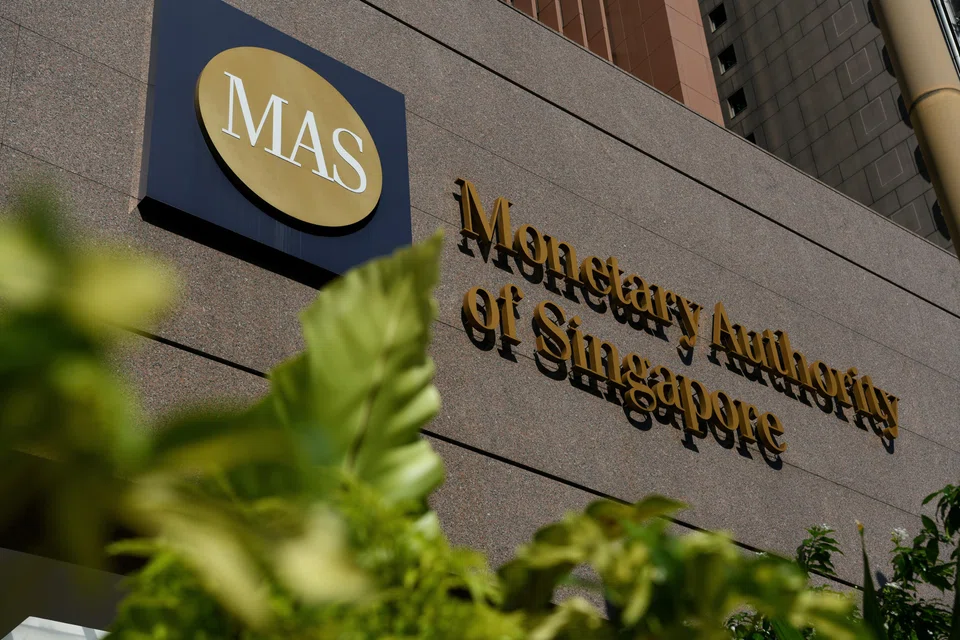
THE proposed streamlining of the regulatory framework for fund managers is timely given the growth of Singapore’s fund management industry and will help to strengthen compliance within the industry.
However, smaller players could face challenges in meeting the more stringent requirements and exit the industry altogether, said market observers.
Their comments come a day after the Monetary Authority of Singapore (MAS) announced that it would repeal the registered fund management company (RFMC) regime.
The central bank also launched a public consultation exercise on a simplified process for existing RFMCs to become licensed fund management companies (LFMCs).
MAS will respond to all applications from RFMCs within a month of submission. Successful applicants will be issued a Capital Markets Services licence upon the repeal of the RFMC regime.
RFMCs have similar admission criteria and business conduct requirements as LFMCs that only serve accredited or institutional investors (A/I LFMCs). However, unlike LFMCs, RFMCs are allowed to serve only up to 30 qualified investors and manage assets of not more than S$250 million.
MAS said on Tuesday (Oct 24) that it was streamlining the regulatory regime as the business models and risk profiles of RFMCs and A/I LFMCs have “increasingly converged, making the regulatory distinction between the two less meaningful”. There are currently 283 RFMCs in Singapore, according to the MAS website.
Robson Lee, a partner at Kennedys Legal Solutions, felt that the proposed repeal would be “in sync” with the development of Singapore’s fund management industry. He noted that the growth of RFMCs had stagnated over the last seven years and that most new entrants to the industry applied to be A/I LFMCs. “It is an appropriate juncture for Singapore to do away with a dual regulatory framework and have a standard compliance regime for fund management companies.”
The move would also help to build public confidence and strengthen oversight in governance and compliance in the fund management industry, said Emily Lai, a business risk partner at advisory firm Grant Thornton Singapore.
Eric Chan, a partner at law firm Shook Lin & Bok, pointed out that simplifying the regulatory framework would reduce confusion among the public brought about by the associated terminology. He noted that currently, RFMCs are not allowed to represent themselves as being licensed by MAS, even though the current label might suggest they are so.
The move also eases the administrative burden on RFMCs looking to transit to an LFMC status, said observers.
Daniel Yong, a senior funds partner at Withers KhattarWong, said that currently, RFMCs that choose to apply for LFMC status have to submit a fresh application to MAS for approval.
They also have to navigate around MAS’ timeline for approval, which is around six months, potentially impacting the companies’ fundraising momentum. On the other hand, MAS’ proposal will allow eligible RFMCs to change their status to an LFMC within a month and without any fee, added Yong.
Despite the potential benefits of a simplified regulatory framework, industry players and observers raised concerns over having to meet more stringent requirements in future. For example, companies under the LFMC have to report their financial returns more frequently than RFMCs. They also have a higher annual fee of S$4,000 plus S$200 per representative, as compared with S$1,000 for RFMCs.
Lai of Grant Thornton Singapore said that existing RFMCs may need more time, effort and financial resources to meet the new requirements.
Smaller companies that find it challenging to meet the higher regulatory requirements may also merge or exit the industry, added Wong Nai Seng, the regulatory strategy leader at consultancy firm Deloitte South-east Asia.
Additionally, the “higher burden” from more stringent regulations could deter young locals from starting a business in the industry, noted Deanna Seow, the executive director of Rainforest Research Investment Managers, which is an RFMC. Nevertheless, Seow said that she appreciated MAS’ efforts to minimise business disruption and costs during the transition, such as by responding to applications within a month.
She pointed out that companies under the RFMC regime can provide customers with more tailored service and personalised products, as compared with that offered by big institutions. “We hope that the proposed changes will not only help to simplify the regulatory regime but also retain the above benefits to Singapore as a financial centre.”
TRENDING NOW

Easy to rent out, hard to sell: Are buyers losing interest in Singapore’s one-bedroom condos?

GovTech retrenches another 38 staff in second round of layoffs

Stocks to watch: Seatrium, CapitaLand Investment, Keppel DC Reit, Suntec Reit, CLCT, TSH Resources

World’s largest offshore wind platform by Seatrium consortium on track to be completed by 2028

