

Stripping the layers in money laundering is a Herculean task, say experts

Uma Devi
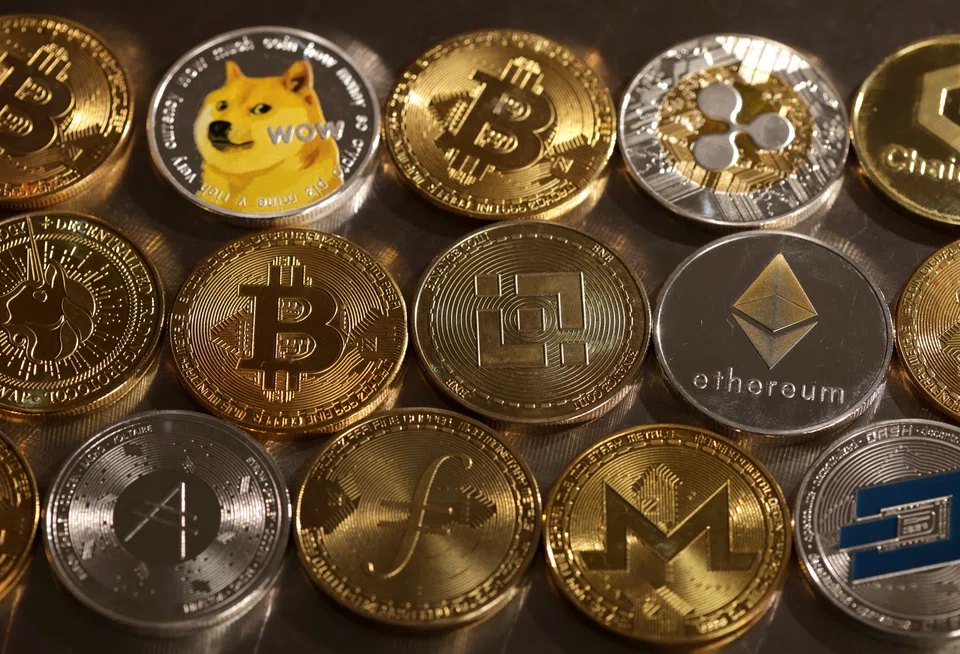
SHELL companies, cryptocurrencies and penny stocks can all be made use of by would-be money launderers seeking to hide ill-gotten gains, experts said. The nature of these assets can make them difficult to track, and transactions difficult to unravel.
Singapore’s multi-billion-dollar anti-money laundering probe has turned the spotlight on property, cars and other luxury items as a means of moving or concealing money.
Assets worth S$2.4 billion have been seized from 10 individuals, and glitzy accounts of Bearbrick collectibles and well-stocked wine racks have caught the public eye.
Now that the physical assets have been seized, here comes the tough part: Tracking money that has been laundered through financial assets or other intangibles.
Shell companies – or companies with no significant assets – are a popular conduit, said S Suressh, a partner at law firm Harry Elias.
These companies are usually used to hold assets or execute transactions for the individual seeking to conceal his identity.
Shell companies could even be incorporated in jurisdictions perceived to be well-governed, including the United States, the United Kingdom, Hong Kong and Singapore – where the incorporation process is fast and efficient, Suressh added.
Saket Bhartia, managing director for forensic investigations and intelligence at risk and financial advisory firm Kroll, said such hidden “layering” is even easier to do today, given enhanced privacy laws in several jurisdictions.
“The risk of money laundering would exponentially rise if there were no regulatory oversight, or if systems to detect money laundering (were) still manual,” he said.
It is primarily still the “fear of imposition” of a penalty or fine that forces companies to invest in technology and beef up their compliance and governance efforts, he added.
Shell companies are often private entities, but public markets can also be conduits for money laundering.
The banking and financial services sector as well as the infrastructure and real estate sector are among the most susceptible to money laundering, Bhartia said.
Athreya H D, financial services partner at the consulting practice of Mazars Singapore, said penny stocks – listed companies with small market capitalisations – can also be easily manipulated due to their “modest price tags and limited oversight”.
These smaller companies might also evade the rigorous scrutiny that their larger counterparts face, he said.
Alternative investment markets are another segment of the financial ecosystem that would-be money launderers can tap.
Private equity and hedge funds can be structured such that tracking true ownership is an uphill task, Athreya said, and cryptocurrencies allow individuals to move funds without revealing their identities.
Anna Bleazard, FTI Consulting’s head of financial crime compliance for Singapore and South-east Asia, said any online platform with a virtual currency can be used to launder funds.
Fiat currencies can be converted to virtual currencies, moved within the system, and converted back into fiat currencies after they have passed through other hands or commingled with other people’s funds.
The ability to use mixers – a service that mixes the crypto assets of multiple clients – makes the tracing of funds more challenging, Bleazard said.
Trade-based money laundering – the movement of proceeds of crime through the use of trade transactions – is another top means of money laundering, given the relative ease of being able to hide high-value individual transactions within the vast volumes of trade flows and transfer monies across borders, said Bleazard. These transactions often occur in multiple currencies with complex financing arrangements, she added.
Commodities markets are another potential hot spot. Mazars’ Athreya said some commodity markets lack transparency, enabling money launderers to exploit pricing inefficiencies and complex trading structures.
These markets have high liquidity, making it easy to buy in and cash out. The “complex cross-border transactions nature” of the market is also exploited by money launderers, he added.
Would-be money launderers may also fund or establish businesses that can be used to legitimise their illegal cash.
Jansen Chow, co-head of Rajah & Tann’s fraud, asset recovery and investigations practice, said money launderers typically target industries that involve “large cash transactions that are difficult to monitor”.
“These can (range from) simple businesses like restaurants or car washes, to online gambling or trading in precious metals, commodities, luxury goods or cryptocurrency,” he said.
Are tougher regulations needed in Singapore?
“Stricter regulations are not always the answer,” said Suressh of Harry Elias. “Regulation for the sake of regulation risks the misallocation of resources, leading to a waste of time, effort and money. An overly prescriptive approach can overlook vulnerabilities, allowing them to persist and be exploited.”
For stock markets, Athreya said fostering collaboration at both the national and international levels is essential.
This can also provide a more secure and transparent financial ecosystem, he added.
Stock markets that rely on dated technology or have less rigorous governance practices inherently face greater vulnerabilities, he said. Less-stringent listing rules could also make a stock market an “attractive channel for illicit money flows”.
In response to queries from The Business Times, a spokesperson from the Singapore Exchange (SGX) said the city-state has strict anti-money laundering laws that apply to individuals and corporate entities, including SGX-listed issuers and member companies.
For instance, intermediaries involved in fundraising activities by listed issuers must carry out their own due diligence on parties from which funds are raised. SGX Regulation, the bourse regulator, will also undertake checks on fundraising by listed issuers.
SGX members must abide by anti-money laundering laws and requirements when new clients come onboard, and on an ongoing basis, the spokesperson said.
“Should any party encounter suspicious activities, a suspicious transaction report must be filed with the relevant authorities,” the spokesperson added.






