Strong US dollar, Trump policies pulling the rug from under some Asian, trade-exposed economies
Affected countries will be grappling with cheaper exports to the US, and costlier US dollar-denominated imports

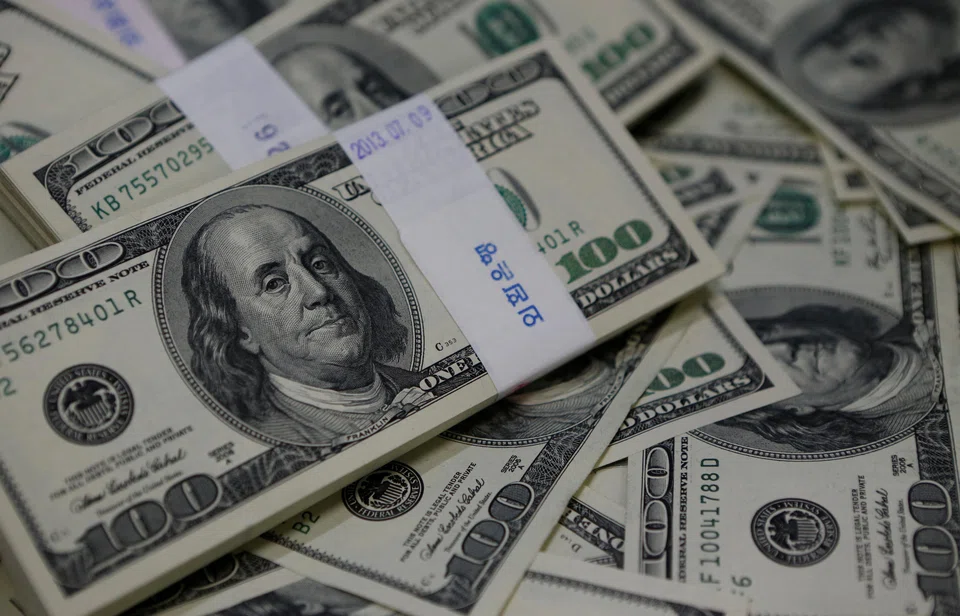
THE US dollar has surged with Donald Trump’s win in the US presidential elections, and Asian policymakers and economists are watching the uptrend like hawks.
In just the past month, the US currency has jumped 2.5 per cent against the Singapore dollar, and nearly 3.9 per cent on the ringgit. It has also strengthened 3.7 per cent on the yen. Measured from the election in early November, it has shot up 2.7 per cent and 3.4 per cent, respectively, against the Singdollar and the ringgit.
Cheaper exports and investments
CIMB director of investment research and advisory Jason Kuan said the weaker Singdollar, ringgit and yen would make the three countries’ exports more competitive, compared with the exports from countries with relatively stronger currencies.
The weaker currencies would also draw more direct investments, he added.
On the other hand, US tariffs will pull in the opposite direction. IG market strategist Yeap Jun Rong said: “Most Asian export-driven economies also have significant trade relations with the US, so any follow-through of US tariffs could affect export demand.”
Trump has proposed tariffs of 60 per cent on China, and 10 to 20 per cent on global imports.
The net effect, however, would depend on the tussle between cheaper exports and how punitive the new US tariffs would be.
Singapore impact
Saktiandi Supaat, Maybank’s head of foreign exchange research, said a weaker Singdollar generally makes the nation’s exports more affordable. But “exporters here may also import intermediate goods from abroad and pay in US dollars, so some of the benefits derived from a weaker Singdollar might be mitigated”.
The US was Singapore’s second-biggest trading partner in 2022: Its imports from the Republic totalled S$62 billion, while exports to Singapore amounted to S$92.2 billion – making movements in the forex rate of particular importance to the country.
The large trade both ways between Singapore and the world’s largest economy makes a strong greenback a double-edged sword. While exports would be cheaper, a stronger dollar might push up certain import costs for Singapore.
Inflation and tourism
On the inflation front, Trump 2.0 is likely to raise risks for the region through more expensive imports.
A stronger US dollar fuels inflation in countries with weaker currencies, both by making it harder to service US dollar-denominated debt and jacking up the cost of imports.
With much global trade denominated in US dollars, Asian countries heavily reliant on imported oil and other key commodities would also be hit.
As for tourism, DBS FX and credit strategist Chang Wei Liang noted that while a stronger greenback may drive more US travellers to Asia, the overall impact on the region’s tourism sector is minimal. This is because the number of US visitors to Asia is smaller than the number of intra-Asia travellers.
“For Singapore, in particular, the outcome of US dollar strength is that Asian currencies will soften relative to the Singdollar,” he added. “This may weigh more on Asian tourist arrivals in Singapore, particularly those from India, Japan and (South) Korea.”
A mixed forecast
Much will depend on the direction of the US dollar, which will in turn be influenced by Trump’s policy priorities, said IG’s Yeap.
He believes the greenback could continue to strengthen. “Markets rush to price for a less dovish (Federal Reserve) outlook, given that most of Trump’s policies around tax cuts, spending plans and tariffs are likely to see little resistance with a ‘red wave’.”
Charu Chanana, chief investment strategist at Saxo, said fiscal policies such as tax cuts and deregulations are likely to support growth and drive yields, lifting the greenback.
But for now, the currencies will probably trend lower against the greenback as Trump’s economic plans and global trade stance remain ambiguous, added IG’s Yeap.
DBS senior currency economist Philip Wee believes the Fed will lower rates from 4.75 per cent to 3.5 per cent in mid-2025, and keep it at that level through 2026.
He said when US gross domestic product, inflation and jobs data “stop surprising and soften again”, the Fed could ease monetary policy and lower rates in 2025. This could lead to the Singdollar, yen and ringgit appreciating against the greenback, he added.
Phillip Securities Research’s head of research Paul Chew said near-term currency movements are influenced primarily by economic conditions, interest-rate differentials and central bank interventions.
Moreover, the Monetary Authority of Singapore upheld its existing policy on the Singdollar nominal effective exchange rate in October; CIMB’s Kuan expects this policy to remain unchanged in the near term.
“Thus, the US dollar will likely stay range-bound against the Singdollar for now. We also expect the US dollar to appreciate gradually against the Singdollar over the next 12 months as the pace of rate cuts may slow down,” he said.
Kuan projects a slightly stronger ringgit against the greenback, as policymakers are expected to keep the monetary policy unchanged amid lower Fed rate cuts.
Commenting on the yen, DBS’ Chang is projecting a gradual recovery over the medium to long term.
This is because the yield gap for the yen against other currencies is expected to narrow in 2025, as the Bank of Japan raises rates, and the Fed and European Central Bank lower theirs as inflation slows.
Chang’s forecast is for the US dollar/yen to dip back towards 150 by the end of 2024, and then move towards 139 by end-2025.