

Success comes from overseas for AMTD
A digital bank would be "in no way successful" if it was to operate only in its home country, says Calvin Choi, its group chairman and CEO
Singapore
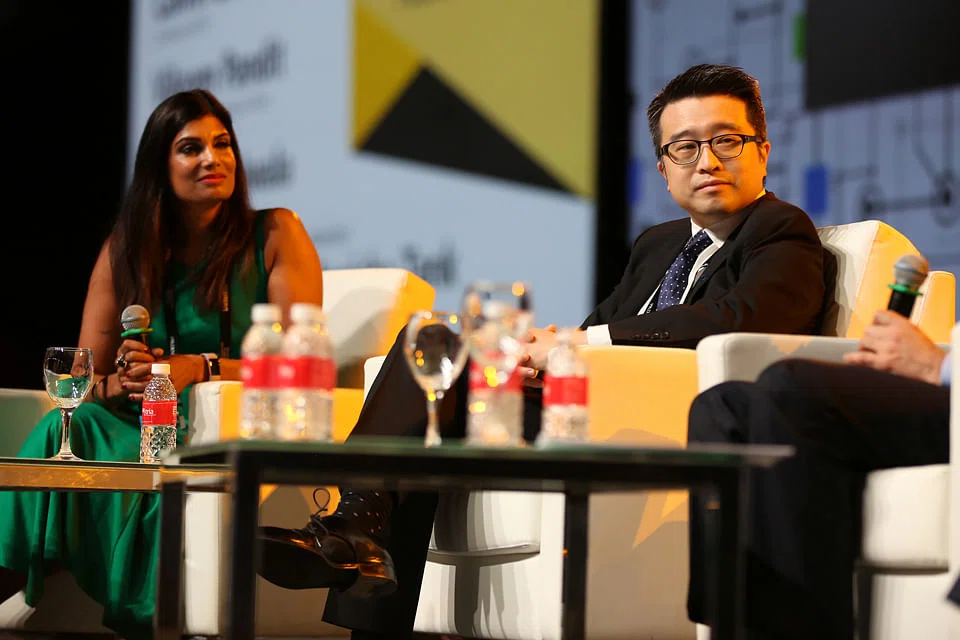
AS ASIA'S digital banking scene continues to see increasing competition, a digital bank would be "in no way successful" if it was to operate only in its home country. So says Calvin Choi, group chairman and CEO of Hong Kong-based AMTD Group, who has been heading the firm's push for greater regional connectivity to offer comprehensive, cross-border services.
The financial services firm, which owns a virtual bank in Hong Kong with Internet giant Xiaomi, is leading a consortium that has bid for a digital wholesale bank licence in Singapore to further capture Asia's small- and medium-sized enterprise (SME) market. It has also expressed interest in a digital banking licence in Malaysia.
"If a company only operates a digital bank within its own country, I see no way that this can be successful because of client mobility, client connectivity and their risk appetites and demands regionally.
"They're looking for something that meets their overall needs in the region, something more comprehensive that takes less time to find. Whichever platform that offers one-stop holistic services will have better power and control," Mr Choi told The Business Times in an interview.
AMTD - via its digital finance arm headquartered in Singapore - has been buying startups in the region and entering into partnerships to grow its regional ecosystem of fintechs, banks and enterprises.
It sees Singapore as its entry point into the wider Asean market, where it aims to ramp up its presence over next two to three years and connect the region with the Greater Bay area and the rest of China, said Mr Choi.
Outside Hong Kong, the group has investment banking businesses in the United States and in Singapore.
Said Mr Choi: "We want to be in the major markets, supporting our clients via one connected solution."
Local payments startup FOMO Pay is AMTD Digital's third and latest controlling-stake acquisition in Singapore's fintech industry recently, following its buyouts of insurtech startup PolicyPal and private capital platform CapBridge Financial in June.
In July, the group also partnered with India-based business networking platform GlobalLinker to tap into its SME base; and with Singapore's Funding Societies and CIMB Bank to offer SMEs a range of cross-regional financial products.
About six to 10 more of such deals can be expected "very soon", with an overall target to triple the size of AMTD's regional ecosystem over the next few years.
To boost its digital capabilities, the group typically acquires young startups that are aligned with its business verticals - such as digital payments and insurtech.
AMTD - with its scale and resources - will "groom" such startups into "what they cannot achieve on their own". It has plans to aggregate these individual platforms, where possible, to build a "stronger combined entity" and ultimately take them public, said Mr Choi.
"We see ourselves as a weapons collector. When we go into the war zone, we want to not only be ready, but efficiently ready. We don't want to hold on to more swords or knives than needed."
AMTD's consortium was one of 21 applicants vying for a digital bank licence in Singapore. It is also one of the 14 that progressed to the next stage of assessment in June. Nine of the 14 left standing are digital wholesale bank applicants.
The licence application is just one of AMTD's growing number of ties to Singapore. In April, AMTD International, a subsidiary of the group, completed a secondary listing of its dual-class shares (DCS) on the Singapore Exchange's (SGX) main board. AMTD International is the first company with a DCS structure to be listed here, and also the first company to have a dual listing on both SGX and the New York Stock Exchange (NYSE).
"Our commitment to Singapore as our global digital hub is not just hanging in the air," said Mr Choi.
The stock has done well so far. It closed at S$17.50 last Friday, up 9.4 per cent from its closing price of S$16 on its maiden trading day in April. The NYSE-listed counter, however, has fallen from US$9 to US$6.50 in the same period.
In a blog post this month, NUS associate professor and corporate governance advocate Mak Yuen Teen had highlighted the difference in the trajectories of both counters.
"I had expected AMTD shares to be buffeted by the rapidly worsening relationship between US and China/Hong Kong because most of AMTD's clients are from China and Hong Kong, including (mainland Chinese) banks. Therefore, what is happening to its shares on NYSE doesn't surprise me at all, but its good performance on SGX certainly does," Prof Mak said.
He also drew attention to an Aug 18 announcement that Mr Choi would step down from AMTD International's audit committee (AC) and that a woman would take his place.
This was done to "embrace international best practices and enhance the diversity of its board committees", the company said. But Prof Mak said such a move was "no more than minimum standards in most developed markets now".
"The fact that the CEO was on the AC all this time was a complete surprise to me, given that it had been listed on NYSE since August last year, and NYSE listing requirements require the AC to be made up only of independent directors," he said.
For the year to Dec 31, 2019, AMTD International reported a 66.5 per cent increase in revenue to HK$1.20 billion. This was attributed to fair value changes under its strategic investment business as well as fee and commissions from investment banking and asset management. Profit and comprehensive income attributable to ordinary shareholders doubled to HK$938.3 million as costs were kept under control.
Amid the economic pains brought about by the pandemic, Mr Choi told BT that AMTD's core business lines are "not affected by the ups and downs of the overall market".
"We are expecting lots of transactions and deals this year. These are plans that would not be easily changed by some outliers," said Mr Choi.
He further noted that Hong Kong will remain as the group's key investment banking hub for now despite the growing political unrest there. "Where we want to develop and grow will depend on future trends and developments."
TRENDING NOW

Looking beyond looming CEO succession, should UOB potentially pursue a transformative merger?
MAS holds monetary policy settings, pausing after two straight tightenings

Once staunchly pro-China, Malaysian Chinese businesses are now distancing themselves from Beijing

Stocks to watch: Kore US Reit, Parkway Life Reit, Raffles Education, Vin’s Holdings

