

Sunpower banks on steam to propel its next growth phase
Director also calls company's recent share sale a "sad story" that should not repeat in future
Singapore
WINTER is a good time for steam producers. The additional revenue from providing heating during winter is partly the reason why Sunpower is expecting to pull in a stronger set of results for the final quarter of 2018.
The other reasons are that the three-month period will also capture full-quarter electricity revenue by the Changrun Project as well as other projects which have continued to secure new customers, driven by the closure of small "dirty" boilers in China's bid to tackle its smog problem.
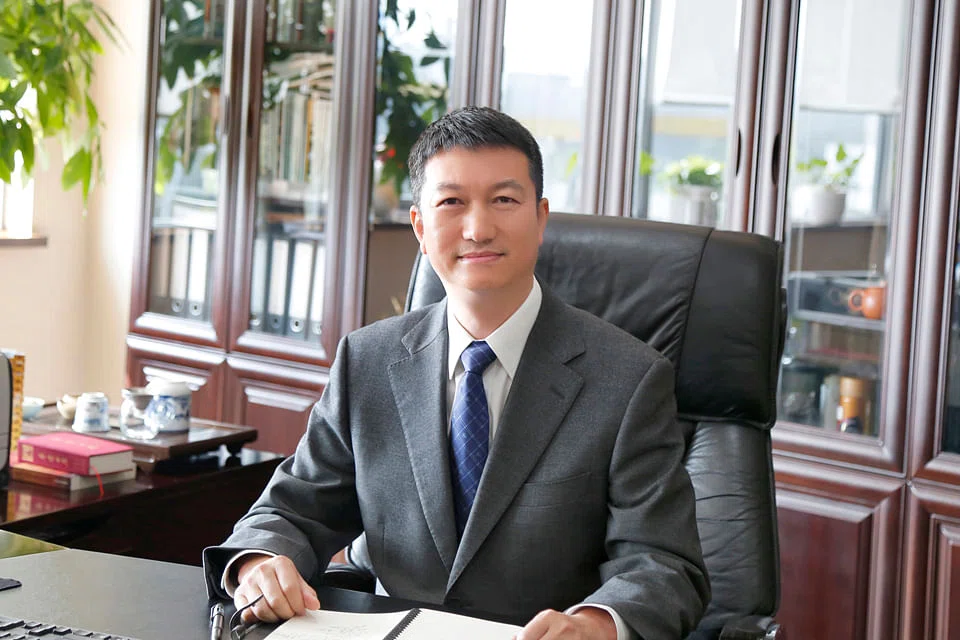
In an interview with The Business Times, executive director Ma Ming made his point simple: "The fourth quarter is cold. When it's cold, the steam is needed more, so winter time is very good for steam demand.
"Secondly, we still have a heavy smog issue in the winter time, so the government is still closing smog boilers and forcing companies to move into industrial parks to use more efficient centralised steam boilers so that it is easier for them to control the pollution."
This is good news for Sunpower as an exclusive supplier of steam to industrial customers in industrial parks. Sunpower typically holds 30-year concession agreements with the government in these transactions, and steam is a necessary, non-discretionary input product for many companies in the food, printing, dyeing, chemical and petrochemical industries.
The good thing about producing steam compared to other kinds of utilities services, is that payment is always in advance. In Mr Ma's words: "If they don't pay me, I can cut off the supply . . . They have no way to delay or postpone payment."
This is unlike a service like waste water treatment where clients would only pay after the service has been rendered. Municipal waste water treatment firms tend to deal with the local governments, while steam producers deal directly with the industrial end-users and therefore have stronger bargaining power as suppliers.
Since 2017, the Chinese government has identified factories that use their own on-site coal boilers to generate steam as one of the biggest sources of air pollution. It has required factories to shut down their dirty boilers and use centralised facilities that use clean coal technologies to make steam instead, like the ones that Sunpower runs.
Sunpower, which deems itself an environmental protection solutions specialist, expanded into the green investments (GI) segment in 2017 when it saw the enormous business opportunity available in China's decided move to clean up the air.
Before this, it only had a traditional manufacturing and services (M&S) business that manufactures environmental equipment and provides engineering, procurement, and construction services.
Now, Mr Ma is expecting the company's GI segment to grow both organically and inorganically. Currently, Sunpower has seven GI projects in operation, with two more under construction.
Expansion could come in two ways: one, by ramping up production at existing plants to meet increased demand from clients; and two by adding new greenfield projects or acquiring brownfield projects that are exclusive suppliers of steam and electricity in the industrial parks that they supply to.
The company's tactical move two years ago drew the attention of former KKR co-head David Liu, the founder of DCP Capital, who had known the founders of Sunpower, Guo Hongxin and Mr Ma for many years.
Together with another private equity investor CDH China Management, both firms invested US$110 million via convertible bonds in 2017 and committed to invest another US$70 million in convertible bonds in 2018, as well as potentially another US$30 million in warrants that can be exercised in 2019 or 2020.
Sunpower targets to invest a total of 2.5 billion yuan (S$501 million) in equity in GI projects by 2021; as at end-Sept 2018, the group had invested 1.3 billion yuan in GI projects.
In the first nine months of 2018, the GI business recorded a revenue of 419 million yuan, or one-fifth of total revenue, but its Ebitda of 155.4 million made up 58 per cent of group Ebitda, and operating cash flow made up nearly three quarters of the group's total.
Sunpower's strategy is to keep its M&S business stable, while it expects the GI business to drive most of the company's future growth. As at end-September last year, its M&S segment had a record order book of 2 billion yuan which will last the company for a while, Mr Ma said.
Recently, Sunpower made headlines when Mr Ma and executive chairman Mr Guo had to lodge a report with the Commercial Affairs Department over the unauthorised transfers of their shares in Sunpower.
They had each entered into an agreement in their personal capacities with America 2030 Capital to take personal loans, but later discovered that their 14 million shares each, deposited as collateral, were allegedly no longer in the account.
Mr Ma called it "a sad story". Both individuals have since hired TSMP Law Corp to represent them, and the Court has granted an interim injunction to restrain America 2030 and parties working with it from selling, forfeiting, transferring or dealing with the shares.
Sunpower's share price has corrected more than 30 per cent since last October. Part of it could be due to the investing public's occasional tendency to tar it with the same brush as other suspect or troubled S-chip counters, Mr Ma said.
But addressing shareholders' worries that the incident may repeat in future with the remaining shares that have been pledged, he said that in the worst case, the proceeds from the shares sold last October would be enough to cover the break-up fee. Hence, there will be no need for America 2030 to sell any more shares to recover that break-up fee.
The break-up fee is the fee that America 2030 is demanding for them to pay to terminate the loan agreements as a result of the decline in the price of the company's shares, before it would return the shares. This is despite America 2030 allegedly not having disbursed any monies to both directors to date.
The portion disposed make up about a tenth of the directors' total shares held, or 3.8 per cent of the total issued shares. Both men held a combined 37.4 per cent interest in the company before the pledge.
Meanwhile, Sunpower has also started buying back shares this year to bolster prices and investors' confidence in the firm.
The company had purchased more than 2.5 million shares at S$0.30 to S$0.415 per share for a total of about S$934,000, no mean feat in less than a month, in the company's obvious attempt to send a positive signal to the market.
TRENDING NOW

South-east Asia has lost Nvidia’s best salesman

Demand, tech capabilities position Apac and AI as Skyscanner’s next growth frontiers: CEO Bryan Batista

Peter Kwee’s Ridley Park bungalow on the market with S$100 million asking price

Beyond the greenback, Vietnam’s big borrowers turn to Asian-currency bonds

