Sustainability standards, financial reporting must be on equal footing
GRI's new chief says increasingly propagated stakeholder capitalism would be meaningless without accountability.

AS environmental, social and governance (ESG) concerns grow in importance and priority on the agendas of businesses, the way in which companies handle these obligations must also evolve - from merely reporting them, to being accountable for them.
And the Global Reporting Initiative (GRI) - which pioneered and developed a comprehensive sustainability reporting framework widely used around the world - intends to play a key role in this transformation, under the charge of a new chief executive officer (CEO).
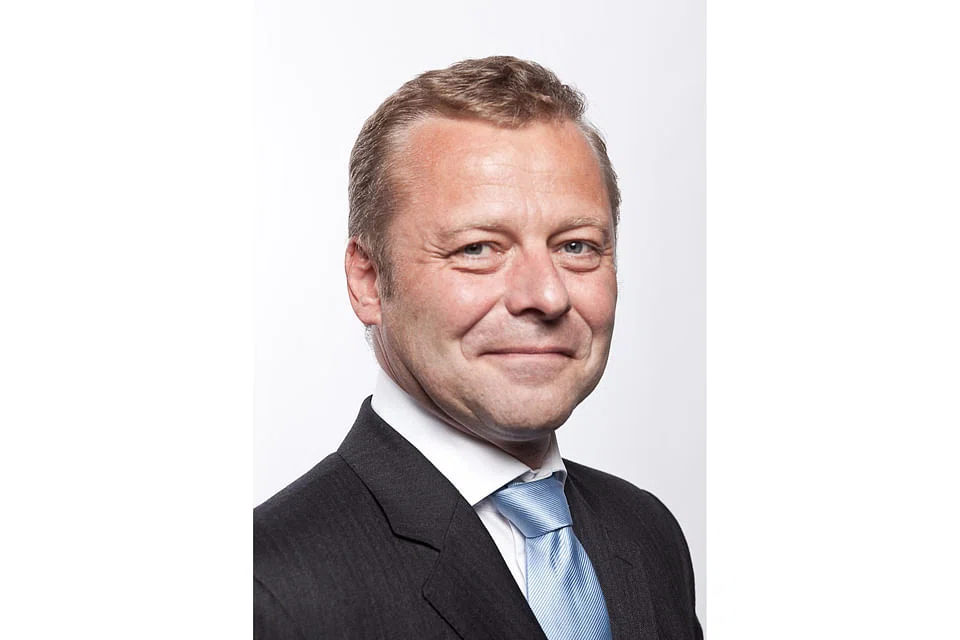
Speaking to The Business Times 2 months after taking office, Eelco van der Enden says he wants to drive GRI's vision of accountability, with reporting as the catalyst: "We need sustainability standards that are mandatory and enforceable, and on an equal footing with financial reporting. How else can we speak of stakeholder capitalism?
"It is about both enterprise value creation as well as environmental and social impacts on society. You have to have both," he said.
And, GRI takes care of the latter; in fact, one of its latest efforts sees it contributing to the European Financial Reporting Advisory Group's (EFRAG) undertaking to develop sustainability reporting standards for the European Union (EU).
These new non-financial reporting standards - the first set of which are expected to be adopted later this year - will apply to all large companies governed by the law of, or established in, an EU member state and all European stock exchange-listed companies; global businesses with operations in Europe will also be affected.
It means these standards will be mandatory for over 50,000 companies - compelling measurable action and accountability; they will also have significant influence and relevance well beyond the borders of Europe, van der Enden says.
"Any multinational that does business in Europe will need to take notice, while other jurisdictions are looking on with interest.
"That will include many Singapore-based multinationals. Better be prepared for that, if you do not already report on a voluntary basis according to GRI standards, as many, many companies already do."
Van der Enden believes this will advance GRI's role and the global applicability of its standards; with GRI's standards being integrated into the new EU sustainability reporting rules, he believes GRI will help to manage the reporting burden of companies. "Understanding GRI means understanding the future of mandatory EU sustainability reporting."
GRI
This ties in with the growth of GRI that van der Enden has envisioned. GRI was founded in Boston, in the United States, in 1997, following the public outcry over the environmental damage of the Exxon Valdez oil spill. It launched the first version of its guidelines in 2000, providing the first global framework for sustainability reporting. It then went on to set the first global standards for sustainability reporting in 2016 - standards which are widely used and recognised today.
GRI currently has a network of 7 regional offices - in South Africa, Singapore, Brazil, Hong Kong, Colombia, the US and India - which offer advance reporting and respond to the needs of local stakeholders at both regional and country levels.
Van der Enden says: "Previously, GRI's focus has been primarily on the transparency of organisations - how we can ensure they do more to disclose their impacts on the economy, the environment and society. I would like to expand our focus to encompass the challenge of how we can enable greater accountability for those impacts.
"Stakeholder capitalism, as increasingly propagated by many businesses and asset managers, is meaningless without accountability."
Van der Enden, a 57-year-old Dutch national, worked for global professional services firm PwC, prior to joining GRI this year; he had been a partner with PwC Netherlands since 2007, and last served as its global ESG platform leader for Tax, Legal, People & Organisation Services. He was also a GRI board member and served on the committee that designed the GRI Tax Standard. He brings this considerable experience to bear in his latest role.
"It stands to reason that accountants should have an important role in achieving accountability! When it comes to understanding sustainability issues, I do believe that accountants have a key task in ensuring the application of robust and comprehensive reporting standards. This is where transparency and accountability intersect.
"If large organisations already have their financial performance validated by external auditors, why should they not bring the same approach to sustainability? I think we are starting to see that changed mindset being adopted. For example, my former firm, PwC, has committed US$12 billion to ESG, including to recruit people with the right skillset (to act) as advisers to assess sustainability," he said.
Crucially, van der Enden recognises - in fact, he calls it his "passionate belief" - that accountability is important not just for environmental matters, but also for social and governance ones.
"I also want to see more acceptance of sustainability standards that reflect multi-stakeholder concerns. Our vision is for a comprehensive corporate reporting regime based on a 2-pillar structure, reflecting the concept of double materiality: 1 pillar addressing financial considerations, through a strengthened financial report that includes sustainability-related disclosures ... that could impact the financial health of an organisation or its ability to create enterprise value; and a sustainability reporting pillar, addressing all the external impacts that a company is having on society and the environment and, hence, their contributions towards the goal of sustainable development."
The alignment of the current plethora of sustainability reporting standards also needs to be addressed. The GRI played a pivotal role in developing a sustainability reporting framework, but several other standards have since emerged; and new standards, such as those being developed by EFRAG and those that will be developed by the recently launched International Sustainability Standards Board (ISSB), will be added to the mix.
"I accept that investors, businesses and society may feel overwhelmed by the bombardment of ESG-related reporting guidelines," van der Enden says.
"But the reality is that there are only 2 sustainability reporting standards-setters, and they complement each other. There is GRI, for impacts on the economy, environment and people that meet the needs of all stakeholders, and there are the Sustainability Accounting Standards Board standards (which inform the ISSB), for enterprise value disclosure for an investor audience."
He says that his mantra is "alignment, alignment, alignment".
GRI is planning to work with the ISSB on environmental, social and governance standards, while maintaining its distinct purpose. And it hopes to cooperate and align working processes when it comes to sustainability reporting, perhaps setting joint agendas with the ISSB.
Aligning standards
"Businesses will eventually need to account for both their financial performance and their socio-environmental efforts; therefore, we need alignment between these standards. We shouldn't see them as competitors because they all serve their purpose, for their specific set of stakeholders."
Van der Enden thinks, however, that complaints of an 'alphabet soup' of sustainability standards are overstated. "The broader landscape can be confusing, but companies should not let the myriad of ESG guidelines, raters, certifiers, and others distract them from fulfilling their transparency obligations.
"What's important is that we move towards a strengthened 2-pillar structure for corporate reporting - both financial and sustainability - with each on an equal footing.
"The basis of this overarching system has to be double materiality. That is the only way to achieve the comparable and effective reporting needed to drive corporate accountability."