Swedish krona gains on central bank forecast for more hikes, US dollar slides
 Add BT as a preferred source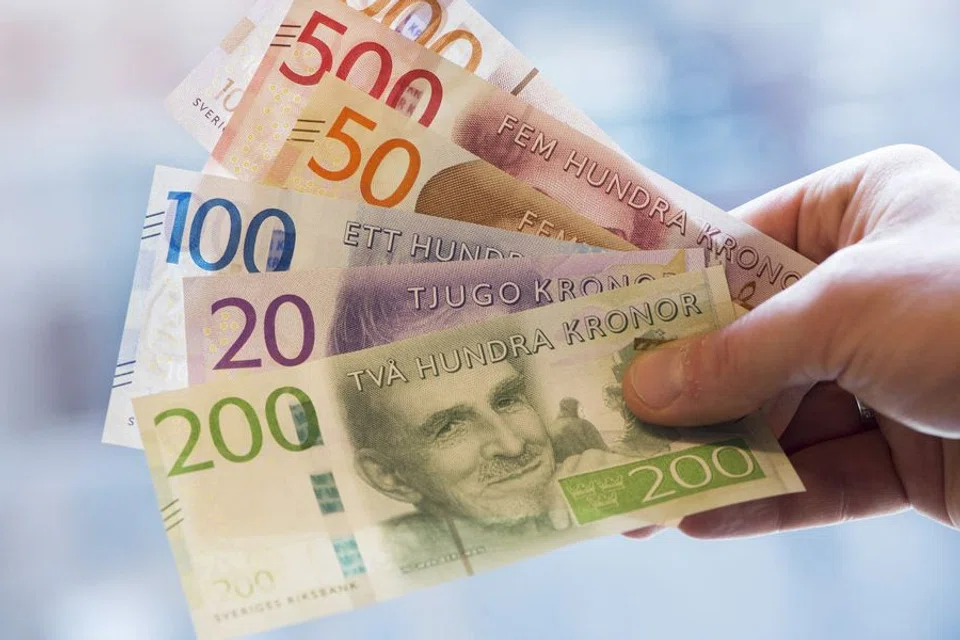
THE Swedish krona firmed on Thursday (Feb 9) after the country’s central bank raised rates, forecast further hikes and said it wanted a stronger currency, while the US dollar also weakened against most other currencies amid positive sentiment across markets.
The US dollar was last down 2 per cent against the krona at 10.39 kronas and the euro was down 1.5 per cent at 11.7, set for its biggest daily percentage fall since 2015, after the Riksbank raised its benchmark interest rate by 50 basis points to 3 per cent, and forecast more increases in the spring.
The central bank also said a stronger currency would be desirable to bring down inflation.
“All this is very positive for SEK (the krona), but it’s unlikely to turn the tide too much if it’s met with a correspondingly hawkish ECB,” said Simon Harvey, head of FX analysis at Monex Europe.
The Swedish currency has been under pressure, having hit its weakest since 2009 against the euro earlier this week as markets bet the central bank will raise rates less aggressively than the European Central Bank (ECB).
“The idea is that because of the amount of leverage in Sweden’s housing market it’s much more difficult for them to follow the ECB much above 3 per cent,” said Harvey.
Navigate Asia in
a new global order
Get the insights delivered to your inbox.
Elsewhere, the euro climbed 0.43 per cent to US$1.076, and the pound rose 0.63 per cent to US$1.215 both boosted by improving risk sentiment across markets.
The Australian dollar, often seen as a proxy for risk sentiment, rose 0.77 per cent to US$0.6977 as the safe-haven US currency dipped in line with a rally in equities and other so-called “risk-friendly” assets, helped by strong company earnings.
The pound was largely unmoved by Bank of England policy makers expressing a wide range of views about Britain’s inflation trajectory and need for rate hikes before a panel of lawmakers.
Inflation was also in the mix for the euro after German inflation data came in below expectations.
The US dollar also slipped 0.4 per cent against the Japanese yen to 130.9.
Japan’s government is planning to present the new Bank of Japan governor nominee to parliament on Feb 14, broadcaster TBS reported on Thursday. Markets are closely watching the appointment, as on the new governor’s agenda will be how quickly the central bank could phase out its massive stimulus.
Markets are also digesting a series of remarks from Federal Reserve policymakers about its interest rate plans after Friday’s stronger-than-expected jobs data and ahead of next week’s closely watched inflation numbers.
US jobless data is due later on Thursday, and will provide another data point for the Fed and markets. REUTERS
Decoding Asia newsletter: your guide to navigating Asia in a new global order. Sign up here to get Decoding Asia newsletter. Delivered to your inbox. Free.
Share with us your feedback on BT's products and services