

Taking a new path in pain management (Amended)
iX Biopharma wants to be the first in the world to get ketamine registered in the US as an alternative to opioid - the only pain management drug administered by doctors.
Singapore
WITH one day to go before it trades on the Catalist, late-stage specialty pharmaceutical firm iX Biopharma has already caught the eyes of interested parties.
This might have something to do with the firm's niche, which lies in the development and commercialisation of innovative therapies for pain management and male erectile dysfunction.
It has developed a fast-dissolving wafer formulation, Waferix - a technology that delivers a vast number of United States Food and Drug Administration (FDA) approved drugs that require quicker delivery or reduction in loss of drugs due to hepatic and gastrointestinal metabolism.
Its initial product development focus is on analgesics, or pain relievers.
Started in 2008, the company is in the midst of late-stage testing of three products - Wafernyl, Wafermine and PhoeniX - delivered through Waferix.
Wafernyl uses fentanyl as the active ingredient for the treatment of acute and breakthrough pain.
Wafermine, which is non-opioid, uses ketamine as the active ingredient in treating acute and neuropathic pain, while PhoeniX addresses male erectile dysfunction.
In November 2009, the drug company began its first clinical study - phase 1 study on Wafernyl. It has moved into the next phase of testing.
The following year, the firm came up with Wafermine and PhoeniX.
The company is now waiting for the phase 2 results involving ketamine. It plans to start phase 3 trial next March and launch it in the first quarter of 2018.
It is targeting to start the pivotal study for Phoenix in Q2 next year and it could be available in Q3 of 2017.
Currently, opioid is the only pain management drug in the world administered by doctors.
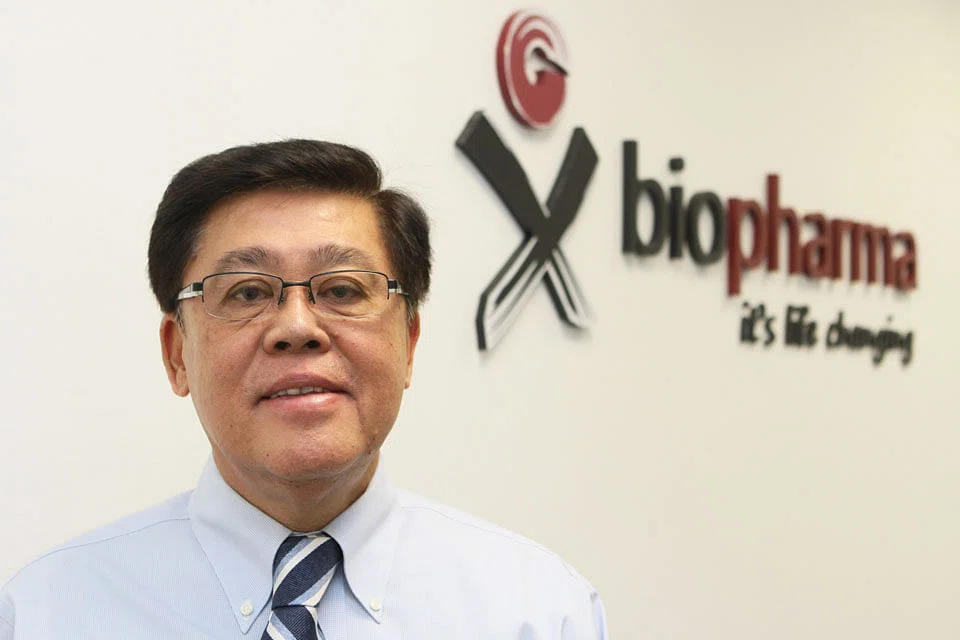
Eddy Lee, the firm's chairman and chief executive officer likens this to "having Coca Cola as the only drink in the world", which he found to be rather "silly". He funded a study by his doctor friends who wanted to see if ketamine can be an effective alternative to opioid.
The study worked and the rest is history.
iX Biopharma will be the first in the world to get ketamine registered in the US as an alternative to opioid in managing excruciating pain, Mr Lee said.
Paul Rolan, director of drug development, explained that ketamine is an old drug that has been around for 40 years as a general anaesthetic. But only in recent years has it been recognised with pain relieving properties at a low dose.
In emergency situations, opioids are particularly hazardous, said Dr Rolan.
"Let's say a person is injured, of course you have to relieve their pain but you don't know about bleeding or lung problems. Unfortunately morphine-like drugs depress blood pressure and breathing, so the concern is you may take your patient to hospital calm and quiet but the reason why they're calm and quiet is they're dying."
In addition to relieving strong pain, ketamine supports blood pressure and breathing so there is now "a lot of interest in using the drug by American military and paramedics", he said.
The only way of giving ketamine now is by injection which not ideal, said Dr Rolan, adding that the firm's fast-dissolving delivery method will plug the gap.
"It puts the drug right up against the membrane at the base of the tongue, holds it there to stop it from being swallowed because the problem if you swallow ketamine is that not much gets into the blood stream . . . what we show with this particular method of delivery was that it was very acceptable to people but also delivered very consistently."
So far, the firm has been granted patents for the Waferix drug delivery platform in seven countries including Singapore, Australia, Malaysia, and New Zealand. It now has patents pending in major markets such as the US, Europe, Canada, Japan, South Korea and China.
iX Biopharma manages its own research and development in Singapore and Australia. It acquired two subsidiaries in Australia last May - Syrinx Pharmaceuticals Pty Ltd and Chemical Analysis Pty Ltd. The company also has manufacturing and laboratory testing facilities in Victoria, Australia.
"After we have the product, we can out licence it, we can sell it first, or, at some point if it gets more developed, we might want to bring in a third party to help fund the project and then they can distribute it," Mr Lee said.
More than a week ago, the company launched its initial public offering to raise about S$27.6 million in net proceeds, or 65.5 million new shares at 46 cents each. The issue of 64.5 million shares will be by way of placement, while the remaining one million shares are for public subscription.
The new shares are about 11.1 per cent of iX Biopharma's enlarged issued share capital after the IPO.
Most of the proceeds generated from the listing will be used to fund clinical trials necessary for product development.
The developed products will be subjected to regulatory approval.
As at end December 2014, the company recorded total equity of S$11.9 million and only its chemical analysis business unit is generating positive cash flow.
Asked for the reason behind the choice to list here, Mr Lee said that the environment is pro-business, pro-industry and pro-start-up.
"The Singapore Economic Development Board has spent years bringing the big pharmas to have manufacturing plants here. That means the day I'm ready to get my products registered and when we need to market, Singapore is ready for me."
Amendment note:
iX Biopharma has clarified that it meant it hopes to be the first in the world to register ketamine in the US as an alternative to opioid in pain management when it said it is the first to do so. The article has been updated to reflect this.






