

Taking Religare beyond India
The trust aims to expand its portfolio to other Asia-Pacific markets, says its CEO Gurpreet Dhillon, reports NISHA RAMCHANDANI
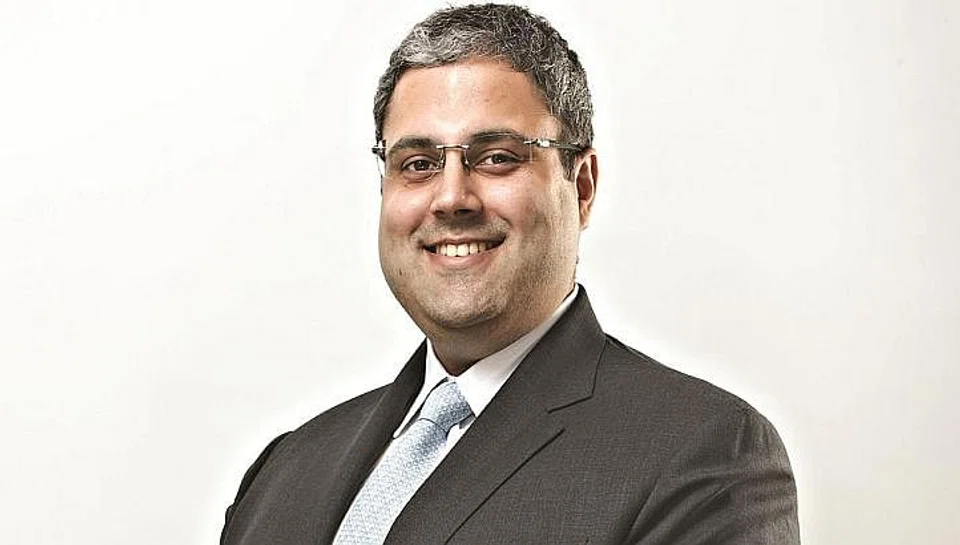
A YEAR into its listing on the Singapore Exchange (SGX), Religare Health Trust (RHT) is considering expanding its portfolio beyond India to include other Asia-Pacific markets, even as it continues to push for growth from existing assets.
"The first year was about stabilising the portfolio, about delivering everything we set out to our investors," Gurpreet Dhillon, RHT's CEO told BT in an interview. "The next year is going to be about building on that foundation, looking for growth opportunities both inside the portfolio and outside."
Mr Dhillon assumed the role of chief executive in May this year, taking over from Ravi Mehrotra, currently executive chairman, in order to separate the roles of CEO and chairman.
"We do want to, at some stage, go and diversify from Fortis and India. I think there is a case for diversification. As and when it happens, it will have to be meaningful. I don't think it makes sense for us to just buy one hospital in five different geographies. We are working on that," said Mr Dhillon, adding that its plan to grow its footprint overseas could happen within the next year.
Expanding overseas
In this respect, its preference would be to invest in more stable markets, such as Australia or Japan, to help offset the risks in emerging markets such as India.
But even as RHT is ready to look beyond India to fuel growth, it remains cognisant of the opportunities within the populous country, especially as private healthcare continues to gain traction in a nation of over one billion people.
In India, RHT's portfolio includes 13 operating assets - which typically focus on either single specialities or multiple specialities - as well as four upcoming greenfield sites in Ludhiana, Chennai, Hyderabad and Greater Noida in the coming years. As at March 31, its portfolio was valued at approximately $772 million.
India's Fortis Healthcare, probably best remembered for taking on Malaysia's sovereign wealth fund Khazanah Nasional in a takeover battle for then Parkway Holdings, holds 28 per cent of the units in RHT. It also operates RHT's healthcare assets, paying RHT a combination of a base fee, as well as a variable fee which is set at 7.5 per cent of the operating revenue of a hospital. But RHT runs other services which are typically outsourced, such as outpatient services, radiology and food & beverages.
Since its listing in October last year, the business trust has added some 550 beds to its then-portfolio of about 1,700 beds. On Friday, RHT closed at 77 cents per unit, under its IPO price of 90 cents.
"What we've been working (on) with Fortis is to start with organic growth. That's low-hanging fruit for us. There's limited capital expenditure required," he points out, adding that the variable fee serves as a "huge kicker" for the trust.
Excluding the four greenfield sites, RHT could add some 1,700 hospital beds by expanding its existing assets. Including them, it could be looking at ramping the portfolio up to a total of 4,600 beds, roughly double what it is today.
Fortis, which is backed by Indian billionaires Malvinder and Shivinder Singh, has also been scaling back its international presence through divestments, which could work in RHT's favour.
"They've re-evaluated the strategy and the focus is now to grow in India," Mr Dhillon said. "That's a huge plus for RHT because future capex is going to come in India, where all our assets are today. We can actually work with Fortis to grow because we can step in on the asset heavy side, while they come in on the operations side. Together, we can work and act as a consolidator in this hugely fragmented industry."
He remains positive where the Indian healthcare market is concerned, citing a "huge demand-supply gap", an increasingly affluent middle class, as well as a growing incidence of lifestyle diseases such as heart disease or stroke.
"In a city like Delhi, there's a shortage of 6,000 beds. In Mumbai, it's as much as 10,000 beds," he pointed out.
India market
Mr Dhillon is also particularly bullish about its new hospital in Gurgaon, which was launched this year and will start contributing revenue from April next year. The multi-speciality hospital, which accounts for nearly a quarter of its portfolio valuation, is already churning out a higher revenue per operating bed of $330,000 vis-a-vis the average revenue per operating bed of $200,000 for the other beds across its portfolio.
In addition, RHT is eyeing five to six assets where Fortis acts as an operator, but doesn't own the asset. Last month, the trust announced it was in talks with regard to acquiring a clinical establishment in Mohali, Punjab, which is operated by Fortis.
Meanwhile, challenges facing the trust include the depreciation of the Indian Rupee, although RHT has tackled this by hedging its exposures.
"The policy is to continue to hedge 100 per cent of our distributable income, so on a six-month rolling basis, we hedge 100 per cent of our one year forward," he added.
Just last week, it announced that it had entered into forward currency hedging contracts for the year ending Dec 31, 2014.
TRENDING NOW
Ex-Nvidia CEO Jensen Huang carried a secret for more than a year. It led to his downfall

Higher rates, weaker spending: Is the Philippines entering stagflation?

As Indonesia picks new vice-president to succeed Gibran, investors see risks and opportunities
Singapore to inherit South China Sea code talks with key issues unresolved

