A tale of two IRs: MBS edges out Genting’s RWS in mass-market appeal
Analysts say Marina Bay Sands’ new tower is unlikely to erode traffic at Resorts World Sentosa, but other factors could give the former an advantage

Megan Cheah
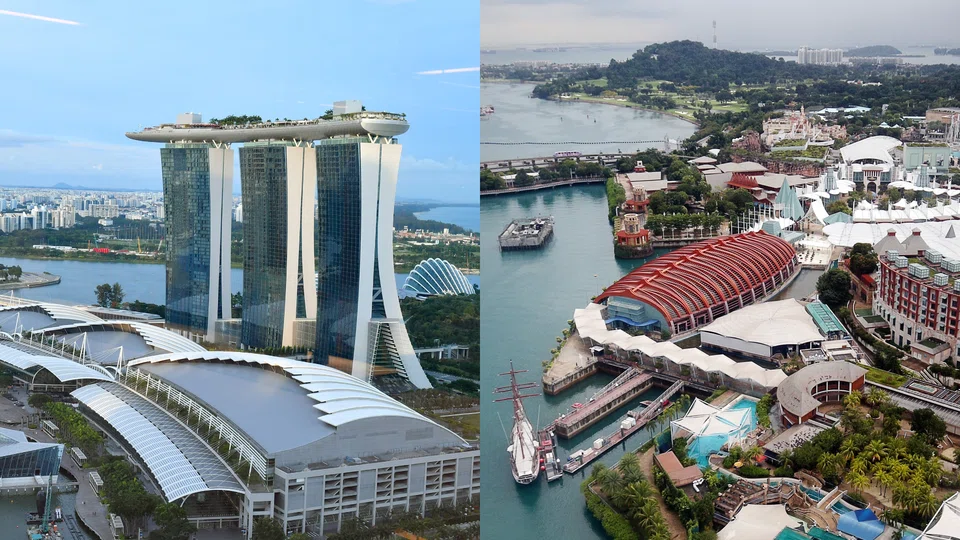
MARINA Bay Sands’ (MBS) upcoming fourth tower – an expansion of its integrated resort (IR) in Singapore – may not significantly impact rival Resorts World Sentosa (RWS), but factors such as location and casino operations could potentially give MBS an edge.
DBS analyst Jason Sum highlighted that compared to RWS, which is run by Genting Singapore , MBS tends to draw a higher proportion of visitors who do not stay on its premises, even though it currently operates at an “elevated occupancy rate”. He does not expect the planned 587-room fourth tower at MBS to significantly draw visitors away from RWS.
The new development is expected to have 153,100 square metres of hotel space and 12,185 sq m of retail space, according to Jan 26 data from the Urban Redevelopment Authority (URA). MBS announced in April 2019 that its fourth tower would feature 1,000 all-suite rooms. However, URA indicated in late January 2024 that the new tower will have over 587 rooms. MBS has declined to comment on the discrepancy in numbers.
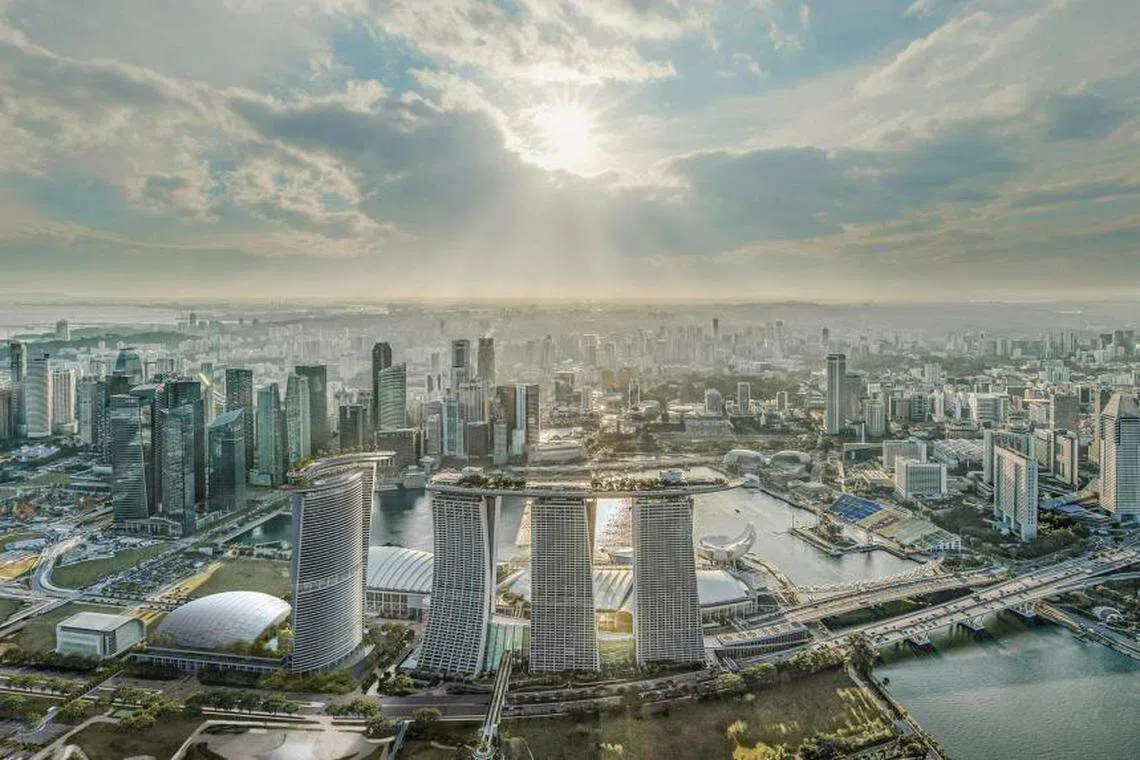
The commencement of construction was delayed twice, largely due to the Covid-19 pandemic. The IR operator has until Apr 8 this year to kickstart its S$4.5 billion plan.
At the same time, RWS is embarking on an expansion of its own, which is progressively being rolled out. Dubbed RWS2.0, the Sentosa resort said that the expansion will include a new waterfront lifestyle complex with more hotels, retail space and eateries. More recently, it was granted provisional permission to develop 21,243 sq m gross floor area of retail space and add 700 hotel rooms as part of the planned expansion.
Casino takings
Maybank Securities analyst Yin Shao Yang called the MBS expansion a “synergistic effort” with RWS. He agreed that it was unlikely the two IRs would cannibalise visitor numbers from each other, as gaming customers are likely to visit both. In particular, he noted that customers from China are more likely to visit Singapore’s casinos over those in the US and Macau. This is largely due to the good relations between Singapore and China, as well as the 30-day mutual visa-free travel arrangement between both countries that started on Feb 9.
In addition, CGS International analyst Tay Wee Kuang pointed out that each IR offers different value propositions and market segmentation, with MBS in the city centre having more expensive room rates, versus RWS’ “off-island experience” and lower rates.
Phillip Securities head of research Paul Chew agreed, noting that MBS generally caters to the event and conference crowd, while RWS features more family-oriented attractions. That said, prior to the tower expansion, the Las Vegas Sands-operated IR has gained more mass-market gaming growth than RWS, due to its proximity to the city centre and the return of meetings, incentives, conferences and exhibitions (Mice), he noted.
For the fourth quarter ended December 2023, MBS’ casino net revenue grew 84.3 per cent to US$741 million from US$402 million for the same period a year earlier.
The higher segment revenue drove the IR’s quarterly top line to US$1.1 billion, up 55.6 per cent from the US$682 million recorded in the previous corresponding period.
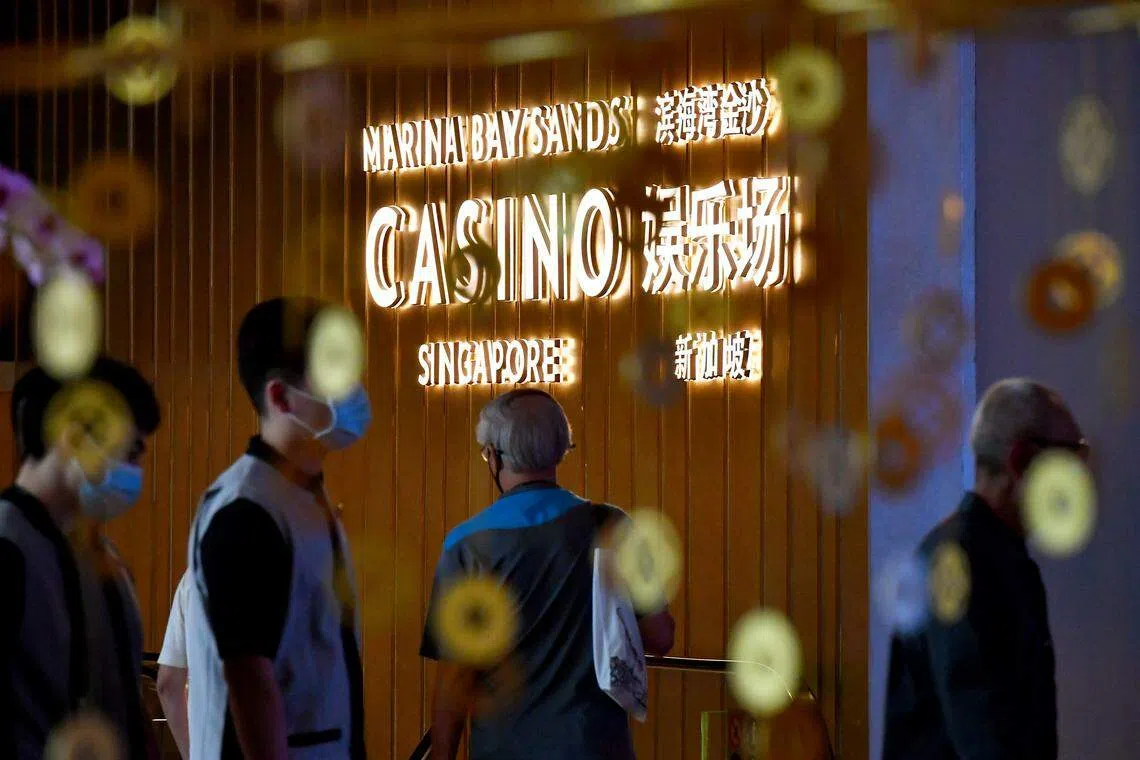
For the full year, MBS’ net revenue was US$3.8 billion, up 53 per cent from US$2.5 billion a year earlier. “Any expansion will further cement (MBS’) mass-market position,” Chew added.
The new tower will also come with an entertainment arena, additional Mice capacity, a sky roof with a pool and luxury retail offerings, MBS previously said.
Maybank’s Yin highlighted that the addition of an entertainment arena was MBS “taking a page from Las Vegas’ playbook”, where entertainment acts such as sports matches or concerts offers a segue for customers to head to the slots. “The entertainment cycle is a proven one in Las Vegas,” he said.
DBS’ Sum reckons that should MBS increase its gaming-specific area, RWS could see some negative effects.
In 2019, both IRs were given the green light to expand their casino operations, but the planned non-gaming expansions were even larger, shrinking the gambling space to 2.3 per cent, from 3.1 per cent.
“Focusing on their casino operations, which remain their core revenue and earnings source, the competition between them is evident, with market share dynamics generally shifting in MBS’ favour over time,” Sum added.
Hotel-dependent visits
Unlike MBS, RWS’ casino traffic is more dependent on its hotel capacity, noted Chew. It has more than 1,600 rooms in its six hotels, which generated hotel room revenue of S$244.4 million for the full year ended December 2023, up 64.2 per cent from S$148.8 million a year earlier.
Genting Singapore’s full-year revenue was S$2.4 billion, climbing 40 per cent from S$1.7 billion the year before. This was largely driven by the gaming segment, which rose 34.1 per cent to S$1.6 billion, from S$1.2 billion.
Its planned expansions are also on track, with the company disclosing in a post-earnings briefing that it expects to fork out more – some S$6.8 billion – for RWS2.0, from an initial S$4.5 billion.
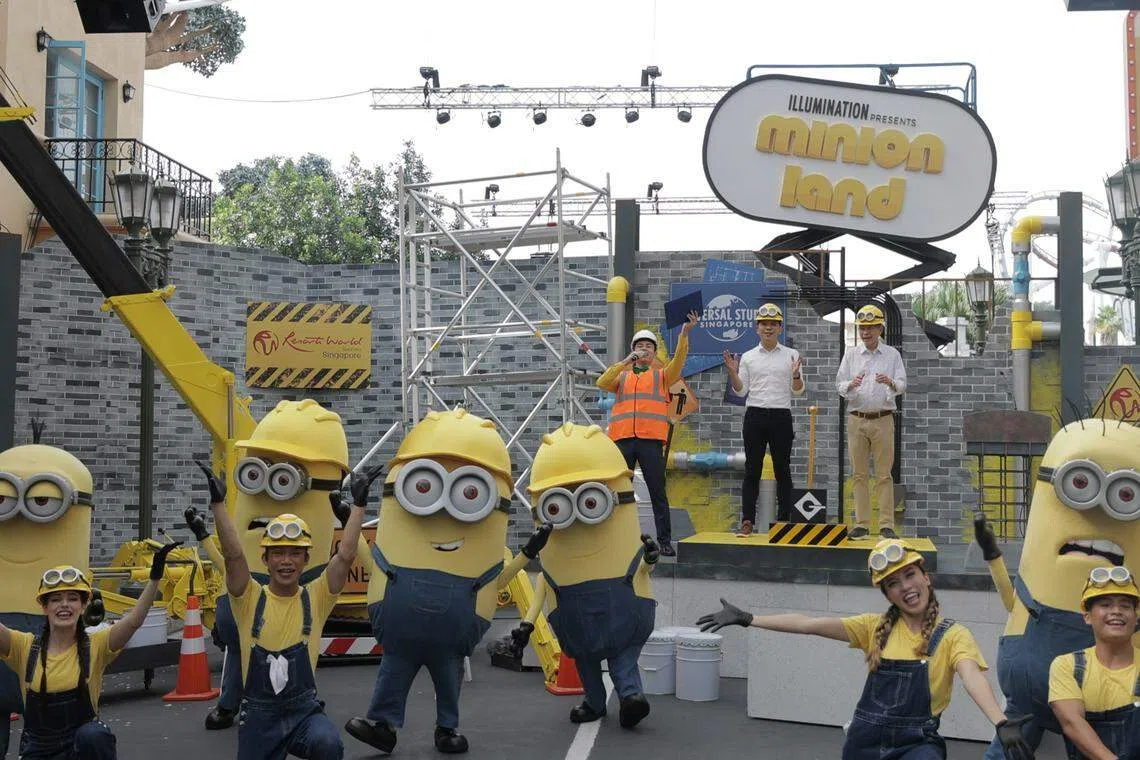
This includes the costs of land acquisition, Minion Land’s addition to the Universal Studios Singapore theme park, and growing the SEA Aquarium, which is set to be renamed the Singapore Oceanarium.
Sum cautioned that the revised potential investment cost “far exceeds” the research house’s projected range of S$5 billion to S$5.5 billion, based on cost escalation and “revisions aimed at attracting the premium mass segment”. “Although Genting Singapore has the financial capability to support this investment through its strong net cash position and robust cash flow generation, we believe this could negatively impact the company’s capacity for capital distribution to shareholders,” he said.
CGS’ Tay also suggested that there might be internal factors limiting tourist visits to RWS, noting that the IR has temporarily taken its 360-room Hard Rock Hotel offline for renovations starting from Mar 2.
On the other hand, UOB Kay Hian analyst Jack Goh said that the revamp will be fruitful over the mid- to long-term horizon, as it will allow Genting Singapore to capitalise on RWS’ sustained higher spending per capita.
Analysts are overall still mostly positive on the IR operator’s 2024 prospects. Goh pointed to a sustained trend of higher average spending at RWS, as well as earnings accretion from Hotel Ora, which was launched in May last year. Another positive catalyst for Genting Singapore is the recovery of foreign tourist arrivals.
Shares of Genting Singapore ended Tuesday (Mar 26) at S$0.89, S$0.005 or 0.6 per cent higher.