Talent crunch, patchy compliance at banks chinks in Singapore’s money laundering armour
A shortage of skilled compliance professionals and lack of consistency among financial institutions are among the challenges


A TALENT shortage and inconsistent treatment among financial institutions in enforcing the rules are the main gaps that Singapore has to address to boost its standards of compliance with anti-money laundering (AML) standards, industry watchers have said.
Singapore has a robust compliance system, seen by the industry as being on a par with global standards, but the supply of talent in compliance roles is not matching up to the growing demand for such skills, they said.
Another key issue is in ensuring that the controls are implemented consistently and effectively.
Jason Tan, partner of forensic and advisory at KPMG in Singapore, said: “As with all compliance programmes, the challenges often lie in ensuring the effectiveness of the controls during implementation on an ongoing basis.”
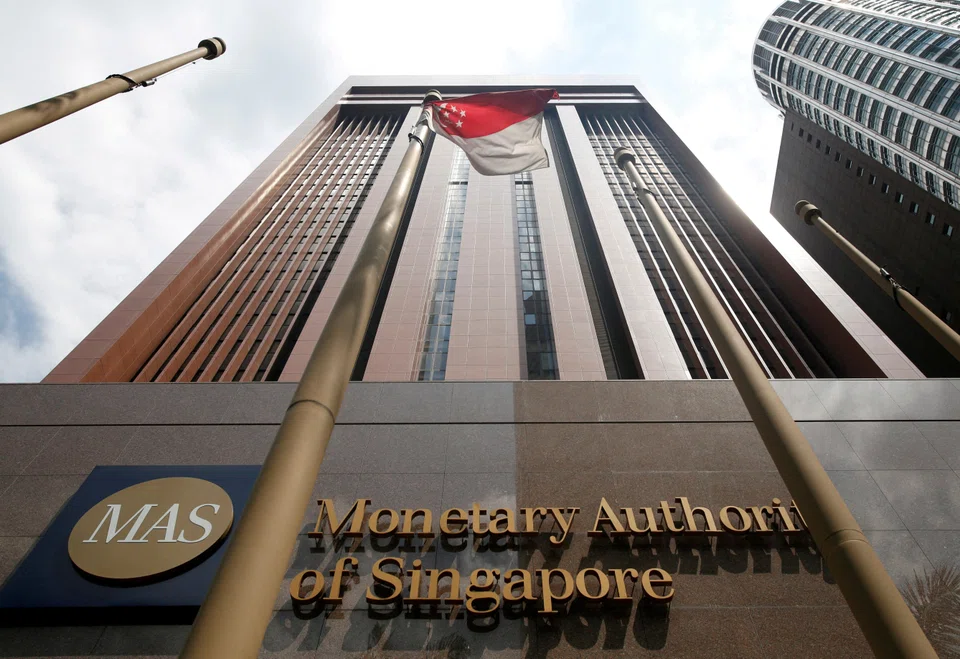
Bloomberg reported last week that the Monetary Authority of Singapore (MAS) has set up a work group comprising representatives from local and global banks, to boost its AML regime.
The group is likely to look into, among other things, how banks perform checks during the opening of accounts and how they verify the sources of funds.
Industry watchers expect the move to standardise and fill up the gaps in compliance systems across financial institutions.
Lee Yishan, managing director of regulatory compliance of IQ-EQ in Singapore, said of the work group: “(This) appears to be an effort to identify and address gaps within the various banks’ operational processes, skill sets and experience levels of personnel, as well as information sources.”
The move comes amid concerns among various stakeholders, including private-banking relationship managers, that the various financial institutions are applying the standards unevenly when they perform their know-your-client and client-due-diligence checks, said Suang Wijaya, managing partner at law firm Eugene Thuraisingam.
Financial institutions need to take enough measures to ensure that wealth flows into Singapore are from legitimate sources.
But there is “insufficient detailed guidance” on how the standards should apply in specific situations, Wijaya noted.
An overly strict or foolproof compliance standard may potentially deter genuine clients from coming to or investing in Singapore, he added.
For example, an overseas client with legitimate wealth sources but who comes from a “less developed” nation may not have the detailed documentation required.
Genuine clients who came by their riches partly or wholly from inheritance may also not have sufficient business documents to prove the legitimacy of their inherited wealth.
“The result of this may be that entirely legitimate prospective banking clients may be declined, simply because of insufficient documentation that follows strict compliance standards,” Wijaya said.
Furthermore, IQ-EQ’s Lee expects that there could be over-reliance on technology-based systems in some situations. Artificial intelligence and machine-learning algorithms may have significantly enhanced compliance processes, but they are not flawless and are also accessible to criminals, she warned.
“Over-reliance on technology could lead to complacency and undervalue the role of human expertise and judgment, which are critical in detecting suspicious activities,” she said.
KPMG’s Tan said it is important to temper expectations that money laundering, terrorism financing and proliferation financing activities by bad actors can always be detected. “Continuous improvement and vigilance are essential in maintaining and enhancing the compliance framework,” he said.
Talent shortage
Meanwhile, the shortage of skilled compliance professionals in Singapore is being felt especially among external asset managers (EAMs), who have to compete with conventional banks for the small pool of compliance experts, said Gaven Koh, head of risk and compliance of multi-family office Wrise Group.
He said it is “not uncommon” for a single compliance officer to oversee a spectrum of compliance activities within the EAM space, and these range from managing conflicts of interest and handling of client complaints to ensuring robust AML controls.
This talent issue can significantly hurt the effectiveness and efficiency of compliance within EAMs, potentially leading to compliance issues and undesirable outcomes, he said.
“Smaller EAMs, in particular, can be more vulnerable to money laundering risks as they often face competition and increased pressure to expand their client base, which in turn results in the acceptance of clients with potentially higher risk profiles,” said Koh.
Such shortage could be attributed to the substantial time it takes to train compliance professionals from the ground up, before the salary uptick occurs. This time lag may deter individuals from committing to this career, said IQ-EQ’s Lee.
But the talent situation is improving as the profession gains popularity, said KPMG’s Tan.
The complexity of financial crimes, on top of increased regulatory scrutiny, has driven the demand for talent. “This creates ample opportunities for career growth and development in the compliance field,” he said.