

Team led by Charles Madhavan wins Magnus board tussle
Nearly 100 retail investors, upset about losing their investments, vote the challenger's team in

Angela Tan
Singapore
IT was like a weigh-in before a prize fight between two boxers.
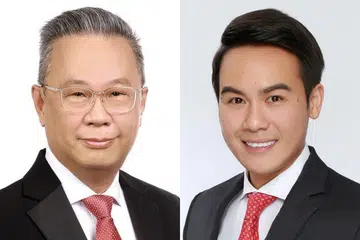
In one corner was Charles Madhavan, 61, a self-proclaimed blue-collar oil man and frustrated shareholder. In the other was Lee Chong Ping, 40, an independent director whose appointment by Magnus Energy on Nov 22 is being queried by the Singapore Exchange (SGX).
After more than three hours of listening to both teams at an extraordinary general meeting (EGM) on Thursday, shareholders voted in Charles Madhavan and his proposed team of directors on board.
More than 63 per cent of the total number of valid votes were received in favour of resolutions one to four, regarding the appointment of Mr Madhavan, Ong Chin Yew, Anthony Kuek and Christopher B. O'Connor as directors with immediate effect.
About 60 per cent voted in favour of the removal of Mr Lee and Seet Chor Hoon as independent directors.
The payment of S$90,000 in directors' fees for the financial year ending June 30, 2020 was approved, and Baker Tilly TFW was appointed as auditor.
Resolutions nine to 12, involving the re-election and appointment of Mr Lee as a director, along with his team members See Soon Hong, Steven Lam and Wong Ann Chai, garnered around 37 per cent in favour.
Nearly 100 mostly mom-and-pop retail investors turned up at York Hotel on Thursday morning for the EGM. Many told The Business Times that they were fed up with the shenanigans in the company, which have cost them their investments.
A Mrs Lim, who has about 10,000 Magnus shares, bought at between 20 and 30 cents, said: "My husband said I was stupid to buy this company's shares.
"Look what's happened. I came to the EGM because I want to see justice done. I hope the new board can turn it around."
Another shareholder, Steven Liu, said three years ago, his shares represented a 1 per cent stake in Magnus.
"Not anymore - after all the issuance of convertible notes to shares. I am very angry. They should have been taken to task and removed three years ago," he said.
Magnus' share price has plummeted from 40 Singapore cents in October 2014 (before the start of the conversion of the convertible notes to shares) to as low as 0.1 Singapore cent.
Trading was suspended on Aug 23 on the back of what shareholders have called "the relentless issuance of convertible notes by the company and the subsequent conversion of those notes into shares".
Retail shareholders became irate when the company's chief executive officer (CEO) Luke Ho, 43, asked them in his opening address to support further fund raising through share issues and share consolidation, in the event the company needs to consider a reverse takeover to get out of the trading suspension.
One shareholder shouted: "You already consolidated the shares 50 to 1. Consolidate until what? Odd lot?"
Others heckled: "You apologise for all the losses!" and "Step down!"
In a SGX filing on Jan 3, Magnus said Mr Ho had resigned as CEO effective Jan 9. He has 970 million Magnus shares, representing a 7.68 per cent stake, mostly from the performance shares rewarded to him over the years - even as the company bled.
The new board will have to make rebuilding the group's balance sheet its priority. The board members intend to explore synergistic partnerships in the energy sector for sustainable income.
Attention will also be given to meeting SGX's regulatory requirements to facilitate early resumption of share trading.
Past and ongoing transactions will be reviewed for potential breaches; measures to recover these investments from past boards of directors and managements will be imposed.
When The Business Times spoke to Mr Ho after the EGM and asked him to share his thoughts on his performance as a CEO and on the allegations of asset stripping, he replied:
"When you wind down, you have unused warehouse. What do you do? Every year, the cost is S$100,000. When it is not in use, we have to sell it. We are not stripping the assets. We are minimising cost."
On the fund-raising exercise, he said: "I inherited the group with a negative of S$5 million in debt. How do you pay?"
Asked whether he knows or has any association with John Soh, one half of the alleged masterminds behind the 2013 penny stock crash, Mr Ho replied: "For the record, no."
He said he has not visited Mr Soh in prison.
Mr Ho is among those asked to provide the Commercial Affairs Department (CAD), the white-collar crime buster, with records of their stock trades and details of accounts held with financial institutions; they have also been asked to provide personal and corporate electronic data, and been interviewed by the CAD.
TRENDING NOW
Knight Frank’s Tan Tee Khoon leaves firm, Nicholas Keong takes over auction business
Keppel Energy, Sembcorp Utilities and Tuas Power to supply biomethane in pilot project

GovTech retrenches another 38 staff in second round of layoffs
Take-up of new private homes dives 45% in Q3 as prices accelerate with 1.4% rise

