

Telcos could tap tech to eSIM-plify business

Annabeth Leow
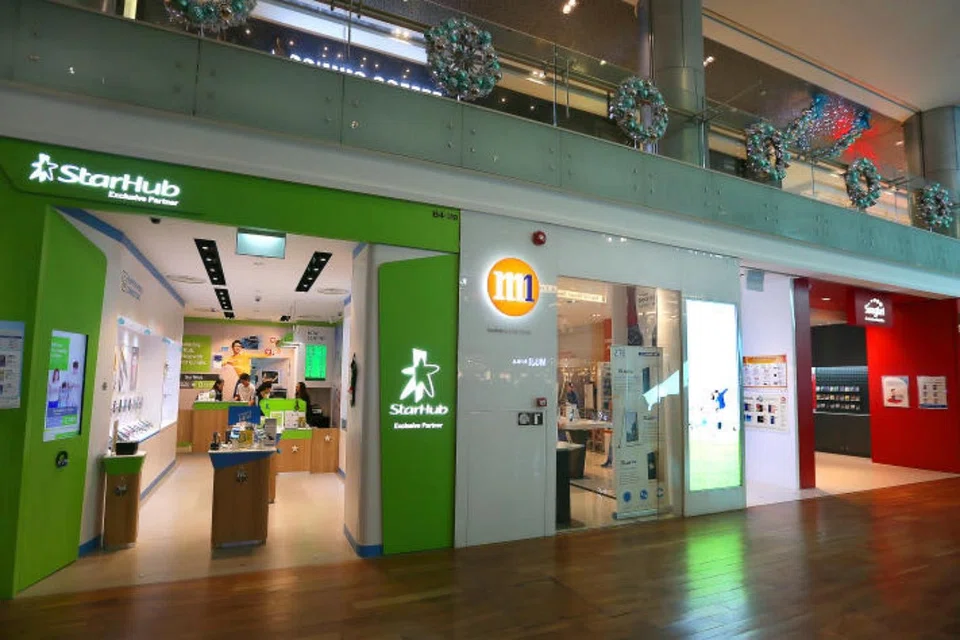
PHYSICAL barriers enforced by the novel coronavirus pandemic have choked off some streams of income for telcos, such as mobile roaming.
But, unlike hotels, restaurants and other hapless bricks-and-mortar players, Singapore telcos can still tap the tech advantage of a borderless world.
One such opportunity comes from the growing prevalence of embedded SIM (eSIM) cards. These eSIMs can be configured digitally, doing away with the need to manually replace SIM cards to switch network connections.
eSIMs are not brand-new to the market. They largely power consumer smart devices - although M1, the telco unit of Keppel Corp, also offers eSIMs as an alternative to physical SIMs at no extra charge and on request.
But, of late, the industry has begun to experiment with new and creative approaches.
M1 launched pre-paid tourist eSIMs for iPhones in May last year. Inbound visitors with compatible smartphones can get M1 service even while using their own SIM cards - making for a smoother roaming experience.
Amid the ongoing pandemic, Circles.Life, a mobile virtual network operator (MVNO) that leases frequency from M1 in Singapore, also jumped on the eSIM bandwagon.
It released eSIMs last week in a move that co-founder Rameez Ansar billed as a contactless way of "on-boarding" of customers at this time.
"What usually takes between one and three days, multiple physical touch points and a physical SIM is now instant, safe and 100 per cent contact-free," he said in an e-mail.
The bigger and potentially more lucrative market for eSIMs, however, may not be among tourists or home-bound consumers, but enterprises.
Two weeks ago, mainboard-listed Singtel unveiled a tie-up with China Unicom to allow their enterprise customers to remotely change SIM configurations in China and Singapore.
Singtel already has a regional network, thanks to ownership stakes in other telcos worldwide. But, for its partnership with China Unicom, it tapped the 34-member Bridge Alliance that connects operators in the Asia-Pacific, Middle East and Africa.
Through the alliance, Singtel could now find footholds in new cross-border markets that involve the Industrial Internet of Things (IIoT).
"With more IoT devices being built with eSIMs, and cross-border eSIM swap collaborations being arranged, switching cellular networks abroad becomes easier," Singtel explained in its press release at the time.
Such arrangements enable cost-effective IIoT roll-outs across regions.
Rival StarHub also has its eye on the IIoT prize. Starhub currently uses eSIM technology for its NumberShare service, which lets retail consumers and enterprise customers share their mobile plans and phone numbers across Apple or Samsung smart watches.
Demand for eSIM largely on wearables
That's a similar set-up to Singtel's consumer eSIM offering in Singapore.
A spokesperson for StarHub acknowledged that "market demand for eSIM has largely been on wearables".
But the telco is also keeping a close eye on industry developments. He told The Business Times: "With 5G, we expect enterprise IoT and machine-to-machine applications to become mainstream reality, driving further growth of SIM and eSIM services."
To be sure, it may be some time before the telcos benefit materially from the use of eSIMs in IIoT devices.
Nevertheless, their attention to the possibilities of the technology should reassure investors of their readiness for, and resilience in, the upcoming post-Covid-19 economy.
Even with physical distancing in place, the pandemic shows that barriers and borders can be illusory for technologically-advanced businesses with a sound value proposition.
TRENDING NOW
China Investment Corp, PGIM’s 50% stake in Nex mall up for sale; asking about S$1.2 billion

Higher rates, weaker spending: Is the Philippines entering stagflation?
Singapore tech stocks plunge as Nasdaq bloodbath spills into region
OCBC wealth clients turn defensive amid market volatility as Q3 profit rises 3%

