

AI’s token economy revolution creates new China tech winners
The market remains hypercompetitive with new players all the time, and the deeper-pocketed, larger firms are not sitting still
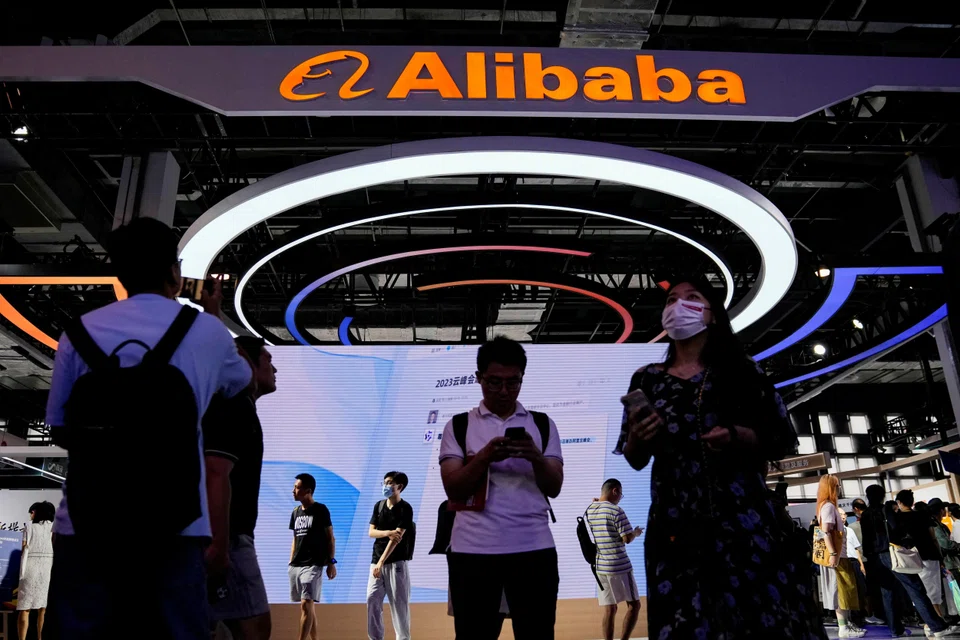
CHINA’S cheap artificial intelligence models are rapidly attracting global users and creating new winners in the nation’s stock market.
As AI development increasingly focuses on performing a diverse array of tasks, an economy is emerging around demand for “tokens”, the basic units of data in large language models. Surging token consumption globally has given China a distinct advantage thanks to its abundant supply of low-cost electricity and a legion of competing AI model developers.
Niche startups are quickly winning investor favour over established tech leaders as AI pure plays with greater growth potential. Recently listed developers MiniMax and Knowledge Atlas Technology Joint Stock, known as Zhipu, have already touched market values of over US$40 billion, surpassing Baidu Inc. and Kuaishou Technology.
The big share gains have defied losses in titans, including Alibaba Group Holding, which have sprawling businesses exposed to the broader economy. Investors such as Victoria Mio, a portfolio manager and head of Greater China Equities at Janus Henderson Group, see the start of a major shift.
“The rally reflects a structural re-rating rather than a short-term trade,” Mio said. “Investors are responding to visible token consumption, early pricing power and evidence that AI inference is becoming a monetisable activity, not just a narrative.”
As with last year’s DeepSeek boom, investors are buying the premise that China’s cost efficiency will make it a long-term winner. Beijing has seized on the latest trend in its push to make the local tech industry globally competitive, with “token export” becoming a buzzword in state media.
AI economy
A token is a chunk of data equal to about four characters. AI firms offer free and flat-fee monthly plans, but these have low token caps. Users with demand greater than these limits, like application developers, pay for LLM usage based on the amount of tokens used. They pay for both input and output, with tokens for the latter costing up to 10 times more than the former.
Tokens have become the basic unit of the AI economy. They are being used not only for transactions between companies and customers, but also by tech firm employers to measure the productivity of their developers.
According to data from LLM distribution platform OpenRouter, the three most-used models by token consumption this month were all Chinese brands: Xiaomi’s MiMo, Alibaba’s Qwen and DeepSeek. Among smaller firms, MiniMax has two models in the top 10, while Chinese startup StepFun has one.
“China can compete in terms of providing tokens and models to global users,” said Bush Chu, Investment Manager at Aberdeen Standard Investments HK. “The total cost in China to build data centres is much cheaper than that in the US.”
Perhaps more impressively, MiniMax ranked fourth in terms of overall market share by company as at Apr 19, according to OpenRouter data. It trailed only the US giants Alphabet, Anthropic PBC and OpenAI. Cheapness helps drive appeal, with MiniMax’s most popular models charging around US$1 per million tokens of output versus US$3 for some of Google’s and US$15 or more for Anthropic’s Claude.
Goldman Sachs sees MiniMax as one of the Chinese AI model companies best positioned to capture growth potential, “on the back of its comprehensive multi-modal offerings, strong commercialisation capability, AI model per token cost advantages”.
It and Zhipu are two of the “Six Tigers”, startups offering more specialised AI services, often with support from larger firms. Alibaba still owns a stake in MiniMax.
Both were listed in Hong Kong in January, and Zhipu shares have soared about 670 per cent since then, while MiniMax is up nearly 440 per cent. In contrast, Alibaba is down 5 per cent year to date and fellow megacap Tencent Holdings has tumbled 15 per cent.
‘Token maxxing’
With investors rushing to buy new startups, more market debuts are on the way – of the other Six Tigers, StepFun, Moonshot AI and Baichuan are expected to launch IPOs. To be sure, the rapid gains in shares of still unprofitable newcomers has raised red flags for some investors.
“The valuation expansion in some areas has happened rapidly over a short period of time, possibly faster than the actual growth in revenues,” said Nicholas Chui, a fund manager at Franklin Templeton. “Adoption of models is going to be important. If the adoption by both domestic and overseas corporates and individuals continue, it could provide some level of support.”
The market remains hypercompetitive with new players all the time, and the deeper-pocketed, larger firms are not sitting still. Tencent is seen as having a big potential advantage in the AI arena given its ownership of the ubiquitous WeChat app, but its latest efforts have failed to impress.
Meanwhile, cost remains a decisive factor for users. The massive popularity of OpenClaw, which helps users automate all sorts of everyday functions, has driven ravenous need for tokens supplied by cheap niche models. So has the tech industry trend of “token maxxing”, whereby engineers maximise token consumption to demonstrate how much work they are doing.
While the US still maintains the technological advantage, China’s lower-cost AI pure plays are scooping up much of the global demand. China’s average daily token consumption exceeded 140 trillion in March, compared with 100 billion at the beginning of 2024, according to state-run media.
“For investors, Chinese AI should be assessed less on headline model quality and more on utilisation, cost curves and monetisation efficiency,” said Janus Henderson’s Mio. “China is industrialising AI services at low marginal cost and embedding them rapidly into real workflows.” BLOOMBERG
Decoding Asia newsletter: your guide to navigating Asia in a new global order. Sign up here to get Decoding Asia newsletter. Delivered to your inbox. Free.
Share with us your feedback on BT's products and services
TRENDING NOW

DBS, OCBC, UOB rout lops billions off STI as inflation, rate concerns spook investors

Grab CEO’s wife Chloe Tong on life with Anthony Tan and finding her purpose

OCBC sheds S$8 billion in value as shares close nearly 6% down; analysts cautious on banks

Deal between tycoon friends sparks scrutiny of Philippine power sector

