

Alphabet plots big expansion in India as US restricts visas
Google rivals have recently set up shop in the country
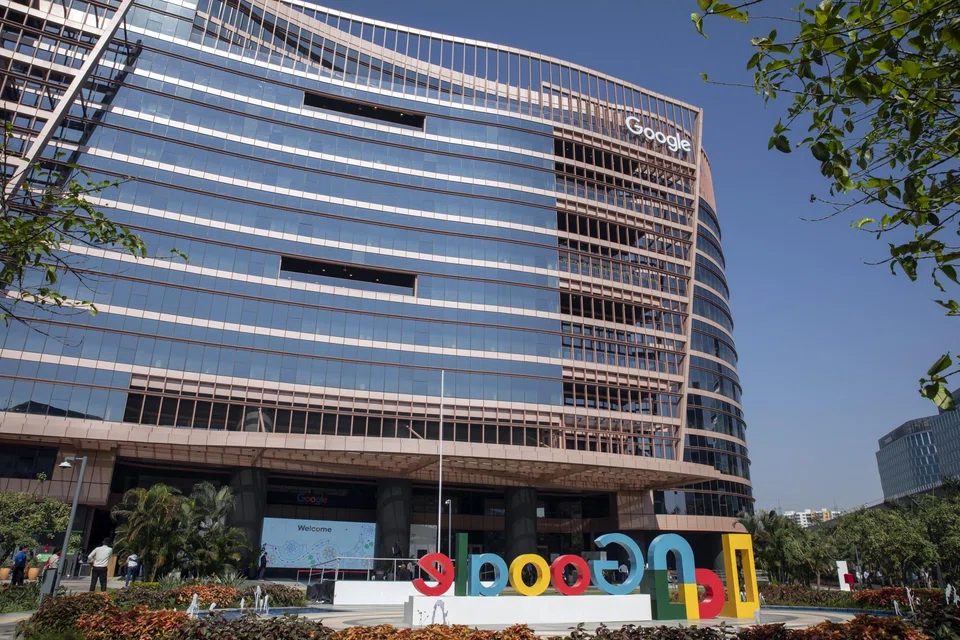
[BENGALURU] Alphabet is plotting to dramatically expand its presence in India, with the possibility of taking millions of square feet in new office space in Bangalore, India’s tech hub.
Google’s parent company has leased one office tower and purchased options on two others in Alembic City, a development in the Whitefield tech corridor, totalling 2.4 million square feet, according to sources familiar with the deal. The first tower is expected to open to employees in the coming months, while construction on the remaining two is set to conclude next year.
Options in the real estate industry give would-be tenants the exclusive right to rent, or in some cases buy, a property at a predetermined price within a specific time frame. It’s also possible that Alphabet will not exercise the option to use the additional towers.
If it does take all of the space, the complex could accommodate as many as 20,000 additional staff, which could more than double the company’s footprint in India, said the sources, asking not to be identified because the plans are not public. Alphabet currently employs around 14,000 in the country, out of a global workforce of roughly 190,000.
In a response to a request for comment, Alphabet said that it maintains a significant presence across several Indian citie,s including Bangalore.
“We have only leased one tower,” a spokesperson said, saying it totalled 650,000 square feet of office space. The source did not comment on Alphabet optioning two more towers and did not share its India headcount.
US President Donald Trump’s visa restrictions have made it harder to bring foreign talent to America, prompting some companies to recruit more staff overseas. India has become an increasingly important place for US companies to hire, particularly in the race to dominate artificial intelligence (AI).
Google rivals, including OpenAI and Anthropic PBC, have recently set up shop in the country, with Anthropic appointing former Microsoft executive Irina Ghose to lead its India operations in January. “India has a real opportunity to shape how AI is built and deployed at scale,” Ghose said.
For US tech giants, India offers a strategic workaround to Washington’s tightening immigration regime. The Trump administration has moved to sharply hike the fees for H-1B work visas, potentially to US$100,000 per application, making it harder for companies to bring Indian engineers to the US.
SEE ALSO




This shift is fuelling the growth of so-called global capability centres, or technology hubs operated by multinational corporations across sectors from software and retail to finance. Many of these centres are now focused on building AI products and infrastructure. Nasscom, India’s IT industry trade group, estimates such centres will employ 2.5 million people by 2030, up from 1.9 million today.
Google is already a major player in this shift. Last year, it opened its largest campus in Bangalore, complete with indoor mini golf, pickle ball courts and cafeterias serving cardamom tea.
The company has since advertised hundreds of engineering roles in the city, ranging from AI practice directors in its cloud division to chip designers and machine learning specialists, many requiring PhDs. YouTube, Google’s video unit, is hiring engineers to build generative AI tools.
For AI giants such as Alphabet, India’s appeal is not just its talent pool. Tens of millions of new Internet users come online annually, becoming potential customers for chatbots and AI assistants, as well as trying out new AI coding tools.
The India headcount for the US tech giants Facebook, Amazon.com, Apple, Microsoft, Netflix and Google collectively grew by 16 per cent over the last 12 months, the biggest jump in a three-year period, according to talent solutions and staffing company, Xpheno.
“The net headcount growth is driven by a return of hiring action,” said Kamal Karanth, co-founder of the Bangalore-headquartered consultancy. Immigration policy changes such as the recent H-1B visa fee revisions have “influenced the cohort to relook their talent plans for India”, he said. BLOOMBERG
Decoding Asia newsletter: your guide to navigating Asia in a new global order. Sign up here to get Decoding Asia newsletter. Delivered to your inbox. Free.
Share with us your feedback on BT's products and services
TRENDING NOW

Once staunchly pro-China, Malaysian Chinese businesses are now distancing themselves from Beijing

Looking beyond looming CEO succession, should UOB potentially pursue a transformative merger?

Could stablecoins be the future of money?

Grab CEO’s wife Chloe Tong on life with Anthony Tan and finding her purpose

