



Apple sales forecast beats Wall Street expectations, shares rise
iPhone sales were held back in the quarter by supply constraints of advanced processor chips, says CEO Tim Cook
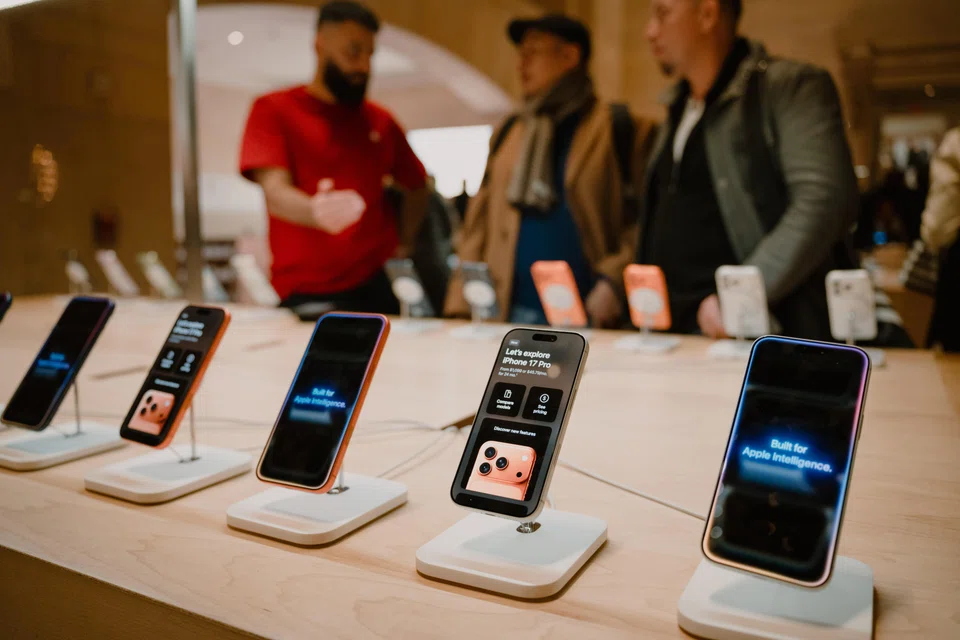
[SAN FRANCISCO] Apple on Thursday (Apr 30) forecast sales that beat expectations, even as it said it expected to continue to face chip supply constraints, sending shares up more than 3 per cent.
Apple executives said they expect sales growth of 14 to 17 per cent in the current fiscal third quarter, which was above Wall Street estimates of 9.5 per cent growth to US$102.93 billion, according to data from LSEG.
Earlier, Apple reported better-than-expected second-quarter results, with customers showing eagerness to buy a new MacBook model driven by the incoming chief executive John Ternus, while supply constraints hindered iPhone sales.
Apple said sales and profits were US$111.18 billion and US$2.01 per share for the fiscal second quarter ended Mar 28, above analyst expectations of US$109.66 billion and US$1.95 per share.
Sales of the iPhone – still the company’s best-selling product nearly 20 years after its introduction – were US$56.99 billion, slightly less than estimates of US$57.21 billion, after the biggest revamp of the lineup since the iPhone X in 2017.
Apple chief financial officer Kevan Parekh also said the company would no longer aim to bring its net cash – its cash minus debt – to a net neutral position. Apple embarked on that goal in 2018 but still had US$54 billion in net cash at the end of the first fiscal quarter in January.
‘Less flexibility’ in supply chain
Apple CEO Tim Cook said iPhone sales were held back in the quarter by supply constraints for the advanced processor chips that form the brains of the device. The iPhone 17 family’s chips are made on a variant of the same Taiwan Semiconductor Manufacturing Co chip manufacturing technology as many leading AI chips.
“The demand was off the charts. And there’s just a little less flexibility in the supply chain at the moment for getting more parts,” Cook told Reuters.
The iPhone 17 family of devices, plus the iPhone Air, was spearheaded by Ternus, who will take over from Cook in September.


Under Ternus, Pro models gained more features but also a higher price tag, while entry-level models such as the 17e and base model iPhone 17 held prices steady relative to their storage capacity.
That strategy, along with massive buying power, has helped Apple navigate higher memory chip prices. Apple said gross margins were 49.27 per cent, above estimates of 48.38 per cent, according to LSEG data.
Another product masterminded by Ternus was the MacBook Neo, which costs US$500 for students.
Analysts believe it could help Apple crack a new US$20 billion market for lower-priced laptops now dominated by Google Chromebooks. Apple said Mac sales, which included several weeks of Neo sales, were US$8.4 billion, compared with estimates of US$8.02 billion.
Investors are waiting to hear more about Apple’s plans for Siri, its voice assistant that it plans to improve with Google technology.
“The Google Gemini partnership for Siri signals Apple’s willingness to lean on external AI innovators,” said eMarketer analyst Jacob Bourne.
“Investors will be watching for clues about how Ternus plans to balance Apple’s cautious AI posture with the pressure to define the next consumer device for the AI era, particularly as expectations about the iPhone’s performance are getting harder to meet,” he said.
Apple will hold its annual software developer conference in June, where it is expected to reveal more details about its AI plans.
While Apple is not spending tens of billions of dollars per quarter on AI like its rivals, its research and development costs were up 33.5 per cent to US$11.42 billion in the fiscal second quarter.
“We are investing a lot. We see it as a huge opportunity, both for consumer and for business,” Cook told Reuters. “We are all in, and personalised Siri is on schedule for this year.”
Services stay robust
Apple’s services business, which includes revenue from its App Store, which has been under regulatory scrutiny in Europe and elsewhere, generated US$30.98 billion in revenue for the fiscal second quarter, above analyst estimates of US$30.39 billion.
Sales of iPads were US$6.91 billion, compared with estimates of US$6.66 billion, and wearables, which include the Apple Watch, accounted for US$7.9 billion in revenue, compared with expectations of US$7.7 billion, according to LSEG data.
Apple’s greater China sales were US$20.5 billion, beating analyst estimates of US$19.45 billion, according to Visible Alpha data.
Apple updated its capital return programme, saying its board has authorised an additional US$100 billion in buybacks, the same as a year ago. REUTERS
Decoding Asia newsletter: your guide to navigating Asia in a new global order. Sign up here to get Decoding Asia newsletter. Delivered to your inbox. Free.
Share with us your feedback on BT's products and services
TRENDING NOW

Grab CEO’s wife Chloe Tong on life with Anthony Tan and finding her purpose

8 public officers referred to police over property buys near unannounced MRT stations: Chan Chun Sing

DBS tops trades in smaller board lots on debut of revised SGX framework

Deal between tycoon friends sparks scrutiny of Philippine power sector

