

Arm forecasts higher-than-expected revenue on surging AI data centre demand
The company generates revenue by licensing its technology to companies such as Nvidia and Apple
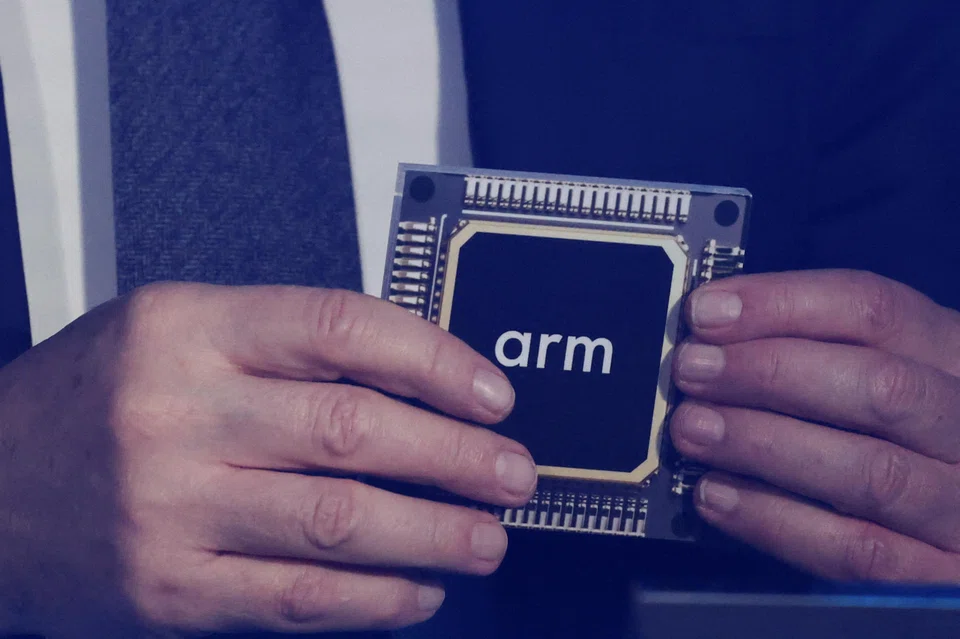
[BENGALURU] Arm Holdings forecast first-quarter revenue above Wall Street expectations on Wednesday (May 6), benefiting from higher adoption of its chip technology as tech companies spend heavily on artificial intelligence compute.
Arm shares jumped 12 per cent in after-hours trading, but reversed course to drop 5.49 per cent after executives told analysts on a conference call that they have not yet secured supplies to meet the demand for a new chip and after analysts probed about the costs of getting into the business of making its own chips.
The company expects quarterly revenue of US$1.26 billion, compared with analysts’ estimates of US$1.25 billion, according to data compiled by LSEG.
Arm generates revenue by licensing its technology to companies such as Nvidia and Apple, collecting royalty payments for every product built using its designs.
These chip architectures are highly valued for consuming relatively little power, a key advantage for data centre operators who are under increasing pressure to control the rising energy demand and heat output that come with running large-scale AI models.
Arm designs dominate smartphones
Arm’s designs power virtually every smartphone in the world, giving it an important role in the vast handheld market.
However, a shortage of memory chips has strained the industry, driving up the prices of consumer electronics and stalling sales, leaving Arm with potentially lower royalties. Smartphone chip designer Qualcomm last week provided a dour quarterly revenue forecast due to the memory issues, but its stock jumped on upbeat comments of a demand rebound.
Arm shares have soared this year, climbing more than 91 per cent, and outperforming other major chip makers including Nvidia, Advanced Micro Devices and Broadcom, as at Tuesday’s close.
“It was a very tough setup for them – the expectations were just so high,” said Seaport Research Partners analyst Jay Goldberg. “They were good numbers, but not good enough.”




Arm’s fourth-quarter revenue came in at US$1.49 billion, beating estimates of US$1.47 billion.
Royalty revenue was US$671 million, compared with expectations of US$697.1 million. Licensing and other revenue was US$819 million, while analysts had expected US$774 million.
Arm forecast first-quarter adjusted earnings per share of 40 US cents, compared with Wall Street estimates of 36 US cents.
Arm, like its peers, has tapped into the growing market for central processing units, as the rise of AI agents introduces the need for substantial general-purpose compute.
“We are very bullish about this data centre demand,” Arm CEO Rene Haas said, adding the current quarter includes a “pretty healthy uptick in terms of royalties associated with the data centre”.
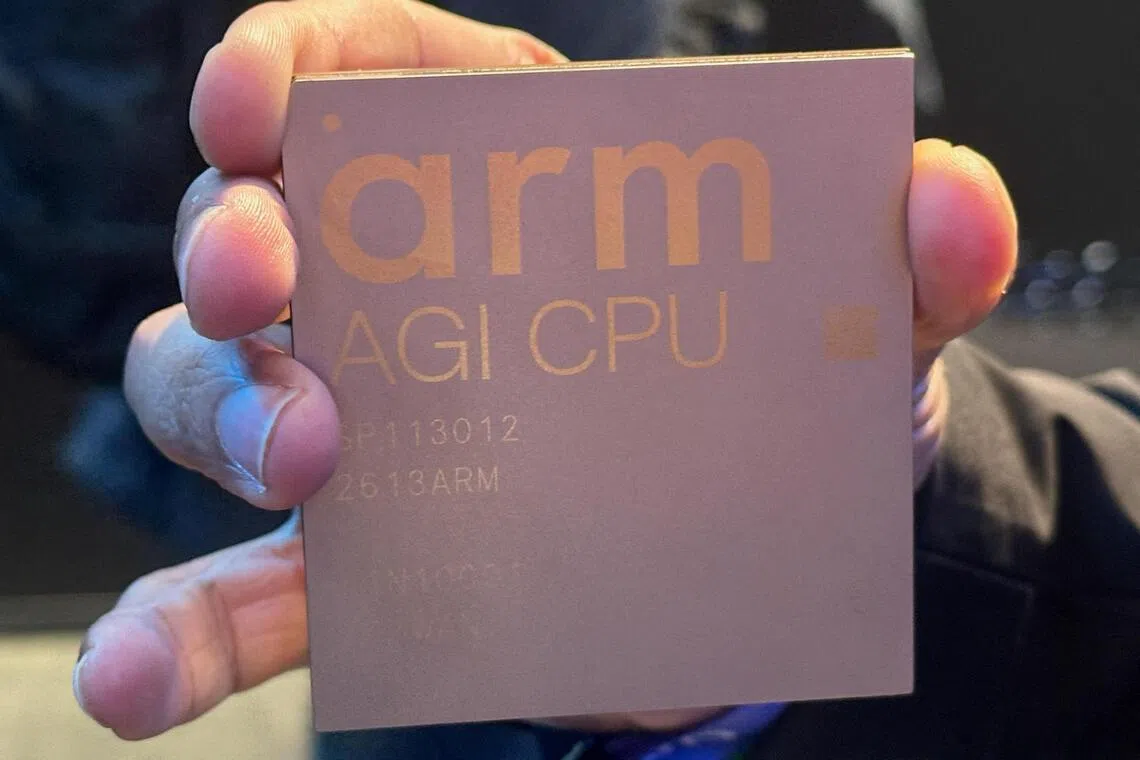
Earlier this year, Arm announced the AGI CPU, a data centre chip that will address data-crunching needed for a specific type of AI that is able to act on behalf of users with minimal oversight, instead of responding to queries as part of a chatbot.
Arm has said that the chip will add billions of US dollars of revenue.
Arm has enough capacity secured to fulfil US$1 billion of demand, the company discussed when it launched the AGI CPU, but has not yet secured it for the second billion dollars’ worth of orders, Haas said.
“The market sees that as a party spoiler,” said Michael Ashley Schulman, partner at wealth management firm Cerity Partners. “They will likely get the supply but the market doubt hinges on whether it will be quick enough and then what happens when more demand arrives.” REUTERS
Decoding Asia newsletter: your guide to navigating Asia in a new global order. Sign up here to get Decoding Asia newsletter. Delivered to your inbox. Free.
Share with us your feedback on BT's products and services
TRENDING NOW

LTA proposes combining car COE categories, adding rebate-surcharge system

StarHub to acquire MyRepublic’s mobile business amid ongoing telco consolidation

DBS, OCBC, UOB rout lops billions off STI as inflation, rate concerns spook investors

Grab CEO’s wife Chloe Tong on life with Anthony Tan and finding her purpose

