Asia’s data centre rush is making some unique skills highly desirable
Private equity firms are on the hunt for skilled operators, including reliable power suppliers, to meet the region’s growing demand for AI computing needs

IF YOU have built or operated a data centre, a private equity (PE) house may be looking for you. Ditto if you know how to supply a building with consistent power in various Asian markets.
In anticipation of artificial intelligence (AI) computing needs, private capital is pouring into the region’s data centre industry.
PE funds, sitting on heaps of dry powder, are among the few investors with the financial wherewithal for the expensive task of building and running data centres.
That wherewithal, however, needs to be matched with niche skills – creating opportunities for individuals and companies in the data centre industry.
“There’s massive growth in this space; so there’s definitely competition for talent as well,” said Dalmar Sheikh, global head of data centre operations at Actis.
His investment firm, which specialises in sustainable infrastructure, on Jun 17 announced the launch and funding of a portfolio company focused on data centres in Asia.
Called Epoch Digital, it will start with a portfolio of three data centres under development: in Taipei, Taiwan; Johor Bahru, Malaysia; and Seoul, South Korea.
Epoch Digital will be managed by data centre veterans Chng Hak Kiat and Lim Pei Ping, whose experiences include stints at Keppel Data Centres and DCI Data Centers.
DCI is a portfolio company of Brookfield Asset Management, a Canadian alternatives investor. Keppel Data Centres is a unit of Singapore-listed asset manager Keppel.
Sheikh, meanwhile, joined Actis from Amazon, where he helped build cloud services and manage data centre operations.
“When there was a failure of a data centre infrastructure, I was the guy they had to come and explain to,” Sheikh said. His experience allows him to look at contracts and site plans, and figure out what makes sense.
“(Actis) is not just an investor. We like to call ourselves builders and operators,” he added. “We’re people with industry backgrounds.”
Talent bottleneck
Data centres attracted greater investor attention after the Covid-19 pandemic raised demand for remote collaboration infrastructure. They are gaining more attention because of AI.
Preqin data shows that Asian data centre deals totalled US$7.8 billion in 2021, up from US$5.9 billion in 2020.
Total deal value has fallen since: US$3.8 billion worth of deals were done in 2023 – the lowest number in five years – and US$1.5 billion worth of deals have been announced this year.
Activity is expected to pick up, though. Alaister Johnson, a partner at law firm Linklaters who specialises in telecommunications, media and technology, said that deals in his space had been dominated by telecom tower assets for some years, but that data centres are now at the top of the list.
“It’s likely the Asia data centre market will continue to grow. As an investment opportunity, the data centre asset is one of the most attractive at the moment,” Johnson said.
The need to secure expertise is a material bottleneck, though.
“(Data centres) are expensive and complicated. Building them is very tricky,” said Fred Fitzalan Howard, Asia-Pacific data centre lead for consultancy Knight Frank.

Tenants – cloud service providers such as Google, Amazon and Microsoft – are very particular, Howard said. For one, a location has to be perfect – with redundant power and fibre sources, for instance, and without flood risks.
“Everything is analysed,” Howard said. Without the right expertise to design, develop and operate these assets, it is difficult for operators to procure tenants.
There are not that many large tenants for data centre operators to court, he added. “The whole market is chasing these companies.”
After signing a tenant, operators also have to contend with huge liabilities from service agreements – such as rental rebates when things go wrong. “There are elements of risk that can get very expensive very quickly,” Howard noted.
The proliferation of AI adds to the complexity, because it requires scale that not all operators can handle, said Udhay Mathialagan, managing partner in Brookfield’s infrastructure group and chief executive of Brookfield Global Data Centers.
There are also challenges unique to Asia. “The Asian market is very diverse and has varying degrees of skills, power and land availability, and construction costs,” he noted. “That said, hyperscale customers still require comparable products in markets across the region – so being able to navigate those differences that are unique to Asia is a challenge.”
Formula for success
These hurdles mean that successful players need a mix of financial heft and operational capability.
Among the potential winners will be specialist infrastructure operators with “industry understanding and the background”, said Johnson of Linklaters.
These include the likes of Brookfield and Actis, and even Keppel. The latter has remade itself into an asset manager and launched several private funds.

“Keppel is uniquely positioned to be able to tap the expertise of the wider Keppel ecosystem to add greater value to data centre investments,” said Christina Tan, Keppel’s CEO for fund management and chief investment officer.
Tan added that Keppel has expertise in renewable energy through its infrastructure division. As a manager of several listed real estate and infrastructure funds, Keppel also has ready exit platforms.
For financial sponsors – meaning private equity players – without specialised expertise, Linklaters’ Johnson said the focus will be on finding the right operator.
“Most financial sponsor players won’t have their own plug-and-play operations team that they can bring in to start running these data centres themselves,” he said.
One option is to buy mature data centres with an existing operator. Another is to pair up with an established data centre player.
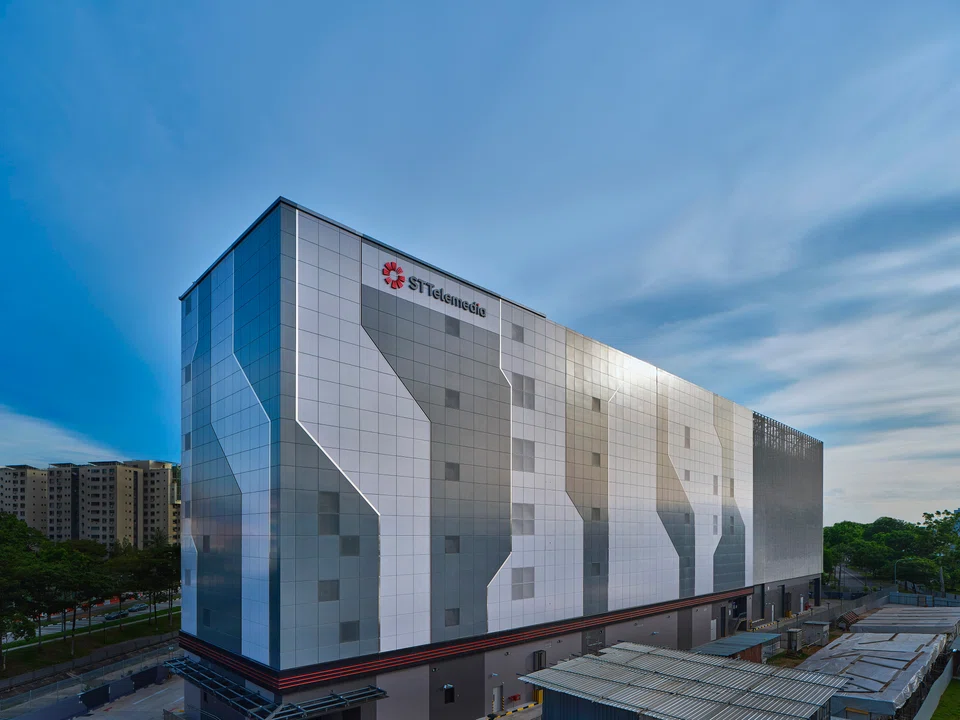
Private equity group KKR, for instance, has taken a stake in the data centre business of Singapore-listed telco Singtel. The two are also jointly investing in ST Telemedia Global Data Centres.
Is there a danger of oversupply given the enthusiasm over data centres? Knight Frank’s Howard said this is unlikely.
“There’ve been times in the past, globally, when people have said this market (was oversupplied). But if you fast forward, we’ve seen that space consumed,” he said. “The market’s in a very good place.”