

Broadcom sees over US$100 billion in AI chip sales by 2027 on robust custom chip demand
It announced a new share repurchase programme of up to US$10 billion
 Add BT as a preferred source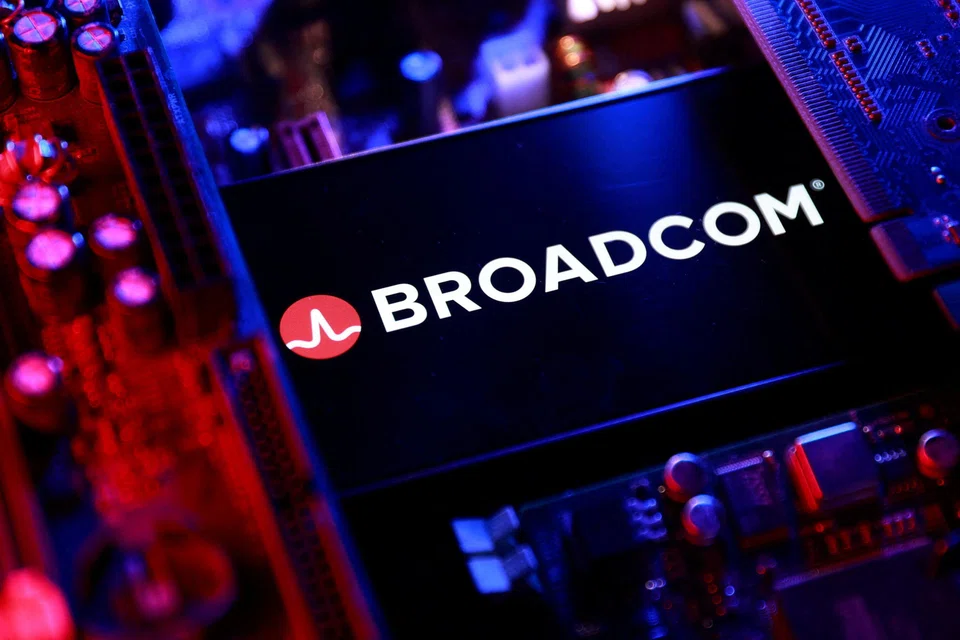
CHIP designer Broadcom on Wednesday projected its artificial intelligence chip revenue would exceed US$100 billion by next year, signaling surging demand for custom artificial intelligence chips in a market dominated by Nvidia.
The company’s share price rose more than 4 per cent in extended trading after it also announced a new share repurchase program of up to US$10 billion through the end of the year.
Big Tech firms such as Alphabet, Microsoft , Amazon and Meta are expected to spend at least US$630 billion to build AI infrastructure this year, boosting demand for chips, servers, storage and networking equipment from companies like Broadcom.
“Our visibility in 2027 has dramatically improved. Today in fact we have line of sight to achieve AI revenue from chips in excess of US$100 billion in 2027,” CEO Hock Tan said on a post-earnings call.
The company expects second-quarter revenue to be about US$22.0 billion, above analysts’ average estimate of US$20.56 billion, according to data compiled by LSEG. It projected AI chip revenue of US$10.7 billion in the quarter.
Broadcom, which supplies semiconductors and infrastructure software, does not typically design entire AI chips itself. Instead, it works with clients such as Google to develop their tensor processing units (TPU) and ChatGPT maker OpenAI on their in-house custom processors.
The company’s engineers help translate an early design into the physical layout of a chip that can be fabricated by manufacturers like TSMC.
“Broadcom’s guidance for the April quarter and into 2027 was very encouraging. While the company typically only guides one quarter at a time, the visibility into results more than a year out are an indication of significant growth in demand,” said D.A. Davidson analyst Gil Luria.
Tan said Broadcom is expected to deliver 1 gigawatt’s worth of TPUs for AI startup Anthropic in 2026, with demand rising to 3 gigawatts in 2027. Broadcom aimed to ship OpenAI’s first AI chip in 2027 and deliver over 1 gigawatt’s worth of the chips.
SEE ALSO





The volumes of chips disclosed for major customers by Broadcom on Wednesday showed that it is signing deals close in size to major AI chip companies such as Nvidia, which disclosed 5-gigawatt of sales to OpenAI last week, and Advanced Micro Devices, which has signed 6-gigawatt deals with both OpenAI and Meta.
Another revenue source for Broadcom is Meta Platforms, with Tan saying reports of a slowdown in Meta’s AI chip business - part of that company’s moves to design more of its own custom silicon and reduce reliance on external suppliers - were mistaken.
“Meta’s custom accelerator MTIA roadmap is alive and well,” Tan said, using the name of Meta’s custom chip. “We’re shipping now.”
Broadcom said last month that it expected to sell at least 1 million chips by 2027 based on its stacked design tech, marking a new product and a sales target that could represent a revenue stream potentially worth billions of dollars.
Growth in Broadcom’s infrastructure software segment slowed to around 1 per cent at US$6.80 billion in the first quarter, compared with analysts’ expectations of 2.6 per cent growth to US$6.88 billion.
The company’s shares have fallen around 8 per cent so far this year, after rising around 49 per cent in 2025. Last month, AI chip heavyweight Nvidia posted better-than-expected results for the January quarter, and forecast current-quarter revenue above market estimates.
Broadcom said its first-quarter revenue rose 29 per cent to US$19.31 billion, beating analysts’ average estimate of US$19.18 billion. Its adjusted earnings per share of US$2.05 exceeded estimates of US$2.03. Its AI revenue more than doubled to US$8.4 billion in the quarter ended Feb 1, driven by demand for custom AI accelerators and AI networking. REUTERS
Decoding Asia newsletter: your guide to navigating Asia in a new global order. Sign up here to get Decoding Asia newsletter. Delivered to your inbox. Free.
Share with us your feedback on BT's products and services
TRENDING NOW

ComfortDelGro’s Zig to buy S$10 million worth of BYD cars for private-hire fleet

Singapore telco price war squeezes earnings, strengthens case for StarHub-M1 deal, say analysts
Sats slides 13.6% as investors dump shares on profit-margin squeeze

When every phone becomes a satellite phone, what happens to Asia’s telcos?

