Chip-sector linchpin Resonac seeks to tap China’s AI ambitions
Japan is home to a network of little-known companies that dominate in key materials that are indispensable for semiconductor manufacturing
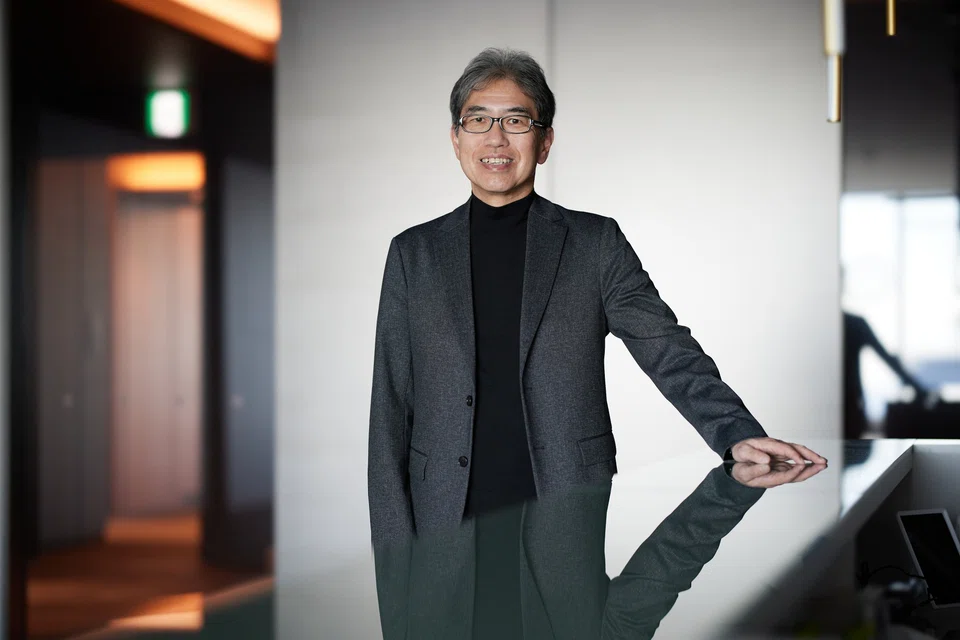
[HONG KONG] Semiconductor materials linchpin Resonac Holdings is eyeing solid growth from Beijing’s ambition to build its own chip industry, leaving the door open for further investment in China in the years ahead.
Tokyo-based Resonac, which supplies crucial chemicals used to make cutting-edge chips, has bolstered production capacity in China to meet demand driven by a state-backed push to create a domestic semiconductor supply chain, according to chief executive officer Hidehito Takahashi.
While Resonac’s current production capacity in China is enough for the time being, the company may consider another round of investment in a few years if there is significant growth, he said.
China is studying plans to pour as much as US$70 billion of state money into its semiconductor industry, deemed critical to win any technological conflict, Bloomberg News reported last week.
“We are ring-fencing China,” Takahashi said on Wednesday (Dec 17). “We are producing in China and selling in China. China is a good market.”
Resonac, whose shares are up 50 per cent this year, is part of a vast supply chain that’s seeking to capitalise on surging artificial intelligence (AI)-related demand even as it takes measures to navigate growing US-China tech tensions. The company has a joint venture with South Korea’s SK Materials and commands a roughly 50 per cent market share in the non-conductive film needed to make high-bandwidth memory chips used to train AI.
It also makes materials such as silicon wafer-polishing slurry and etching gas, supplying chipmakers such as Taiwan Semiconductor Manufacturing Company and Infineon Technologies, according to data compiled by Bloomberg. Nvidia supplier SK Hynix, part of the SK Group alongside SK Materials, is a leader in the HBM arena.
Resonac is diversifying procurement to lower reliance on Chinese rare earths and aims to develop “second sources and third sources” of raw materials, Takahashi said. Possible alternative sources for materials used in its slurry include companies in Australia and Europe, he said.
Japan is home to a network of little-known companies that dominate in key materials such as photoresists and mask blanks that are indispensable for semiconductor manufacturing. Takahashi, who helped orchestrate the creation of Resonac from the merger of Showa Denko KK and Hitachi Chemical, has been a leading voice pushing for consolidation in the country’s materials sector.
Asked if Beijing’s bid to establish its own chip ecosystem would give rise to more competition, the executive said that the backend materials market where Resonac operates is small, and the materials are “tedious” to develop. China would likely focus on manufacturing its own chip gear first, he said.
“We are feeling relatively okay on that end at this point,” he said. BLOOMBERG
Decoding Asia newsletter: your guide to navigating Asia in a new global order. Sign up here to get Decoding Asia newsletter. Delivered to your inbox. Free.
Share with us your feedback on BT's products and services