

Deutsche Telekom weighs full combination with T-Mobile
Any transaction may face significant obstacles, including the need for political support in Berlin and Washington
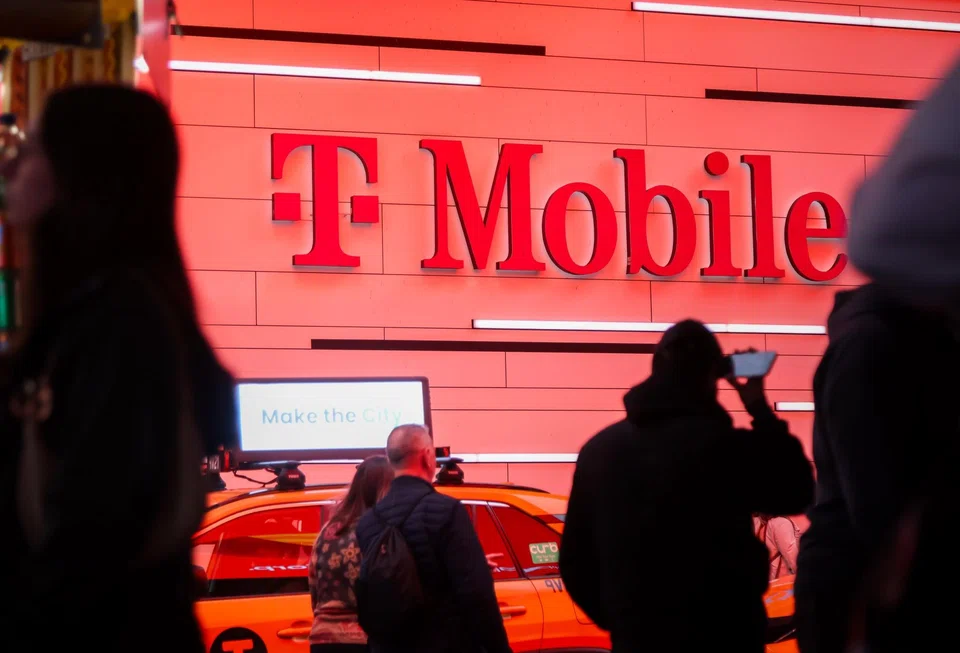
[NEW YORK/FRANKFURT] Deutsche Telekom (DT) is considering a full combination with its American arm T-Mobile US (TMUS), a move that would create a multinational telecom group and rank as the largest-ever public M&A deal, sources with knowledge of the matter said.
Deutsche Telekom is already T-Mobile’s biggest shareholder with a roughly 53 per cent stake. The German carrier has been discussing the idea of creating a new holding company that would make a stock bid for shares of both Deutsche Telekom and T-Mobile, the sources said, asking not to be identified because the information is private.
The potential deal would create a single, simplified corporate group that controls the operations of Deutsche Telekom and T-Mobile and would be jointly owned by the two companies’ current investors. The combined entity may then seek a listing in the US and a major European exchange, though the details are still being worked out, some of the sources said.
Discussions are at a preliminary stage and any transaction would require political support to move ahead, the sources said. Details of the possible deal could also change. The companies have considered a closer tie-up on-and-off for years, and there’s no certainty they will decide to proceed this time, the sources said.
“As per their usual practice, DT and TMUS do not comment on speculation regarding their corporate activity, nor are there specifics for us to comment on for your inquiry,” a spokesperson for Deutsche Telekom said.
Deutsche Telekom shares trade at well below the earnings multiple of T-Mobile, which contributes the bulk of its profits. Combining the two companies could reduce that valuation discount and give the merged group greater heft to potentially pursue acquisitions. It would also create the world’s biggest wireless operator by market capitalisation, surpassing China Mobile, which is valued at about US$235 billion.
T-Mobile shares fell 0.5 per cent to US$197.13 at 2.54 pm in New York trading on Tuesday (Apr 21), giving it a market value of about US$217.1 billion. Deutsche Telekom has a market value of about 141 billion euros (S$211 billion).
T-Mobile has fallen 22 per cent over the past year while Deutsche Telekom is down 10 per cent over that same time period.
Deutsche Telekom entered the US market in 2001 when then-CEO Ron Sommer bought T-Mobile predecessor VoiceStream Wireless in a deal that was criticised at the time for being too expensive. VoiceStream was later renamed T-Mobile USA.
Deal hurdles
Any transaction may face significant obstacles, including the need for political support in Berlin and Washington. The German government and state-owned lender KfW own a combined stake of about 28 per cent in Deutsche Telekom, giving them major sway in any deal.
In order to win approval, the companies may need to consider commitments to keep a major base in Germany and make significant investments in the US, some of the sources said. It’s unclear if the German government would support a deal, as it would give them a smaller stake in the combined company. They’d also need to convince investors that the merits of creating a larger, multinational telecom group outweigh the benefits of having two separate, more focused companies that can attract investors interested in their specific market.
The new holding company would likely be incorporated in a European jurisdiction outside Germany, the sources said. Companies have previously used a similar structure for cross-continental megadeals, including US industrial gas giant Praxair’s roughly US$35 billion combination with German rival Linde AG.
To effect that transaction, they created a holding company incorporated in Ireland, seen as a neutral middle ground, that made separate stock bids for Praxair and Linde. The merged group then listed on the New York Stock Exchange and Frankfurt bourse.
In a February podcast, Deutsche Telekom CEO Tim Hoettges warned that European regulation is a major hurdle that’s preventing progress in building the continent’s digital infrastructure. He said that while Deutsche Telekom has become a global heavyweight, its market value is almost exclusively driven by its US business, highlighting the struggles of the European market.
The potential move also comes at a time of increasing tension between US President Donald Trump and European leaders like German Chancellor Friedrich Merz, who have been at loggerheads on issues from tariffs to the Nato alliance.
The European Union is working on new merger guidelines that would potentially ease the pathway for creating European champions big enough to compete with US and Chinese rivals. At the same time, many European companies have been looking at US acquisitions to tap the faster growth in that market.
Deutsche Telekom has been laying the groundwork for years to wield even more control over T-Mobile. Former Deutsche Telekom executive Srini Gopalan took over as CEO of T-Mobile in November. Gopalan had been CEO of Deutsche Telekom Germany before joining T-Mobile as chief operating officer in March last year.
The company has expressed its desire to increase its T-Mobile stake, with Deutsche Telekom’s Hoettges saying earlier this year that the company was evaluating ways to further boost its holding. BLOOMBERG
Decoding Asia newsletter: your guide to navigating Asia in a new global order. Sign up here to get Decoding Asia newsletter. Delivered to your inbox. Free.
Share with us your feedback on BT's products and services
TRENDING NOW

ComfortDelGro appoints two new independent directors

Once staunchly pro-China, Malaysian Chinese businesses are now distancing themselves from Beijing

NoonTalk needs continued financial support from CEO Dasmond Koh, auditors warn

DP Architects sets the benchmark for sustainability disclosure and design

