

Efficiency initiatives to raise data centre temperatures leave less room for error

Yong Jun Yuan
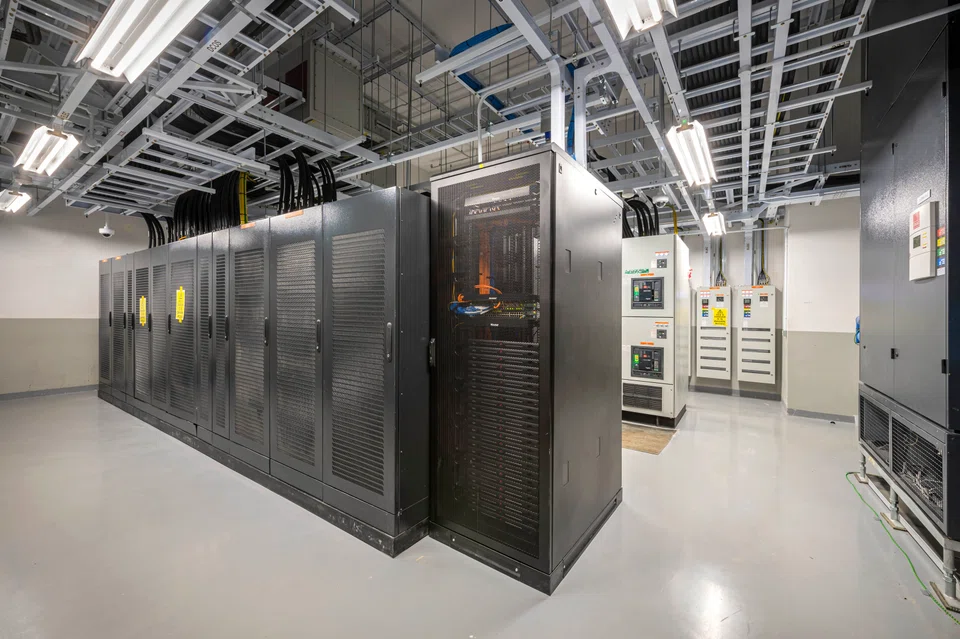
RAISING the temperature at data centres could help generate energy cost savings. But analysts warned it could leave operators with less room for error.
“If we start allowing hardware to operate at an elevated temperature…and let’s say, there were some issues in your cooling facilities, that also means that now you have a very low margin for error,” said National University of Singapore (NUS) Associate Professor Lee Poh Seng.
Industry watchers added that operators need to be wary about raising temperatures as changing workloads in data centres could generate more heat.
“In the past…data centres were used more like storage warehouses with little processing effort necessary only to save backups. Today, a lot of services are also operating at data centres,” said Lim Say Leong, technical director of Asia-Pacific at energy solutions provider Chint Global.
The warnings come as one of Equinix’s data centres in Singapore saw some of its data halls overheat due to a technical issue with its chilled water system during a planned control system upgrade on Oct 14.
In an update on Oct 20, the data centre operator attributed the technical issue to a mistake made by its vendor contractor which impacted the flow of chilled water to the data centre’s cooling system.
The outage disrupted DBS and Citibank’s banking services as their servers were hosted in these data halls.
NUS’ Prof Lee noted that Equinix in December last year said that it would start to operate its facilities closer to 27 degrees Celsius.
The company said this is within the accepted boundaries of standards set by the American Society of Heating, Refrigerating and Air-Conditioning Engineers.
The Infocomm Media Development Authority (Imda) in June this year also released its operating standards, which allow for temperatures of data centres in tropical climates to be gradually raised to 26 degrees Celsius and above. It added that data centres currently typically operate at 22 degrees Celsius or below.
Citing University of Toronto research, Imda noted that the standards could yield energy savings of between 2 per cent and 5 per cent for every one degree Celsius increase in temperature.
Chint Global’s Lim, who is also a former ambassador to the standards body International Electrotechnical Commission, described the development of standards as a “perpetual” process.
As new information emerges from these incidents, Lim said that standards will also need to be revised.
He added that such incidents will need to be correlated with factors such as a data centre’s design, as well as how it was upgraded to account for the higher temperatures that they may be subjected to, to better inform future decisions.
Equinix did not say if its data centres in Singapore were operating at higher temperatures as part of its efficiency initiative.
However, Christopher Street, vice-chair of SGTech data centre chapter, pointed out that the operating of data centres at higher temperatures has not been shown to negatively impact hardware such as servers, switches and routers.
“Where it does have an impact is on the operations of the data centre as the technical team will have less time to address any thermal incident,” he said.
He added that raising temperatures involves the calibration of equipment, systems and settings to create the right environment for such temperatures.
In addition, Street said operators and their clients should work together to address potential overheating incidents with sensors and systems that can react or moderate power usage when temperatures exceed operational thresholds.






