Hi-P plans return to public market, aspiring to achieve S$10b in annual sales by 2029
Hi-P’s customers include prominent global technology and consumer players such as Amazon, Meta Platforms, Keurig, Rivian Automotive, Tesla, Dyson, Procter & Gamble and Colgate-Palmolive


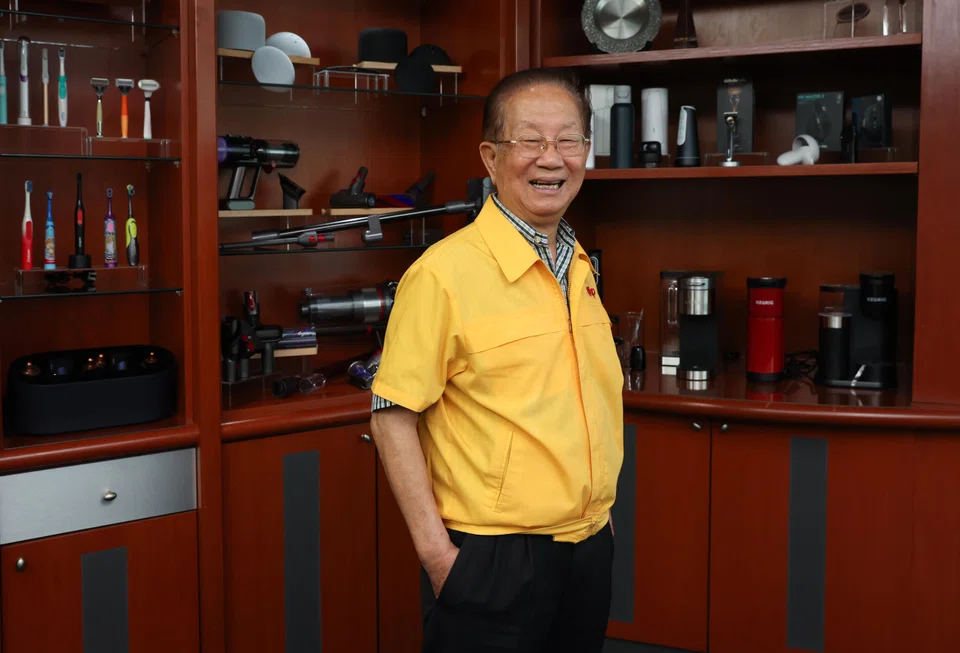
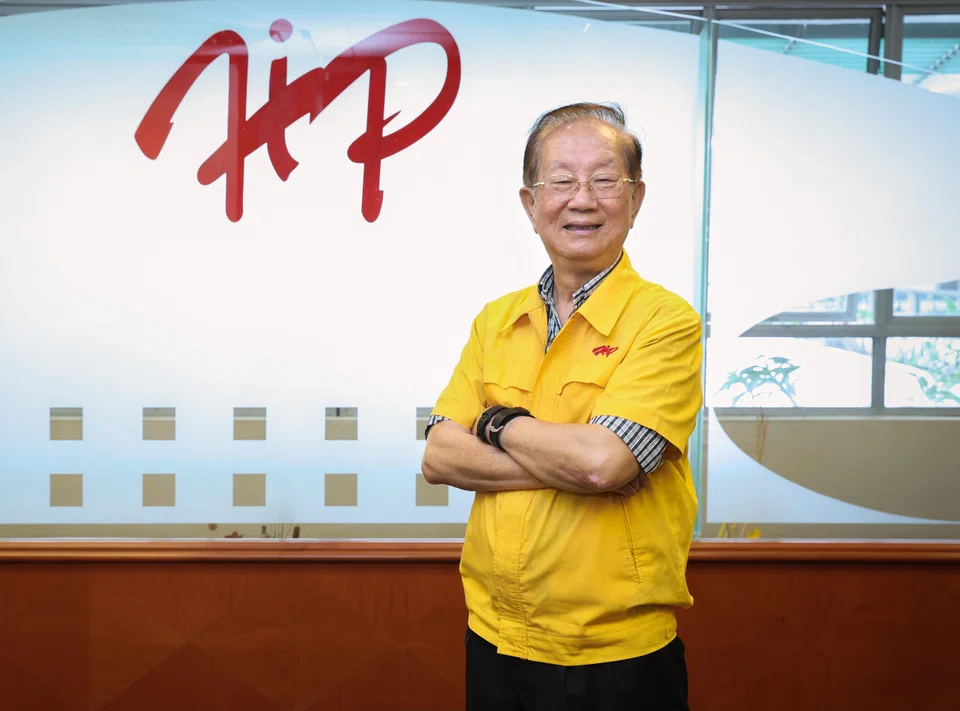
SINGAPORE contract manufacturer Hi-P International might seek a listing again in a couple of years, to fuel an expansion plan that includes achieving sales S$10 billion by 2029, said its executive chairman and owner Yao Hsiao Tung.
Yao, who handed over the role of chief executive officer to Lee Kong Ann on Friday (Feb 24), told The Business Times in an exclusive interview recently that Hi-P might go for a public flotation at the end of 2024 or early 2025, possibly with a dual-listing in Hong Kong or the United States.
This time, however, Yao plans to enlist professionals to ensure the stock gets a fair valuation in the market. He earlier delisted Hi-P because he felt the then Mainboard-listed stock was undervalued.
Yao made a voluntary unconditional offer of S$2 a share in late 2020 for the 16.5 per cent of Hi-P that he and his wife did not already own. Hi-P, which counts several global consumer product juggernauts as its customers, delisted from the Singapore Exchange in April 2021.
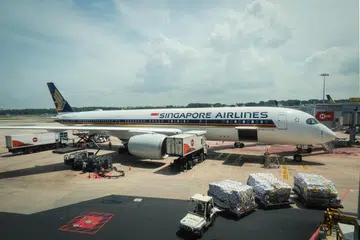
In October, Apple listed Hi-P among its suppliers that provided materials as well as manufacturing and assembly services for its products worldwide for its financial year 2021.
Hi-P’s other customers include e-commerce behemoth Amazon, Facebook’s parent Meta Platforms, coffee maker brand Keurig, electric vehicle players Rivian Automotive and Tesla, and household appliance company Dyson, as well as consumer goods stalwarts Procter & Gamble and Colgate-Palmolive.
Hi-P manufactures products from the ground up for some of its customers, including providing testing and packaging services. For other customers, it produces components and modules that go into their products. About 90 per cent of its customers are in consumer products field.
While demand in the consumer sector can be cyclical, Yao said different companies have different business cycles. So, dips in demand from some customers are often negated by higher orders from others.
The proceeds to be raised from Hi-P’s relisting would be used to support the expansion plans Yao has for the company, which under his charge had grown 10-fold every seven years, from S$1 million to S$1 billion in revenue between 1987 and 2008.
The year its delisting plan was announced, Hi-P achieved a bottom line of S$87 million and a top line of S$1.6 billion. In 2021, Hi-P recorded a net profit of S$98 million on revenue of S$1.8 billion.
In 2022, it achieved a 20 per cent year-on-year improvement in turnover to S$2.2 billion despite a challenging time for its operations in Shanghai amid Covid-related curbs. Earnings rose by 40 per cent to S$135 million.
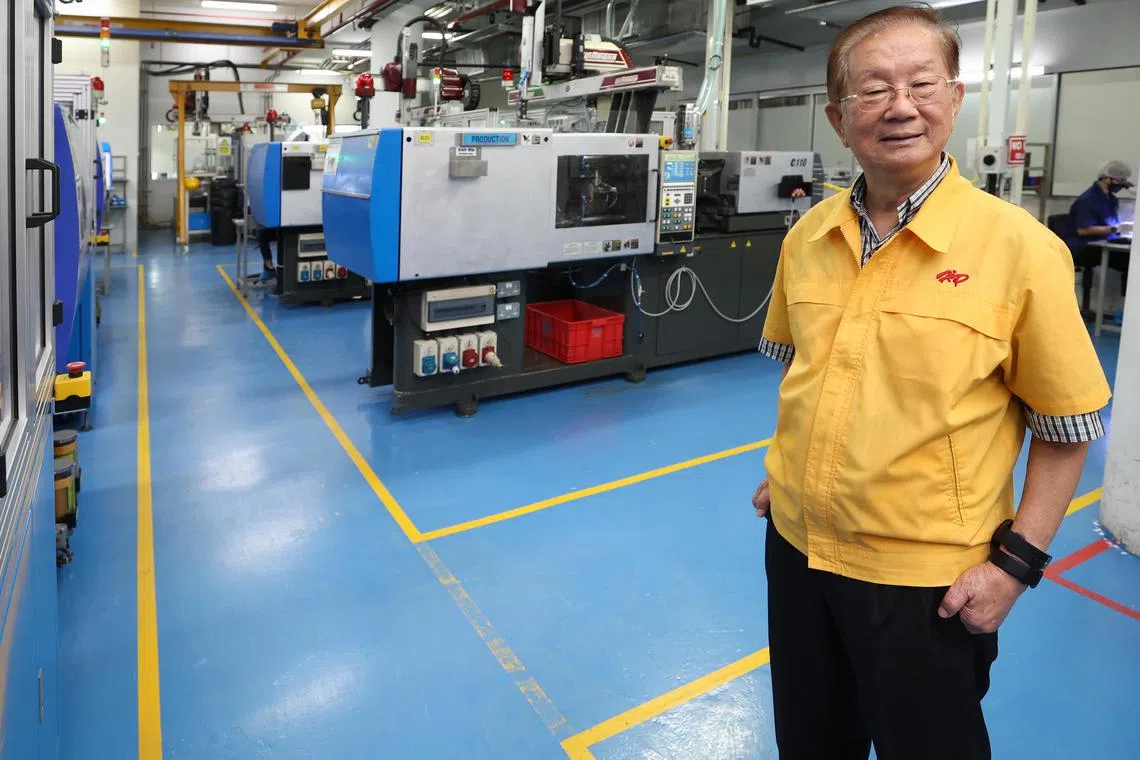
Yao now hopes to boost Hi-P’s top line by 10 times in seven years yet again. At a minimum, he wants Hi-P’s revenue to hit S$10 billion, or about 4.5 times its 2022 revenue. This would make Hi-P a “sizeable” company, he said.
“I’m still ambitious,” Yao exclaimed in English, adding that people should not focus on his advanced age.
“(When) you have desire, (when) you have a goal, you would feel energised,” said the spritely, self-made billionaire who turns 83 this year.
Yao plans to achieve his targets for Hi-P through organic growth as well as mergers and acquisitions (M&As).
Hi-P is currently reinvesting most of its profits to expand its capacity globally. The firm has a diversified manufacturing base, with plants in the Philippines, Thailand, Vietnam, Singapore and mainland China. It is acquiring an injection moulding company in Malaysia, and also intends to set up a manufacturing facility in India.
Hi-P intends to pursue a major M&A deal every year or two as part of its expansion plan. Its recent acquisitions included British high-precision plastic components manufacturer Seamco (now known as Hi-P Precision Technology), which is making several key components for Dyson.
Hi-P International itself manufactures some products for Dyson in their entirety at its own facilities.
Meanwhile, Hi-P is also eyeing customers that produce Internet-of-Things devices in China, hoping to provide them with a one-stop solution, going beyond just supplying components or modules.
Yao took over the running of Hi-P when its previous CEO quit in 2008, because “talent is hard to come by”. In any case, unlike many other CEOs who seek retirement while in their 60’s, Yao felt he was more than up to the task.
“I am 83, (but) I have yet to want to retire,” he said, adding that he would like to continue actively working for another five to 10 years.
Nevertheless, he has roped in the 64-year-old Lee as Hi-P’s new CEO as part of a succession plan. Yao said he plans to coach Lee and work closely with him to “enable his success”.
Lee last served as the chief operating officer of Jabil Green Point, a unit of New York-listed manufacturing solutions provider Jabil Inc. According to Lee, revenue of Jabil Green Point jumped from about US$700 million to US$7 billion in 12 years under his watch.
Before working at Jabil, Lee held senior management positions at Natsteel Electronics, Maxtor and Applied Research Corporation.
A believer in paying employees according to their performance, Yao said each business unit head at Hi-P can easily earn about seven figures a year. “But they work very hard, are very serious about their work, and take very strong ownership of their work,” he noted.
Currently, Hi-P is organised as two business units: a Greater China unit and an overseas unit.
Hi-P has set aside S$28 million as bonuses to reward outstanding employees for their contributions in 2022.
Despite looming challenges such as inflation, weakening economic growth, US-China trade tensions and the Russia-Ukraine war, Yao is confident Hi-P will at least be able to maintain last year’s sales and earnings, if not achieve a slight increase. “I’m a troubleshooting expert,” Yao quipped.
Hi-P does not currently have substantial orders from Chinese customers, so the chip ban imposed by the US will not have much impact on its business.
Manpower costs in China have spiked, though. For example, a general manager there could command a salary on a par with his counterparts in Singapore. Nonetheless, Yao said Hi-P has no plans for now to scale down its operations in China, although he has observed some companies relocating some of their operations out of the world’s factory.
As the manufacturing industry gears up for Industry 4.0, Hi-P with a global workforce of 15,000 is leveraging automation and artificial intelligence to be cost-efficient and reduce its reliance on labour in the long term.