

HTC bets its open AI strategy to drive smart glasses sales
The glasses support multiple platforms, letting users benefit from improvements by various models
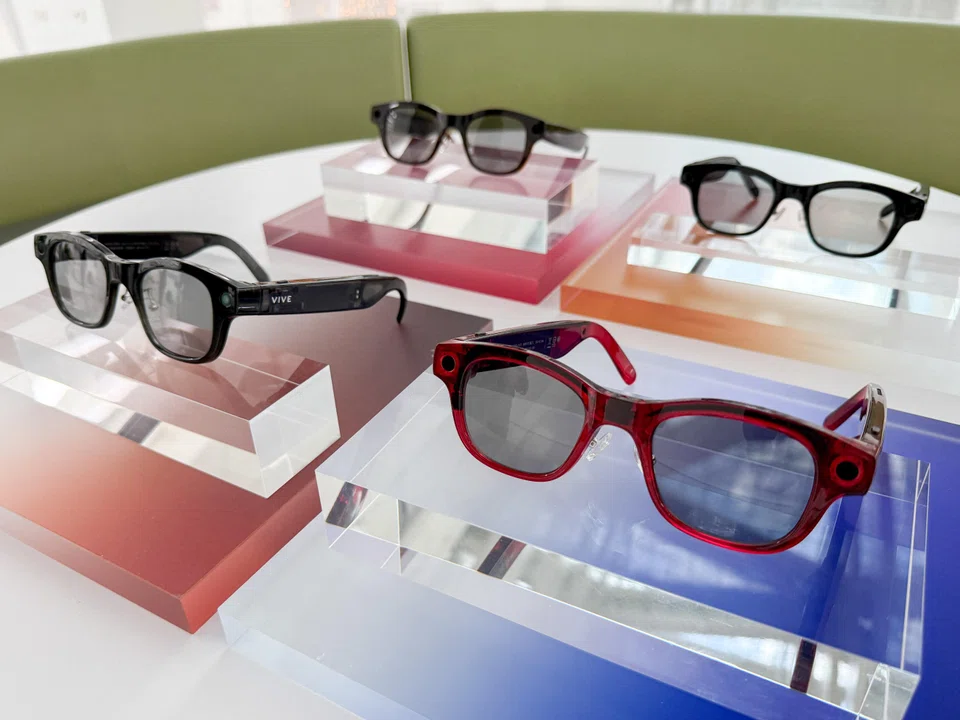
[TAIPEI] Taiwan’s HTC is betting its open platform strategy will allow it to build market share in the fast-growing smart glasses industry, as its newly launched artificial intelligence (AI)-powered eyewear lets wearers choose which AI model they want to use, its executive said.
“AI is advancing very fast, and large language model developers are engaged in an arms race that requires massive resources,” said Charles Huang, senior vice-president of global sales and marketing at HTC.
“We want to leverage the strengths of different platforms instead of building a closed ecosystem,” he added.
Its Vive Eagle smart glasses support multiple AI platforms including Google’s Gemini and OpenAI, allowing users to benefit from improvements across various models, Huang noted.
By contrast, Meta’s smart glasses are supported by Meta AI, while Chinese smart glasses, from brands such as Xiaomi and Alibaba, are built around domestically developed AI models.
HTC launched the Vive model, priced at HK$3,988 (S$661), earlier this month in Hong Kong. It plans to expand sales to Japan and South-east Asia in the first quarter of next year, and to Europe and the US later in 2026.
Huang said that the Asia-first strategy reflects regional design considerations, noting that many smart glasses on the market were built around a “Western fit” that might not suit Asian wearers.
When asked whether the Hong Kong launch was a step towards entering China, Huang said that China’s market was more complex, as foreign AI services were restricted and local data regulations required standalone servers within the country.
“With all these requirements in place, we need to be cautious and it will take some time to prepare,” he added.
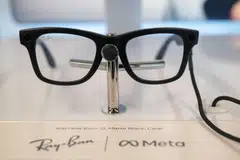
Global shipments of smart glasses soared 110 per cent in the first half of this year, with Meta taking 73 per cent of the market, said research firm Counterpoint.
Meta and partner EssilorLuxottica’s “smart” Ray-Bans and Oakleys, which first launched in 2023, have captured the tech world’s attention by answering calls, taking pictures and playing music.
Analysts, however, have warned that privacy could become a growing concern. Meta, which owns Facebook, Instagram and WhatsApp, is leveraging user data to power AI tools, a move that has drawn scrutiny over data practices.
Huang added that user data was not used to train HTC’s AI models, and that it considered privacy and data security key differentiators from its rivals.
The launch of the Vive AI smart glasses marks a renewed push by HTC into consumer-facing hardware, after it sold part of its extended reality headset and glasses unit to Google for US$250 million earlier this year. REUTERS
Decoding Asia newsletter: your guide to navigating Asia in a new global order. Sign up here to get Decoding Asia newsletter. Delivered to your inbox. Free.
Share with us your feedback on BT's products and services
TRENDING NOW

ComfortDelGro appoints two new independent directors

Once staunchly pro-China, Malaysian Chinese businesses are now distancing themselves from Beijing

NoonTalk needs continued financial support from CEO Dasmond Koh, auditors warn

DP Architects sets the benchmark for sustainability disclosure and design

