

IBM warns AI boom squeezing software budgets; shares sink in sector rout
The company said it expects revenue to rise just 1 per cent to US$17.2 billion in Q2
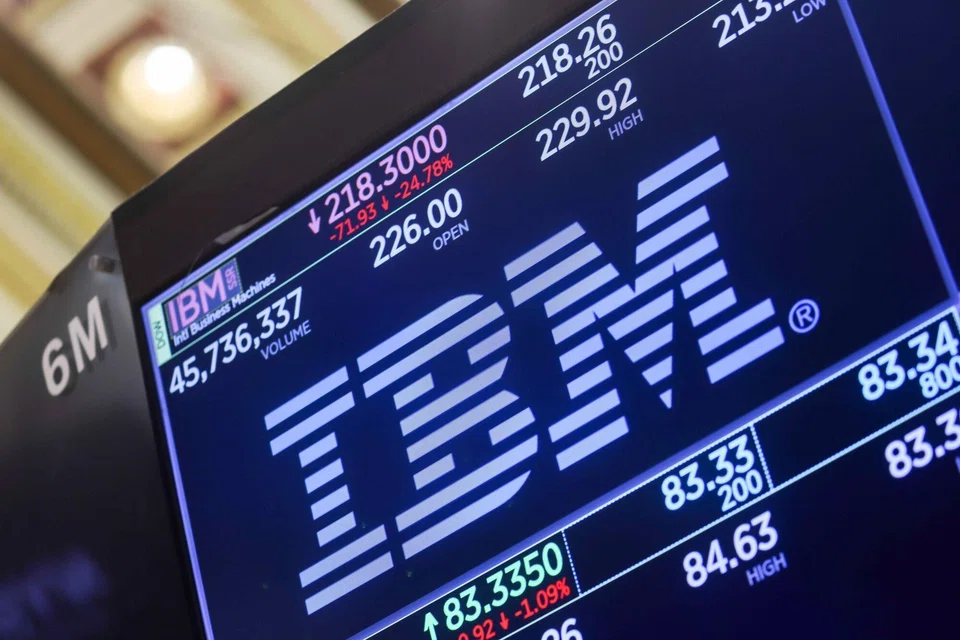
IBM said it had “faltered” in keeping pace with a shift in corporate spending from software to data-centre infrastructure and would take a big earnings hit in the second quarter, in the clearest sign yet of AI’s growing toll on the sector.
IBM‘s shares tanked 25 per cent on Tuesday (Jul 14), putting the stock on track for an even steeper single-day decline than it suffered during the 1987 “Black Monday” crash. Other software stocks also fell.
The warning shows that businesses racing to secure access to supply-constrained servers, chips and networking gear are diverting spending away from other technologies, adding to concerns about a software industry already rocked by the rise of AI tools that can write computer code and automate tasks.
“In the last few weeks of June, we saw clients shift their quarterly capex spend toward servers, storage, and memory purchases to secure supply-constrained infrastructure ahead of expected price increases,” CEO Arvind Krishna said in a letter to investors.
“While we anticipated some supply-chain related impact in our expectations, we did not anticipate the magnitude of the capex reprioritisation,” Krishna said, adding that “numerous large deals” had failed to close as expected.
IBM said the weakness was largely in its mainframe business, which sells high-powered computers and software that process millions of daily transactions for industries such as banking and airlines.
It also noted that businesses were prioritising cybersecurity spending given recent breakthroughs in AI hacking abilities.
Anthropic’s advanced Mythos model has jolted businesses this year with its ability to expose flaws in existing software and encryption systems, pushing companies to ramp up cybersecurity.
Slowing growth
SEE ALSO



IBM said it expects revenue to rise just 1 per cent to US$17.2 billion in the second quarter, compared with analysts’ estimate of US$17.86 billion, according to data compiled by LSEG. That would mark its weakest revenue growth in more than a year.
It forecast adjusted earnings per share of US$2.93, compared with the estimate of US$3.02.
IBM sells mainframe computers, enterprise software and IT consulting services to large corporations and governments.
The company has been trying to reduce its reliance on the cyclical mainframe business by focusing on its software unit including its high-margin Red Hat business, which helps firms run applications across different cloud providers.
“This is an ugly moment for IBM and software stocks... the big question will be how long the shift to infrastructure and cybersecurity lasts,” said Chris Beauchamp, chief market analyst at IG Group.
“A few more months might be bearable, but more than that and serious questions will be asked all over again about software stocks.”
IBM was set to lose US$70 billion from its US$272.78 billion market valuation, if losses hold. Microsoft, ServiceNow, Salesforce and Intuit fell between 2 per cent and 5 per cent.
To reassure investors, IBM on Tuesday highlighted its heavy investments in quantum computing including more than US$10 billion to build the first large-scale quantum computer by 2029.
The technology has drawn fresh interest since the US government in May backed companies including IBM to shore up the supply chain.
But IBM‘s quantum efforts and expanding its AI partnerships, including with OpenAI, are still in early stages and are not yet large enough to materially offset weakness in its core software and infrastructure businesses.
The company is expected to report second-quarter results on Jul 22. REUTERS
Decoding Asia newsletter: your guide to navigating Asia in a new global order. Sign up here to get Decoding Asia newsletter. Delivered to your inbox. Free.
Share with us your feedback on BT's products and services
TRENDING NOW

S$8 billion wiped off OCBC value as shares slide 5.8% in heavy trade

Grab CEO’s wife Chloe Tong on life with Anthony Tan and finding her purpose

Brookfield denies accusation it cut Soilbuild out of Mapletree deal

8 public officers referred to police over property buys near unannounced MRT stations: Chan Chun Sing

