

Intel forecast beats expectation as manufacturing momentum builds
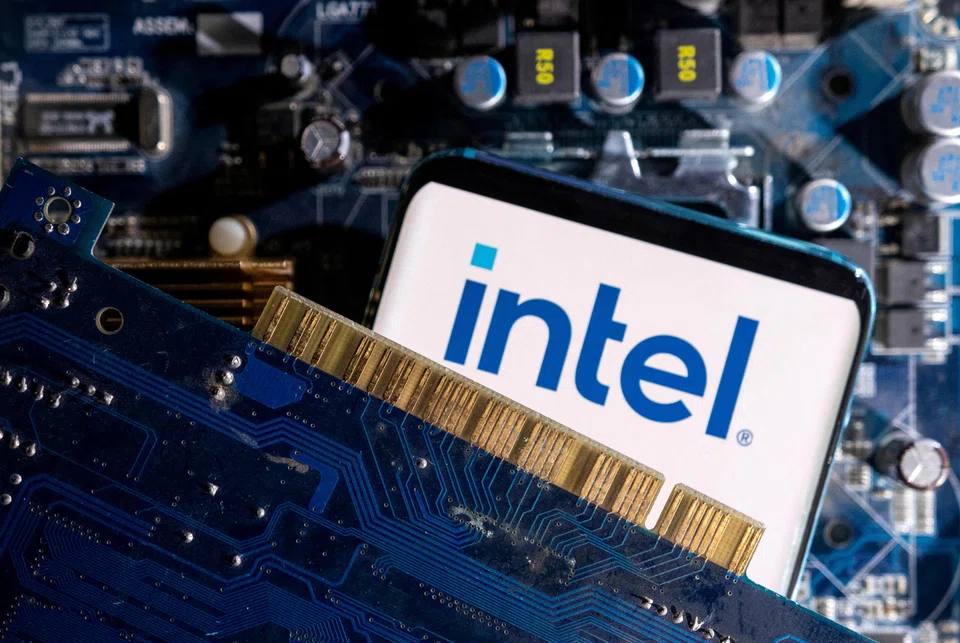
INTEL forecast fourth-quarter revenue above Wall Street estimates on Thursday (Oct 26), optimistic about a healthy rebound in the personal computer (PC) market as it readies new chips to handle artificial intelligence on laptops.
The company also has secured three customers for its chip contract manufacturing business, with chief executive Pat Gelsinger saying he expects to close a deal for a fourth customer before year’s end.
Shares of the Santa Clara, California-based company rose as much as 8 per cent after the closing bell.
PC sales and manufacturing contracts are increasing after a post-pandemic slump that pushed Intel’s margins to their lowest in a decade. While the company still faces a stiff challenge in its data centre business from Nvidia, other challenges have seemed to ease.
The decline in global PC shipments narrowed to 7 per cent in the third quarter after double-digit percentage dips earlier this year, and the market is set to return to growth during the highly anticipated holiday season, analysts at research firm Canalys said.
The company forecast adjusted current-quarter revenue of about US$14.6 billion to US$15.6 billion, compared with an estimate of US$14.35 billion according to LSEG data.
The company expects fourth-quarter adjusted profit per share of about 44 US cents, above analysts’ estimate of 32 US cents.
Heavy manufacturing investments to support Gelsinger’s turnaround plans have taken a toll on the company’s gross margin, which shrank to the mid-30s in the second quarter from over 60 per cent in 2020. The adjusted gross margin came to 45.8 per cent in the third quarter, compared with estimates of 42.7 per cent according to LSEG data.
Gelsinger said that Intel has a fourth foundry customer for its advanced manufacturing process called “18A”, which it plans to offer customers out of its Intel Foundry Services business.


“We now have three committed customers on 18A, and we expect that we will successfully conclude at least one more this quarter,” Gelsinger said.
He declined to say how many chips Intel will manufacture for those companies, but said the first has pre-paid and is “a very significant customer”.
“The next two are very meaningful, not as large as the first one,” Gelsinger added. “But now we have engagements with essentially the who’s who of foundry customers.”
With new customers lined up, Intel is positioned to become “a credible leading-edge foundry supplier to the top fabless companies”, said Kinngai Chan, an analyst at Summit Insights Group.
Intel reported adjusted profits of 41 US cents per share in the third quarter, compared to an estimate of 22 US cents according to LSEG data. Revenue fell 8 per cent to US$14.2 billion.
Revenue in the client segment, which houses Intel’s PC business, fell 3 per cent to US$7.9 billion. Sales at its data centre business dropped 10 per cent to US$3.8 billion.
Taiwan Semiconductor Manufacturing, the world’s largest contract chipmaker, said earlier this month that end-user demand for PCs and smartphones had started showing signs of stabilisation, adding that inventory controls were “more healthy than we thought”. REUTERS
Decoding Asia newsletter: your guide to navigating Asia in a new global order. Sign up here to get Decoding Asia newsletter. Delivered to your inbox. Free.
Share with us your feedback on BT's products and services
TRENDING NOW

Two Singapore-listed palm oil firms named in Greenpeace report on Indonesian plantation fires

Singapore Airlines flight returns to San Francisco after ‘unruly’ passenger incident

Singapore looking into which companies responsible for haze-causing fires: PM Wong

Deluge IPO 3.86 times subscribed ahead of SGX debut

