Keppel to let M1-Simba deal lapse; M1 to be restructured with focus on ‘rightsizing’
Group says the telco industry in Singapore is in need of consolidation and will benefit from it

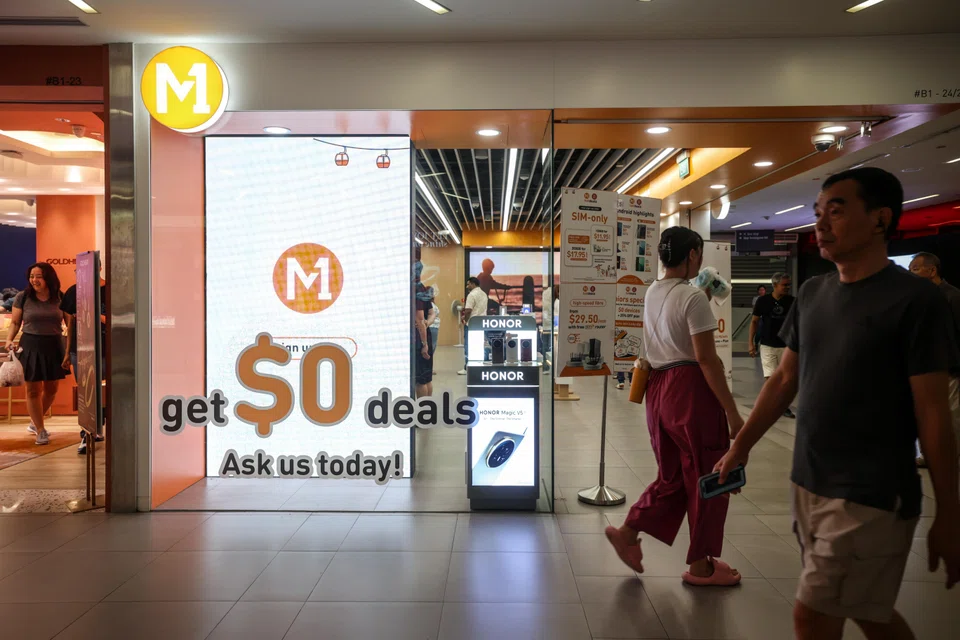
[SINGAPORE] Keppel said on Monday (May 18) that it will allow the sale and purchase agreement between M1 and Simba to lapse upon reaching the long-stop date on May 21.
It will also embark on a plan to restructure M1, with a focus on rightsizing and cost reduction.
“There is nothing to stop us from discussing with third parties after the expiry of the agreement,” said Keppel CEO Loh Chin Hua during a virtual media briefing on Monday.
This follows a Monday announcement by the Infocomm Media Development Authority that it has halted its assessment of the proposed M1-Simba consolidation until further notice.
Keppel added that it remains “open to opportunities for divestment”, as the telco industry in Singapore is in need of consolidation and will benefit from it.
However, Keppel noted that its focus will be on executing a “Plan B” that it prepared in the event that it retains majority ownership of M1, which it will activate immediately.
The plan entails “enhancing M1’s efficiency to improve its run rate earnings before interest, taxes, depreciation and amortisation, through rightsizing the company and reducing costs”.
Keppel’s 90-day plan to drive M1’s efficiency specifically focuses on “reducing technology platform costs and network costs, using artificial intelligence for automation, as well as product rationalisation”.
In response to queries about potential redundancies as a result of the restructuring exercise, Keppel said that it is unable to share details at the moment.

2026 monetisation goals intact
Loh said that Keppel’s goal to monetise S$2 billion to S$3 billion in non-core assets in 2026 “remains unchanged”.
He said: “The new Keppel and our growth strategy remain unchanged. In real terms for investors, the impact is about S$0.07 to S$0.11 per share in terms of special dividends, which in the (grand scheme) of things is not that large.”
Noting that Keppel’s special dividends are tied to the monetisation of its assets, Loh said: “(The sale of) M1 will be deferred from this year but we hope to bring other monetisation targets forward to (2026) to fill the gap.”
He noted that Keppel has already recorded close to S$400 million worth of non-core asset divestments this year.
“We will continue to explore opportunities for monetisation, so the special dividends have not gone away, they have just been deferred,” the CEO said.
As Keppel looks to bring forward the divestment of certain assets to cover for the deferred M1 disposal, Loh said: “Some of the assets that could potentially be considered would be... our rig assets (as) the market conditions for offshore rigs have improved. We are also working on some potential real estate monetisation.”
Between real estate and the rigs, Loh believes Keppel should be on track to hit its goal.
The CEO singled out Keppel Bay Plot Six, a 99-year leasehold waterfront condominium development, as one of the real estate assets that can be monetised.
Keppel may also consider monetising Keppel South Central this year as Loh noted that the leasing of the 33-storey commercial property located in Tanjong Pagar is improving.
Decoding Asia newsletter: your guide to navigating Asia in a new global order. Sign up here to get Decoding Asia newsletter. Delivered to your inbox. Free.
Copyright SPH Media. All rights reserved.