

Meta signs multi-gigawatt nuclear deals for AI data centres
The agreements could end up totalling more than six gigawatts, enough to power a city of about five million homes
[NEW YORK] Meta Platforms agreed to a series of electricity deals to power data centres that will make it the biggest buyer of nuclear power among its hyperscaler peers.
The agreements could end up totalling more than six gigawatts, enough to power a city of about five million homes. While Meta did not disclose the value of the contracts, agreements of this size can easily represent billions of US dollars in total revenue for electricity generators. The deals underscore Big Tech’s scramble to secure energy amid the intensifying battle for artificial intelligence dominance.
Meta said on Friday (Jan 9) it will purchase electricity from three existing Vistra plants and support several small reactors that Sam Altman-backed Oklo and Bill Gates-backed TerraPower are planning to build over the next decade. Those deals follow a separate June agreement to get energy from a Constellation Energy nuclear site.
Vistra’s shares were up about 14 per cent before trading opened in New York on Friday. Oklo’s shares gained about 18 per cent.
While surging US power demand for data centres has helped revive appetite for nuclear energy, hyperscalers that long pledged to go green have recently considered or pursued deals with natural gas-fired plants – generators that are usually much easier and swifter to build. Nuclear projects often take a decade to develop and build, whereas data centres can be operational far quicker, creating a more urgent need for energy.
In 2024, Microsoft and Brookfield Asset Management’s green energy arm signed the biggest corporate clean-energy purchase agreement ever announced, involving more than 10.5 gigawatts of renewable energy capacity. That deal was estimated at the time to be worth as much as US$17 billion.
US power usage is expected to climb at least 30 per cent by 2030, with most of the new demand coming from data centres, according to a recent report from energy consulting firm Grid Strategies. But power suppliers are struggling to keep up, and electricity has become one of the most significant bottlenecks for developing artificial intelligence.
Even with tech firms’ recent deals with gas-fired plants, they are still keen for nuclear power that is clean and can provide round-the-clock energy.
Amazon.com, Alphabet and Microsoft have all signed deals to tap power from nuclear reactors. Those plans have now been dwarfed by Meta’s efforts.
SEE ALSO


Urvi Parekh, Meta’s head of global energy, said that the agreements announced on Friday seek to address concerns about the shuttering of existing nuclear power plants, and reflect the need for early investment to spur new nuclear power.
“There isn’t a one size fits all approach that’s gonna get us to where the US needs to go in order for nuclear to be a material part of the energy mix,” Parekh said in an interview, noting that the company remains committed to “low-carbon energy.”
Meta’s new deals follow chief executive officer Mark Zuckerberg’s repeated pledges to spend hundreds of billions of US dollars through the end of the decade on AI and the infrastructure needed to support it. His most significant infrastructure projects include “Prometheus”, a one-gigawatt data centre cluster in New Albany, Ohio, which is expected to come online this year, and “Hyperion”, a rural Louisiana-based project that may scale to five gigawatts and come online in 2028.
The Hyperion project, expected to be Meta’s largest AI-focused data centre, is going to be powered by at least three natural gas plants. Its utility, Entergy, has applied to connect more natural gas generation to the grid as Meta seeks to scale the project.
The nuclear deals announced on Friday will also help to power the Ohio-based Prometheus project. Meta declined to comment on the financial terms of the agreements.
“If we are unable to generate more electricity, that could hurt the ability of AI to grow faster,” Parekh said. “The big picture is about ensuring that we have more solutions as AI continues to grow instead of having constraints on what options and what technologies can be added to the grid.”
Under the agreement with Vistra, Meta will buy energy from the Davis-Besse and Perry reactors in Ohio, including more than 2.1 gigawatts of operating generation. It will also get an additional 433 megawatts of energy from improvements that are planned to boost output from those two plants and from its Beaver Valley facility in Pennsylvania.
The Vistra nuclear plants will continue to supply the largest US grid operated by PJM Interconnection, which serves more than 67 million people from the Midwest to the mid-Atlantic.
In a separate deal with Oklo, Meta will get up to 1.2 gigawatts of capacity from reactors that Oklo is planning to build in Ohio, with the first going into service as early as 2030. Oklo is developing a 75-megawatt reactor, though it still needs approval from federal regulators. The agreement with Meta also includes a prepayment, primarily to help Oklo procure fuel.
Meta has also agreed to support development of two reactors by TerraPower capable of generating up to 690 megawatts with delivery as early as 2032. Meta also secured the rights for energy from up to six other future reactor projects that together would total 2.1 gigawatts of power.
Zuckerberg last year told investors that he sees more risk posed to his company by under-spending on AI infrastructure than he does by overspending on it. His strategy is to “aggressively front-load building capacity” in preparation for a landmark moment where Meta reaches its goal of “superintelligence,” a term describing AI that outperforms humans at many tasks.
“It’s clear that nuclear energy has to be a big part of meeting the demand for power from AI,” TerraPower CEO Chris Levesque said in an interview. BLOOMBERG
Decoding Asia newsletter: your guide to navigating Asia in a new global order. Sign up here to get Decoding Asia newsletter. Delivered to your inbox. Free.
Share with us your feedback on BT's products and services
TRENDING NOW

Britain’s mansion tax shows the difficulty of targeting wealth

Once staunchly pro-China, Malaysian Chinese businesses are now distancing themselves from Beijing

The only common thing in S-E Asia is that we all eat rice: Cisco’s Asean president
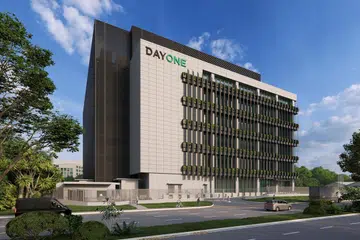
Singapore data centre operator DayOne opts for US IPO at likely US$20 billion valuation

