Micron says AI-driven memory crunch is ‘unprecedented’
PC makers have also warned they are likely to be affected by the ongoing shortage
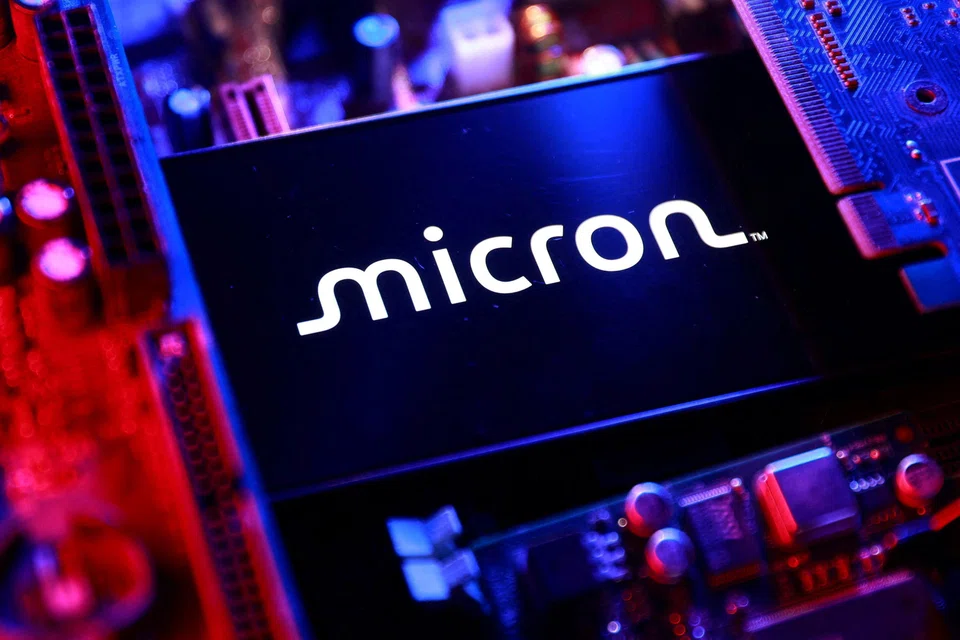
[WASHINGTON] Nvidia supplier Micron Technology said an ongoing memory chip shortage has accelerated over the past quarter and reiterated that the crunch will last beyond this year due to a surge in demand for high-end semiconductors required for artificial intelligence (AI) infrastructure.
“The shortage we are seeing is really unprecedented,” Micron executive vice-president of operations Manish Bhatia said in an interview shortly after the chipmaker held a groundbreaking ceremony for a US$100 billion production site outside Syracuse, New York, on Friday (Jan 16), amplifying a similar forecast the company provided in December.
High-bandwidth memory required to make AI accelerators is “consuming so much of the available capacity across the industry that it’s leaving a tremendous shortage for the conventional side of the industry, for phones or PCs”, Bhatia said. He added that PC and smartphone makers have joined the queue to try to lock up memory chips after 2026.
On Friday, Chinese media outlet Jiemian reported that major Chinese smartphone makers, including Xiaomi, Oppo and Shenzhen Transsion Holdings, are trimming their shipment targets for 2026 due to rising memory costs, with Oppo cutting its forecast by as much as 20 per cent. All three did not respond to requests for comment.
Global smartphone shipments may decline 2.1 per cent next year as a shortage of memory chips drives up costs and squeezes production, industry tracker Counterpoint Research estimated in December. PC makers, including Dell Technologies, have also warned they are likely to be affected by the ongoing shortage.
The big three of the global memory chip industry – Micron, SK Hynix and Samsung Electronics – saw their share prices surge in 2025 thanks to the AI boom. SK Hynix said that it has sold out its entire chip slate in 2026, while Micron has said that its AI memory semiconductors are also fully booked this year.
To prioritise supplying strategic enterprise customers, including Nvidia, Micron said in December it will end its popular Crucial-branded consumer memory business. The AI industry’s insatiable appetite for memory chips is also adding urgency to Micron’s manufacturing expansion in both the US and Asia.
On Saturday, Micron announced plans to pay US$1.8 billion for a site with an existing plant in Taiwan, which serves as a key production hub for the Boise, Idaho-based chipmaker.
That move significantly shortens the time for Micron to bring a new factory online. The company says it will start meaningful output of Dram wafers in the second half of 2027.




Dram provides the operating environment for complex processors from Nvidia and Intel to make calculations and is at the heart of high-bandwidth memory required for AI accelerators to work optimally.
“What we will be doing at our Asian sites is continuing to transition to the next generation of technology,” Bhatia said during the Friday interview.
New wafer capacity, on the other hand, will take place almost entirely in the US, he added.
Micron’s US$100 billion project near Syracuse is slated to host four Dram fabs, each about the size of 10 football fields. First wafers are coming out of the production lines by 2030.
The US chipmaker is also adding two fabs worth of capacity in Boise alongside existing research and development facilities there. The first Idaho fab is scheduled to begin production in 2027, and a second factory is also being planned.
The plans are all part of the company’s commitment to bring 40 per cent of its Dram manufacturing onto US soil, a goal enabled by a US$6.2 billion Chips Act award the company clinched in 2024, and the ability to tap into a now-35 per cent tax credit while construction is ongoing. BLOOMBERG
Decoding Asia newsletter: your guide to navigating Asia in a new global order. Sign up here to get Decoding Asia newsletter. Delivered to your inbox. Free.
Share with us your feedback on BT's products and services