

Nvidia invests US$2 billion more in CoreWeave, offers new chip
The world’s most valuable company has pledged tens of billions of US dollars towards AI companies
[WASHINGTON] Nvidia, the dominant maker of artificial intelligence (AI) chips, invested an additional US$2 billion in the cloud computing firm and key customer CoreWeave, marking the latest example of the circular financing deals that have lifted valuations of AI companies and fuelled concerns about a bubble.
Nvidia purchased CoreWeave Class A common stock at US$87.20 a share, the companies said on Monday (Jan 26), in a move aimed at speeding up an effort to add more than five gigawatts of AI computing capacity by 2030. As part of the collaboration, CoreWeave will be among the first to deploy forthcoming Nvidia products, including storage systems and a new central processing unit, or CPU. Nvidia, already a CoreWeave investor, previously agreed to buy more than US$6 billion in services from the firm to 2032.
“The investment is confidence in their growth and confidence in CoreWeave’s management and confidence in their business model,” Nvidia chief executive officer Jensen Huang said. But the partnership itself is more focused on aligning the two companies’ engineering work and getting computing capacity online, he said.
Nvidia has been using its enormous resources to propel the broader AI industry, by partnering with and heavily investing in its own customers. The world’s most valuable company has pledged tens of billions of US dollars towards AI companies that use its chips and is bankrolling the deployment of new infrastructure that’s critical to sustaining demand for its products.
CoreWeave shares rose as much as 17 per cent in trading on Monday, while Nvidia’s stock inched up by less than 1 per cent.
The announcement puts a spotlight on a new business avenue for Nvidia. The CPU, which carries the Vera brand, marks the first time the company has offered such a chip on a standalone basis.
That means Nvidia will be challenging processors from Intel and Advanced Micro Devices (AMD) inside data centres. The Vera product could also offer an alternative to in-house components that cloud providers use, such as Amazon.com’s Graviton. Previous Nvidia CPUs have been available only as part of systems combined with other chips.
“Vera is completely revolutionary,” Huang said of the CPU. He declined to name other customers for it besides CoreWeave but said that “there are going to be many”.
Intel shares fell as much as 6.1 per cent, while AMD’s slipped as much as 3.6 per cent.
SEE ALSO

Nvidia already leads the market for graphics processing units, or GPUs, the powerful chips used to develop and run AI models. With a CPU, often described as the brains of a computer, it’s taking aim at more of the computing industry.
CoreWeave, which went public last year in one of the biggest stock offerings of 2025 and is now worth more than US$50 billion, is known as a neocloud, a specialised cloud-computing provider used by AI services. The Nvidia investment will shore up CoreWeave’s finances and help allay concern about its costly spending spree on data centres.
Under their agreement, Nvidia will assist CoreWeave with the purchase of land and power for data centres. It will also market CoreWeave’s AI software and architecture designs to cloud partners and large business customers.
CoreWeave has ambitious plans. Five gigawatts is equivalent to the output of five large nuclear reactors. A single gigawatt of electricity is enough to power roughly 750,000 US homes at any moment.
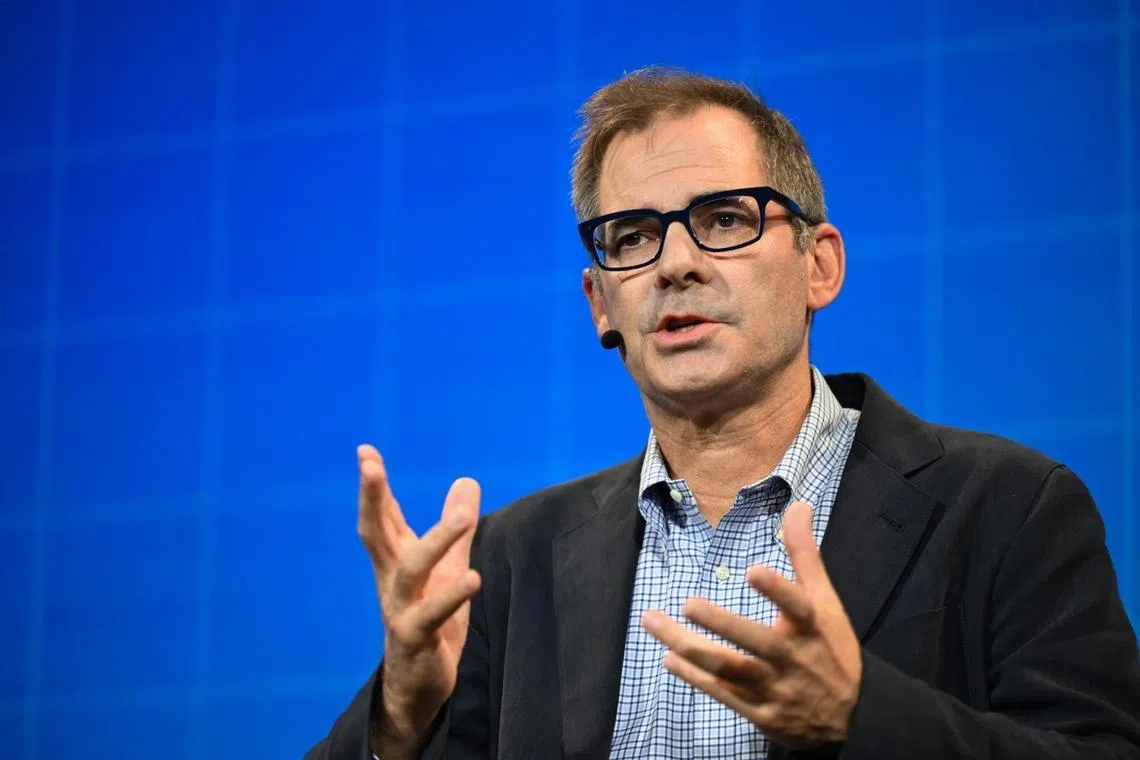
The Nvidia funds represent about 2 per cent of what CoreWeave plans to spend to bring new infrastructure online, CEO Mike Intrator said.
“This year, we’re going to deliver an enormous amount of infrastructure, and that’s just going to accelerate over the next three years,” he said.
Before Monday’s accord, Nvidia was the fourth-largest holder of CoreWeave shares, according to data compiled by Bloomberg. The Santa Clara, California-based chip giant owned about 6 per cent of the data centre operator.
Nvidia has said that it’s spending money to help remove barriers to AI adoption. But the massive investments have intertwined many of the biggest AI companies, sparking concerns about how circular deals – arrangements where a business invests in an entity that also serves as a customer – are inflating the demand outlook for AI tools. Besides CoreWeave, Nvidia has invested in OpenAI, Anthropic PBC, Elon Musk’s xAI and others.
In response to the circular-deal concerns, Nvidia’s CEO said the investments represent a fraction of the total infrastructure spending those businesses will have to make.
Large customers such as Microsoft and Alphabet continue to pour money into new equipment because it helps their existing business, he said. New companies, described by Huang as “AI-native”, were born in a wave of venture investments. Those firms, in areas such as automated coding, health care and video editing, need access to their own computing resources, he said.
“These are generational companies, the investments that we make is confidence in them,” Huang said. “But it’s a small percentage of the amount of money that they ultimately have to go raise, and so the idea that it is circular is, it’s ridiculous.”
CoreWeave has worked to diversify its customer base away from Microsoft, which accounted for two-thirds of sales in the most recently reported quarter. The push has included agreements with OpenAI and Facebook owner Meta Platforms.
CoreWeave is losing money, with its capital spending far outstripping revenue. And the company’s use of debt financing for its data centre build-out had spooked some investors. In December, CoreWeave’s shares fell after it unveiled plans to raise US$2 billion by issuing debt that can be exchanged for shares.
That move also contributed to broader concerns about an AI bubble, something Huang and his peers have downplayed. Nvidia’s CEO has argued that new technology is being adopted so fast that investments are already paying off. The only obstacle is the shortage of computing capacity, he’s said.
Nvidia’s own growth run has shown little signs of fading. After predicting about half a trillion US dollars of revenue from data centre chips by the end of 2026, Nvidia said this month that its forecast has only grown more bullish.
Huang repeated the assertion that total demand remains “enormous”. BLOOMBERG
Decoding Asia newsletter: your guide to navigating Asia in a new global order. Sign up here to get Decoding Asia newsletter. Delivered to your inbox. Free.
Share with us your feedback on BT's products and services
TRENDING NOW

Once staunchly pro-China, Malaysian Chinese businesses are now distancing themselves from Beijing

Looking beyond looming CEO succession, should UOB potentially pursue a transformative merger?

Could stablecoins be the future of money?

Grab CEO’s wife Chloe Tong on life with Anthony Tan and finding her purpose

