Razer dives into AI for consumers, professionals and gamers
The company will invest more than US$600 million into AI over ‘the next couple of years’
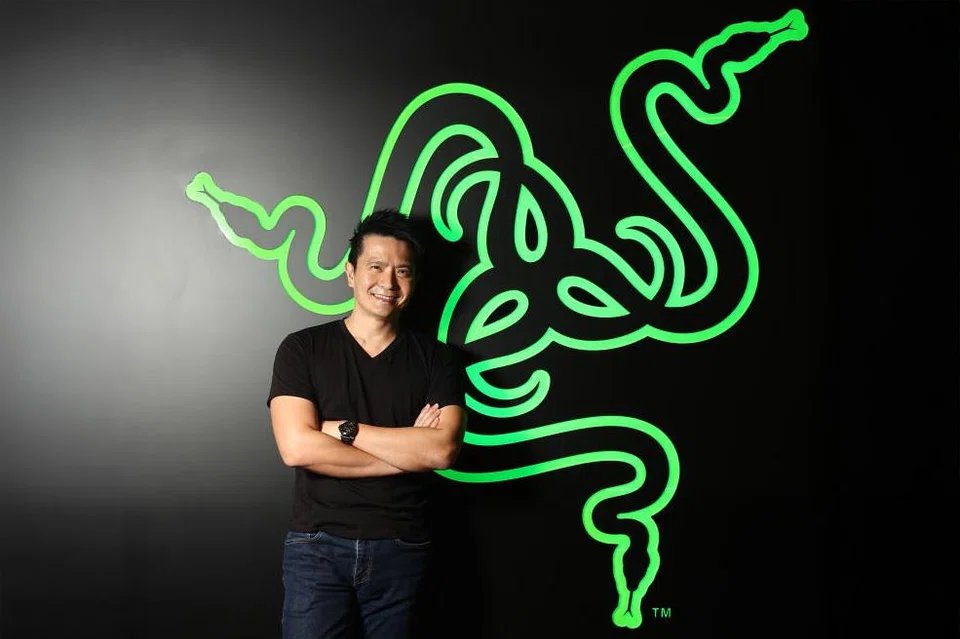
[LAS VEGAS] Razer, the gaming peripherals company that went private in 2022, unveiled a series of new products powered by artificial intelligence as it aims for a far-reaching revamp around AI.
The new lineup runs the gamut from a pair of over-ear headphones that would compete with smart glasses to a high-powered workstation PC meant for handling demanding AI workloads. While some of these items are meant for consumers, other things, such as an open source AI developer kit, are aimed at coders and other business customers.
AI represents a multibillion-US dollar opportunity for Razer, said chief executive officer Tan Min-Liang, who co-founded the company in 2005. Razer will invest more than US$600 million into artificial intelligence over “the next couple of years” and is hiring about 150 AI scientists, he said in an interview before CES.
Razer, with operations in Singapore and Irvine, California, joins tech peers in trumpeting the technology that is dominating the CES trade show and the industry more broadly. Consumer-facing companies such as Samsung Electronics, LG Electronics and Lenovo Group are all trying to articulate their strategy around artificial intelligence – and attempt to sell ordinary shoppers on the practical benefits.
But Razer will be one of relatively few companies at the conference attempting to pitch gamers on the convenience of AI. While the brand has a history of unveiling new concepts at CES, it’s best known for its gaming hardware, including laptops, headsets and even vibrating chairs.
The market for AI in gaming “is completely untapped so we see it as a massive opportunity for us,” 48-year-old Tan said, pointing to about 150 million users already on Razer’s software platform. The broader population of gamers is effectively uncountable, in part because the pastime now includes everyone from professional e-sports players to Wordle enthusiasts.
Tan said the growing popularity of video games, particularly among young people, means Razer can offer its new products to a large swath of potential customers without having to broaden its sights beyond that audience.
“Instead of us going mainstream, we believe that mainstream will come to us,” the CEO said.
Razer’s concept headset, codenamed Project Motoko, uses built-in cameras and microphones to offer some of the same features as smart glasses. One could, for instance, use the headset to translate text, programme a custom workout or suggest a recipe using available ingredients. Naturally, there’s also a gaming angle: AI can help people get through tricky game levels.

Motoko is compatible with most popular AI assistants, such as those from OpenAI, xAI, Anthropic and Microsoft. Although Motoko’s obvious competitors are the sort of smart glasses popularised by Meta Platforms, Razer is betting that consumers will prefer the headphone style, as most people own audio gear but not everyone wears glasses regularly.
The battery life will be longer too, Tan said. While the company has not committed to specific numbers, the wireless headset has gone as long as 36 hours on a charge in testing, said Paige Sander, a product marketing manager at Razer. For comparison, Meta’s second-generation Ray-Ban AI glasses are rated for eight hours.
Inside, Motoko runs on a Snapdragon chip from Qualcomm, which collaborated with Razer on the device.
Razer is not sharing pricing yet for the headset, which Sander said would be available this year. Tan indicated it would command a “slight premium” over other high-end headphones. “We’re really looking at this from a headphone pricing perspective,” he said. “We’re not talking about thousands of US dollars.” (For reference, the most expensive headset in Razer’s current lineup costs US$400.)
In the meantime, Razer has some kinks to iron out. In a product demonstration controlled by company representatives, the headset’s dual cameras failed occasionally to recognise objects in front of it, even in a moderately lit room.
Another new initiative, dubbed Project Ava, is essentially a see-through canister that sits on a desktop and allows users to make eye contact with a small holographic avatar – the face of whatever AI assistant they are using. It will be available in the second half of this year, the company said. The price hasn’t been announced, but consumers can put down US$20 now to reserve one.
The target audience are tech enthusiasts who already relish customising their desk setups, said David Ng, a director of product marketing. “Our fans spend a lot of time on their computers,” he said.
The product is not, he added, leaning into the stereotype that gamers can be a lonely bunch. (Plenty of non-gamers, too, have been known to become emotionally attached to AI chatbots.)
“We’re not trying to foster a relationship, but we do acknowledge that people are using their AIs in a more personal way,” he said.
While Razer’s two AI-based hardware concepts have yet to go on sale, the company has already begun offering artificial intelligence software.
In November, it launched a developer tool called Razer QA Companion, which uses AI to speed up the quality-assurance, or QA, stage of video-game development. Tan said the technology allows programmers to catch 25 per cent more bugs “at any point of time,” reducing the total time for such jobs by 50 per cent.
Razer has so far onboarded about 50 big-budget and indie studios, and is partnering with Side America, a major provider of gaming-related services, including QA.
“As our AI services scale, we expect services revenue, including AI, to grow significantly alongside our hardware business,” Tan said, adding that he expects Razer to move towards a roughly even split between hardware and services over the next three to five years. The high-margin nature of these kinds of software and services will help accelerate growth, he said.
The open source code, meanwhile, called Razer AIKit, is meant to help developers and researchers find more efficient ways to run large language models on local machines, as opposed to the cloud, to reduce response time. Razer declined to comment on its plans to monetise the software.
Not being beholden to public shareholders has given Razer some room to make more ambitious bets, Tan said. “One of the big reasons why we’ve taken the company private was really to double down and focus on AI.” BLOOMBERG
Decoding Asia newsletter: your guide to navigating Asia in a new global order. Sign up here to get Decoding Asia newsletter. Delivered to your inbox. Free.
Share with us your feedback on BT's products and services