

Samsung, SK rally sparks forced selling as funds hit limits
Combined, they have US$58.6 billion worth of net outflows this year
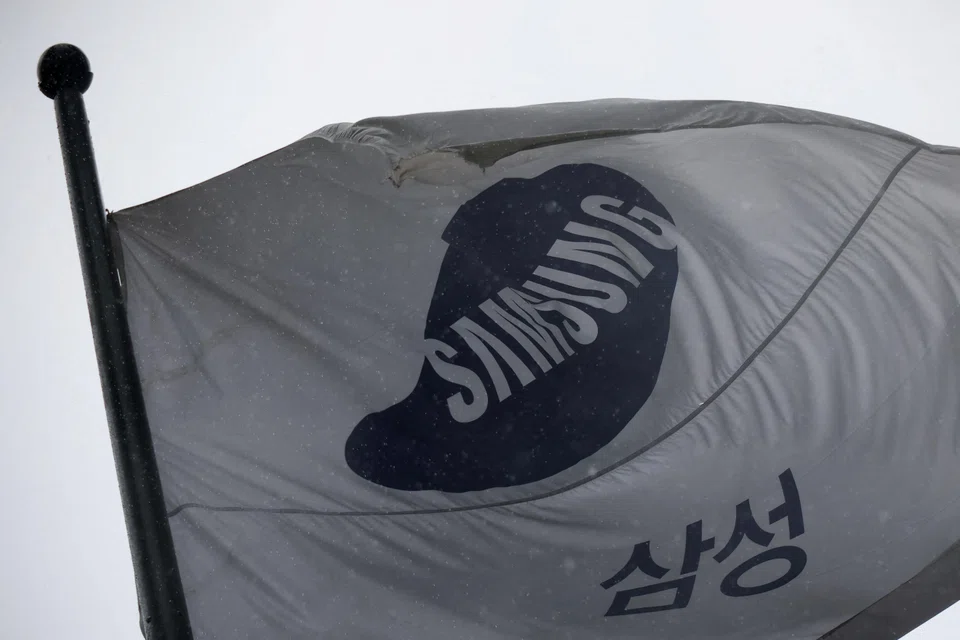
[SEOUL] A blistering rally in Samsung Electronics and SK Hynix has turned into an unexpected headache for some funds, whose positions have grown so large that they are now forced to sell.
Funds bounded by a 10 per cent single-stock cap rule have increasingly hit those limits as the two South Korean chipmakers touch daily highs.
Among them are GAM Investment Management in Zurich and Jupiter Asset Management in Singapore, which have reluctantly reshuffled portfolios to stay compliant.
Analysts attributed the record foreign outflows this year to this mechanical selling pressure as funds rebalance, adding to already-high volatility.
The dynamic also underscores just how crowded the trade has become, with investors piling into the artificial-intelligence frenzy that has pushed both chipmakers to cross US$1 trillion valuation.
The problem has left investors looking for alternatives.
“Investors may seek to indirectly expand semiconductor exposure through affiliates, holding companies or insurers with significant stakes in the two companies,” said Ha Seok-keun, chief investment officer at Eugene Asset Management in Seoul.
On Friday (May 29), shares of the South Korean chipmaking duo rallied after news that the National Pension Service would raise its domestic equity target.
For asset managers, diversification rules prevent outsized bets. Exposure to a single stock is typically capped at 10 per cent of assets, while positions above 5 per cent cannot, in aggregate, exceed 40 per cent of a portfolio.


While designed to curb concentration risk, First Eagle Investments’ portfolio manager Christian Heck said it also could cause selling, even if funds remain constructive on the underlying stocks.
The constraints are showing up in how money managers are responding to the gains.
“We are taking profit more from a portfolio construction point of view, and this is one of the risks,” said Florian Neto, Amundi’s head of investment for Asia.
“I think those stocks have been moving so fast in terms of market cap that they’re getting to levels that investors need to sell because they need diversification.”
Position limits have long been an issue for investors of Taiwan Semiconductor Manufacturing Company (TSMC), whose large weighting in benchmarks forced funds to seek alternative ways to gain exposure.
But, that dynamic is suddenly becoming more acute in South Korea, where the supercharged rally is inflating position sizes and leading to forced selling.
Over the past year, SK Hynix has gained over 1,000 per cent while Samsung has jumped more than 400 per cent. In comparison, TSMC has risen 137 per cent. Combined, they experienced US$58.6 billion worth of net outflows this year.
Goldman Sachs estimated that diversification rules have triggered roughly US$69 billion of selling since October 2025, as South Korea-focused funds overseeing nearly US$200 billion contend with the growth of the two chipmakers’ combined weighting.
Additional pressure could build if Samsung and SK Hynix’s market concentration keeps rising, strategists including Timothy Moe wrote in a note, though much of the selling has run its course.
Some firms have turned their attention to proxy plays for new ways to accumulate local shares. SK Square, which holds a 20.5 per cent stake in SK Hynix, skyrocketed more than 1,000 per cent over the past year.
Shares of Samsung Life Insurance, the largest holder of Samsung’s crown jewel with a 8.58 per cent stake, more than tripled in the past year.
South Korea also imposes a 10 per cent single-stock cap on public equity funds, though Samsung and SK Hynix are exempt.
Portfolio managers in the country can hold the two stocks up to their market weights, which is currently 27.05 per cent and 15.71 per cent, respectively. The figure is issued every first trading day of the month, based on data from the previous month.
While these limits may curb additional demand from investors already at or near maximum exposure, South Korea may end up seeing some fresh inflows from those with little to no existing allocation given the historic rally.
“We think that global fund managers are likely to be increasingly attracted to (South) Korean and Taiwanese tech companies,” said Sam Konrad, an investment manager at Jupiter Asset Management. BLOOMBERG
Decoding Asia newsletter: your guide to navigating Asia in a new global order. Sign up here to get Decoding Asia newsletter. Delivered to your inbox. Free.
Share with us your feedback on BT's products and services
TRENDING NOW

DBS, OCBC, UOB rout lops billions off STI as inflation, rate concerns spook investors

Grab CEO’s wife Chloe Tong on life with Anthony Tan and finding her purpose

OCBC sheds S$8 billion in value as shares close nearly 6% down; analysts cautious on banks

Deal between tycoon friends sparks scrutiny of Philippine power sector

